
 Business License

Inverted Roof Insulation: How XPS Boards Protect Flat Roofs from the Top Down
In February 2024, a logistics warehouse in Rotterdam experienced a roof failure that cost the facility manager his job. Water was pooling on the flat roof after every rainstorm. The waterproof membrane, installed only eight years earlier, had developed cracks from thermal expansion cycles. The insulation beneath it was saturated. The repair estimate exceeded €180,000. The root cause was not defective membrane material. It was a design choice: the insulation had been placed beneath the waterproofing layer, exposing the membrane to extreme temperature swings and mechanical damage.
An inverted roof insulation system would have prevented this. In an inverted roof, also called an upside-down roof system, the insulation sits on top of the waterproof membrane rather than beneath it. The membrane stays protected, thermally stable, and fully functional for decades.
If you are designing or specifying a flat roof for a commercial, industrial, or multi-residential building, the inverted roof approach deserves serious consideration. In this guide, we will explain how inverted roof insulation works, why XPS extruded polystyrene is the material of choice, how to calculate the correct thickness, and what installation practices prevent the failures that plague conventional warm roofs. At DaCheng BangMei, backed by Huaneng Zhongtian's 40 years of manufacturing expertise, we supply XPS insulation boards engineered specifically for inverted roof and plaza deck applications.
What Is Inverted Roof Insulation?
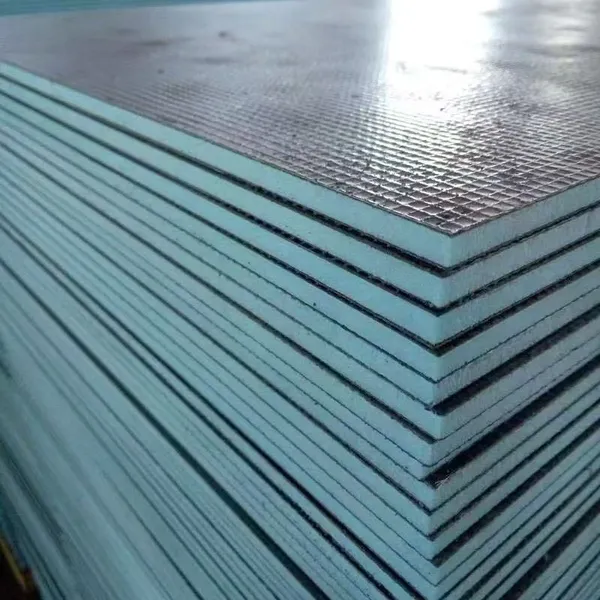
Inverted roof insulation is a flat roof assembly where rigid thermal insulation boards are installed above the primary waterproofing membrane rather than below it. The waterproof layer is applied directly to the structural roof deck. The insulation sits on top. A ballast layer, such as gravel, pavers, or a green roof system, holds the insulation in place and protects it from UV exposure and wind uplift.
This configuration is the opposite of a conventional warm roof, where insulation sits below the waterproofing layer. In a warm roof, the membrane is exposed to temperature extremes, UV radiation, mechanical damage from foot traffic, and thermal stress. In an inverted roof, the membrane is buried and protected.
How an Inverted Roof System Is Layered
A typical inverted roof assembly consists of the following layers from bottom to top:
Structural roof deck: Concrete or steel substrate
Vapor control layer: Prevents moisture migration from the interior
Thermal insulation (optional in some designs): Additional insulation below the membrane
Waterproof membrane: Primary weatherproofing barrier applied to the deck
Separation layer: Geotextile or protective sheet
Inverted roof insulation boards: XPS panels placed directly on the membrane
Filter layer: Prevents fines from entering the ballast
Ballast: Gravel, pavers, intensive substrate, or green roof system
The critical difference is that the waterproof membrane functions as the roof's primary defense against water ingress, while the insulation protects the membrane from above. This arrangement eliminates many of the failure modes that shorten the lifespan of conventional flat roofs.
Need help determining whether an inverted roof is suitable for your project? Speak with our insulation engineers about roof assembly design and U-value targets.
Why Conventional Warm Roofs Fail, and Inverted Roofs Last Longer
Flat roofs are one of the most failure-prone components of any building envelope. Industry data from building warranty providers suggests that roof defects account for roughly 30% of all construction insurance claims in commercial buildings. The majority of these defects trace back to membrane failure.
In a conventional warm roof, the waterproof membrane is the outermost layer. It is exposed to:
UV radiation: Degrades bitumen and synthetic membranes over time
Thermal cycling: Daily expansion and contraction stress seams and joints
Mechanical damage: Foot traffic, dropped tools, and maintenance activity
Standing water: Ponding accelerates membrane aging
Hail and wind: Physical impact and uplift forces
When the membrane fails, water penetrates the insulation layer beneath it. Wet insulation loses thermal performance permanently. The moisture migrates to the deck. Repair requires removing the membrane, replacing the wet insulation, and re-waterproofing. The cost is high, and the disruption is significant.
In an inverted roof insulation system, the membrane is shielded from all of these stresses. The XPS insulation boards absorb the thermal cycling, the ballast blocks UV radiation, and the entire assembly distributes mechanical loads. The membrane operates in a thermally stable environment, typically within a 10°C temperature range year-round, compared to 60°C or more on an exposed membrane.
When Stefan, a roofing contractor in Oslo, was asked to repair a leaking warm roof on a 2015 office building in 2023, he found the membrane brittle and cracked. The mineral wool insulation beneath it had absorbed so much water that its thermal conductivity had doubled. Instead of replacing the membrane and burying new insulation beneath it, he proposed converting the roof to an inverted system. The existing membrane was repaired and verified. XPS boards were laid on top, covered with gravel ballast. The total cost was 15% less than a full warm roof replacement. Two years later, thermal imaging shows consistent surface temperatures and zero moisture ingress.
Why XPS Is the Standard for Inverted Roof Insulation
Not all insulation materials can perform in an inverted roof. The boards sit in a permanently damp environment, often in standing water, under heavy ballast loads. The material must resist water absorption, maintain compressive strength under sustained load, and retain thermal performance for decades.
XPS extruded polystyrene has become the global standard for inverted roof insulation because it meets all of these requirements simultaneously.
XPS vs. EPS for Roof Applications
| Property | XPS (Extruded Polystyrene) | EPS (Expanded Polystyrene) |
|---|---|---|
| Water absorption | <0.5% by volume | 2-6% by volume |
| Compressive strength | 150-700 kPa | 50-150 kPa |
| Thermal conductivity | 0.028-0.035 W/(m·K) | 0.033-0.040 W/(m·K) |
| Long-term creep resistance | Excellent | Moderate |
| Cost per m² | Moderate | Lower |
EPS absorbs too much water for inverted roof use. In a permanently damp environment, EPS can absorb 3-5% water by volume within a few years. This degrades thermal performance and increases weight on the roof structure. XPS closed-cell structure limits water absorption to less than 0.5%, even after decades of submersion.
Compressive strength is equally critical. Inverted roof insulation supports the ballast layer, snow loads, and foot traffic. A gravel ballast system exerts a sustained load of 80-120 kg/m². Pavers add point loads at the corners. XPS at 250-300 kPa compressive strength handles these loads without long-term deformation. EPS would compress and create voids beneath the ballast.
At DaCheng BangMei, our XPS extruded polystyrene boards for inverted roof applications are manufactured with compressive strengths from 250 kPa to 700 kPa and thermal conductivity as low as 0.028 W/(m·K). Custom thicknesses from 30 mm to 120 mm are available for project-specific U-value requirements.
Key Specifications for Inverted Roof Insulation Boards
Specifying the correct XPS board for an inverted roof requires attention to thermal performance, compressive strength, dimensional stability, and compatibility with the waterproof membrane.
Thermal Conductivity and U-Value Compliance
The primary purpose of inverted roof insulation is to reduce heat loss through the roof assembly. European energy codes typically require roof U-values between 0.15 and 0.25 W/(m²·K) for new commercial buildings. Achieving this with an inverted roof requires thicker insulation than a warm roof because the insulation operates at a lower mean temperature and the system includes additional thermal resistance layers.
DIN 18531, the German standard for inverted roofs, recommends adding approximately 20% thickness compared to a warm roof to compensate for moisture effects and the lower mean temperature of the insulation layer. In practical terms:
U-value target 0.20 W/(m²·K): Approximately 140-160 mm XPS at 0.030 W/(m·K)
U-value target 0.15 W/(m²·K): Approximately 180-200 mm XPS at 0.030 W/(m·K)
Passivehaus standard 0.10 W/(m²·K): Approximately 240-280 mm XPS
In warm climates, the same logic applies in reverse. Inverted roof insulation reduces heat gain into air-conditioned buildings, lowering cooling loads. A 150 mm XPS layer on a commercial roof in Southeast Asia can reduce annual cooling energy by 15-25% compared to an uninsulated or poorly insulated roof.
Compressive Strength Requirements
The compressive strength of inverted roof insulation must be selected based on the loading scenario:
| Application | Minimum Compressive Strength | Notes |
|---|---|---|
| Gravel ballast (80-120 kg/m²) | 200 kPa | Standard specification |
| Paver ballast on pedestals | 300 kPa | Point loads at paver corners |
| Green roof / intensive planting | 250 kPa | Saturated soil adds significant load |
| Vehicle-accessible roofs | 500-700 kPa | Maintenance vehicle loads |
| Helipads or heavy equipment | 700 kPa | Concentrated dynamic loads |
Long-term creep is a separate consideration from short-term compressive strength. XPS exhibits very low creep under sustained load, typically less than 2% deformation over 50 years at 50% of its rated compressive strength. This dimensional stability ensures the insulation does not settle or create voids beneath the ballast over time.
Dimensional Stability and Temperature Resistance
XPS boards must maintain their dimensions across the full temperature range of the roof assembly. Roof surface temperatures in exposed conditions can reach 70°C in summer and drop below -20°C in cold climates. XPS has a service temperature range of -50°C to +75°C, which covers all typical building applications. Dimensional stability under temperature cycling is typically better than 2% linear change.
How to Specify the Right Thickness
Thickness selection for inverted roof insulation balances thermal targets, structural loading, build-up height, and cost. Unlike wall or floor insulation, roof insulation must also account for the fact that the waterproof membrane beneath it operates at a different temperature than the structural deck.
Thickness Guidelines by Climate and Code
| Climate / Energy Code | Recommended XPS Thickness | Approximate U-Value |
|---|---|---|
| Temperate (EN minimum) | 120-140 mm | 0.22-0.25 W/(m²·K) |
| Cold (Nordic codes) | 180-220 mm | 0.15-0.18 W/(m²·K) |
| Passivhaus / low-energy | 240-280 mm | 0.10-0.12 W/(m²·K) |
| Hot (cooling-dominated) | 100-140 mm | 0.22-0.30 W/(m²·K) |
| Retrofit (height-limited) | 80-120 mm | 0.28-0.35 W/(m²·K) |
For new construction where roof height is not constrained, specifying 150-180 mm XPS provides a good balance of thermal performance and reasonable cost. In retrofits where parapet height limits the total build-up, thinner boards still provide meaningful improvement over an uninsulated roof, though energy savings are proportionally lower.
For a distribution center in Hamburg retrofitted in 2023, the design team initially specified 100 mm XPS to stay within the existing parapet height. Our technical team calculated that this would achieve only U-0.28, below the local energy code requirement of U-0.20. We proposed extending the parapet by 60 mm and installing 160 mm XPS. The revised specification met code compliance, reduced annual heating costs by €12,000, and qualified the project for a municipal energy efficiency rebate. The incremental material cost was recovered in under two years.
Installation Best Practices for Inverted Roofs
Even the highest-quality XPS board will underperform if the roof assembly is installed incorrectly. These practices apply to all inverted roof systems, whether new construction or retrofit.
Membrane Integrity Verification
Before any insulation is installed, the waterproof membrane must be fully cured, tested, and verified watertight. Flood testing or electronic leak detection should be completed and documented. Any defects must be repaired before the insulation layer covers them. Once the XPS boards and ballast are in place, locating and repairing membrane leaks becomes exponentially more difficult and expensive.
Board Layout and Joint Treatment
XPS boards should be laid in a running bond or staggered pattern to avoid continuous joints. Boards must be butted tightly together with gaps no greater than 5 mm. Some specifications require joints to be taped with compatible adhesive tape to prevent thermal bridging at the board edges. For multi-layer installations, joints between layers should be offset by at least 150 mm.
Separation and Filter Layers
A geotextile separation layer between the membrane and the XPS boards prevents abrasion and allows the membrane to move independently during thermal cycling. A filter layer above the insulation prevents fine particles from the ballast from washing into the joints between boards and filling the drainage paths that keep the system ventilated.
Drainage and Ventilation
Inverted roofs are not completely waterproof at the insulation level. Some rainwater penetrates the ballast and runs across the top surface of the XPS boards to roof drains. The boards must be laid with a slight slope toward drainage outlets, and the drainage layer must remain clear of obstructions. Blocked drains are one of the most common causes of inverted roof performance problems.
When a hotel in Phuket installed an inverted roof with XPS insulation in 2022, the installation crew laid the boards perfectly level. During the first monsoon season, water ponded in several areas because the drainage outlets were 40 mm higher than the low points of the board surface. The standing water increased the thermal conductivity of the saturated ballast and reduced insulation effectiveness. The correction involved regrading the board layout with a 1:80 slope toward drains and adding overflow scuppers. After the correction, the roof drained properly and thermal performance returned to design values.
Cost Analysis: Material, Installation, and Lifecycle
The total cost of an inverted roof must be evaluated against its full service life, not just the initial installation.
Initial Cost Comparison
| Component | Warm Roof | Inverted Roof |
|---|---|---|
| Waterproof membrane | High-quality exposed membrane | Standard protected membrane |
| Insulation | 100-140 mm, any type | 140-200 mm XPS |
| Ballast | None required | Gravel or pavers required |
| Membrane protection | Walkway pads, coatings | Insulation itself protects |
| Expected membrane life | 15-25 years | 30-50 years |
An inverted roof typically costs 10-20% more than a conventional warm roof at initial installation, primarily due to the thicker XPS insulation and the ballast layer. However, the protected membrane lasts roughly twice as long. Over a 50-year building lifespan, an inverted roof often requires only one membrane replacement, while a warm roof may require two or three.
Lifecycle Cost Advantage
For a 2,000 m² commercial roof in a temperate climate, the lifecycle cost comparison over 50 years might look like this:
Warm roof: Initial cost €120,000 + two membrane replacements at €80,000 each = €280,000 total
Inverted roof: Initial cost €145,000 + one membrane replacement at €60,000 = €205,000 total
The inverted roof saves approximately 25% over the building's life while delivering superior thermal performance and lower disruption to building occupants.
For buyers sourcing XPS inverted roof insulation boards in volume, DaCheng BangMei offers factory-direct pricing with custom thicknesses, compressive strength grades, and export packing for international projects. Request a project-specific quote for detailed pricing.
Green Roofs and Inverted Roof Insulation
One of the most compelling applications of inverted roof insulation is as the thermal foundation for green roofs and rooftop gardens. Intensive green roofs with 150-300 mm of growing medium are heavy when saturated. The insulation must support this load without compression while maintaining thermal resistance in a permanently moist environment.
XPS is uniquely suited for this application. Its closed-cell structure prevents water absorption even when buried in saturated growing medium. High-density grades at 300-500 kPa compressive strength support the combined load of soil, plants, and retained rainwater. The insulation also protects the waterproof membrane from root penetration when combined with a root-resistant membrane or root barrier layer.
For a residential development in Singapore, the landscape architect proposed an intensive green roof with 200 mm of substrate over a warm roof assembly. The structural engineer flagged the risk of waterlogging the insulation if the membrane ever leaked. The team revised the design to an inverted roof with 180 mm XPS at 300 kPa compressive strength beneath the green roof build-up. The waterproof membrane was protected, the load was distributed, and the residents gained a rooftop garden with a 50-year design life.
Standards and Compliance for Inverted Roof Systems
Inverted roof assemblies must comply with national building codes, energy regulations, and material standards. These are the key standards that govern specification.
European Standards
DIN 18531: German standard for inverted roofs, widely referenced across Europe. Defines drainage, thermal calculation methods, and material requirements.
EN 13956: Flexible sheets for waterproofing. Defines membrane performance requirements.
EN 13164: XPS factory-made products. Specifies thermal and mechanical properties.
North American Standards
ASTM C578: Standard specification for rigid cellular polystyrene thermal insulation. Defines XPS types by compressive strength and thermal resistance.
ASTM D1621: Compressive properties of rigid cellular plastics.
CSA A123.21: Canadian standard for dynamic wind uplift resistance of membrane roofing systems.
Fire Safety Considerations
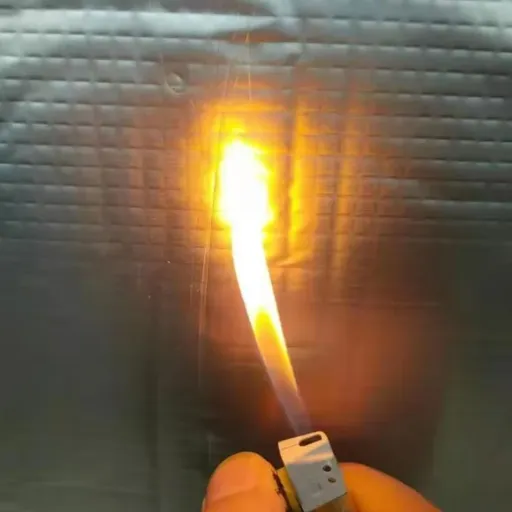
XPS is a combustible material. Inverted roof assemblies with exposed XPS at the roof edge or parapet may require fire-stopping details or non-combustible cladding to meet building code requirements. Some jurisdictions require XPS with flame-retardant additives for roof applications. At DaCheng BangMei, we produce XPS boards with Class B1 flame-retardant performance for projects requiring enhanced fire safety.
Conclusion
Inverted roof insulation is not merely an alternative to conventional warm roof design. It is a fundamentally better approach for flat roofs in commercial, industrial, and multi-residential buildings. By placing XPS insulation above the waterproof membrane, the system protects the membrane from UV, thermal cycling, and mechanical damage while delivering reliable thermal performance for decades.
Key takeaways:
Specify XPS, not EPS, for inverted roof insulation due to superior moisture resistance and compressive strength
Size thickness for the target U-value, adding approximately 20% compared to warm roof calculations
Verify membrane integrity completely before covering it with insulation
Ensure proper drainage slope and clear drainage paths across the insulation surface
Evaluate total lifecycle cost, not just initial installation cost; inverted roofs typically save 20-30% over 50 years
Consider inverted roof design for green roof and plaza deck applications where load and moisture resistance are critical
If you are specifying XPS insulation for an inverted roof or plaza deck project, DaCheng BangMei supplies XPS extruded polystyrene boards with compressive strengths from 150 kPa to 700 kPa, custom thicknesses, and optional Class B1 flame-retardant grades. From Huaneng Zhongtian's ISO9001-certified manufacturing facility, we provide factory-direct pricing, technical consultation, and full export documentation.
Ready to specify? Request a custom quote for your inverted roof project or download our complete XPS technical data sheets for thermal conductivity, compressive strength, and moisture resistance data.
Recently Posted
-
Insulation for Metal Buildings: Complete Buyer's Guide 2026
June 24, 2026A warehouse manager in Texas watched his electricity bill climb every summer. The metal roof turned the building into a solar oven Read More
 -
Insulation Materials Comparison: How to Select the Right Type for Your Project
June 24, 2026The procurement manager stared at six quotations on her screen. Each supplier recommended a different insulation material for the Read More
 -
Thermal Conductivity of Insulation Materials: A Specifier's Guide
June 24, 2026Ahmed Hassan spent three weeks reconciling quotes for a cold storage expansion in Dubai. One supplier quoted 80 mm rubber-plastic Read More
 -
Basement Insulation Board: Complete Buyer's Guide | DaCheng BangMei
June 24, 2026A homeowner in Michigan finished their basement with standard fiberglass batts and drywall. Two winters later, the bottom plates w Read More

Contact Us
Recommended Products
-
 Eco-Friendly Aluminum Foil Foam Board for Underfloor Heating SolutionsNegotiableMOQ: 100 Pieces
 -
Rubber Plastic Insulation Board Waterproof for Industrial Thermal InsulationNegotiableMOQ: 500 Square Meters
-
Premium Soft Silica Nano Aerogel Felt Sheets for Industrial Heat InsulationNegotiableMOQ: 50 Meters
-
Customizable PVC Magnetic Door Curtain Roll for Home & Kitchen UseNegotiableMOQ: 500 Kilograms
-
XPS Waterproof Board for Underground Garage Moisture BarrierNegotiableMOQ: 50 Square Meters
-
Heavy Duty Titanium Steel Mesh Magnetic Door Curtain With Reinforced EdgesNegotiableMOQ: 10 Pieces
-
Rubber Plastic Insulation Tube for Refrigeration & Cold Storage PipelineNegotiableMOQ: 500 Square Meters
-
Durable Aluminum Dry Floor Heating Panel With High Thermal ConductivityNegotiableMOQ: 100 Pieces
-
Nano Aerogel Felt Insulation Material for Cold Protection and Energy EfficiencyNegotiableMOQ: 50 Meters
-
High-Temperature Nano Silica Aerogel Felt for Pipe Fire and Thermal InsulationNegotiableMOQ: 50 Meters
-
Insulated PVC Magnetic Door Curtain for Thermal Insulation in Bedroom & KitchenNegotiableMOQ: 500 Kilograms
-
Professional Aluminum Foil Foam Board for Dry Underfloor Heating SystemsNegotiableMOQ: 100 Pieces
-
Aluminum Underfloor Heating Module for Commercial and Residential UseNegotiableMOQ: 100 Pieces
-
XPS Waterproof Board 10mm Thickness for Roofing InsulationNegotiableMOQ: 50 Square Meters
-
Custom Size Titanium Steel Mesh Magnetic Door Curtain for Warehouse Pest ControlNegotiableMOQ: 10 Pieces
-
Flame Retardant Thermal Insulation Sponge for Rubber & Plastic Pipes - Fireproof Factory DirectNegotiableMOQ: 500 Square Meters
-
Cold Insulation Rubber Plastic Board for HVAC and Industrial Pipeline ApplicationsNegotiableMOQ: 500 Square Meters
-
20mm XPS Thermal Insulation Panel for Dry Underfloor Heating SystemsNegotiableMOQ: 100 Pieces
-
High Temperature Resistant Foam Insulation Tube for Air Conditioner DuctsNegotiableMOQ: 500 Meters
-
XPS Tile Backer Board Waterproof Insulation for Wall & BathroomNegotiableMOQ: 500 Square Meters