
 Business License

Refinery Pipe Insulation: A Practical Guide for High-Temperature Process Lines
In 2022, a turnaround team at a Gulf Coast refinery removed insulation from a 315°C crude line and found the steel wall thinned by 40% underneath. Water had leaked through the insulation jacket, collected at a support, and caused corrosion under insulation (CUI) for years. No one had specified a water-repellent facing, and the inspection interval was too long.
If you specify, procure, or install refinery pipe insulation, you know the stakes. A specification that ignores temperature, chemical exposure, and inspection access can lead to leaks, fires, unplanned shutdowns, and regulatory violations. The right insulation system protects personnel, saves energy, and extends pipe life.
In this guide, you will learn how to select refinery pipe insulation for different service conditions, how to prevent CUI, and how to meet common industry standards. We will also look at the installation details that separate reliable systems from future maintenance headaches.
At DaCheng BangMei, operating under Huaneng Zhongtian Energy-Saving Technology Group, we supply industrial insulation materials to refineries, petrochemical plants, and power facilities across 35+ countries. Here is how our engineers approach refinery pipe insulation specification.
Why Refinery Pipe Insulation Is Different from Standard Industrial Insulation
Refinery process lines carry hydrocarbons at temperatures that range from cryogenic to over 600°C. They operate continuously for years between turnarounds. They are exposed to chemical splash, rain, and thermal cycling. Any insulation system must handle all of these conditions at once.
The consequences of failure are also higher than in most buildings. A leak in an insulated high-temperature line can ignite. CUI can cause a rupture without warning. Poor insulation increases fuel use and emissions. That is why refineries rely on detailed specifications, regular inspection, and materials tested for severe service.
Unlike commercial HVAC insulation, refinery pipe insulation must account for:
High surface temperatures on fired heater outlets, transfer lines, and hot crude pipes
Thermal cycling that causes expansion, contraction, and joint movement
Chemical exposure from spills, vapors, and process leaks
Moisture ingress that leads to CUI beneath the insulation
Fire risk that demands non-combustible or fire-resistant materials
Inspection access for thickness surveys and visual checks
Understanding these factors early prevents expensive changes during construction or turnaround.
Want to compare insulation materials for other industrial applications? Read our guide on industrial insulation materials for power plants, boilers, and process equipment.
Selecting Refinery Pipe Insulation by Service Temperature
The first step in specifying refinery pipe insulation is to define the operating temperature range. The wrong material will degrade, shrink, or lose thermal performance.
Ambient to 120°C: Rubber-Plastic Foam for Auxiliary Lines
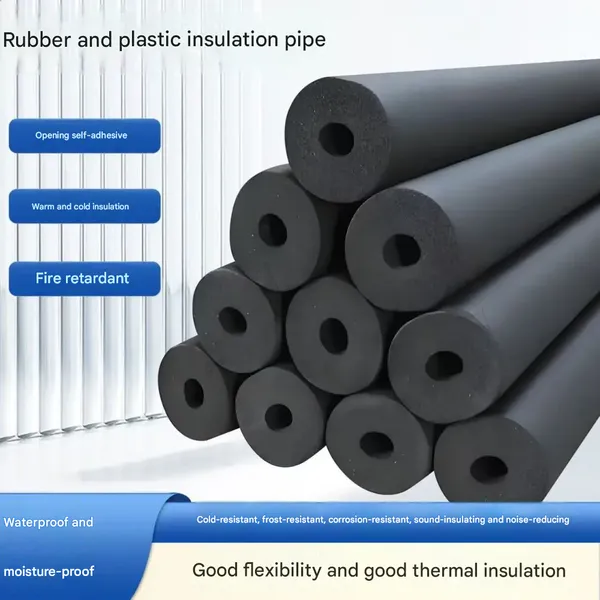
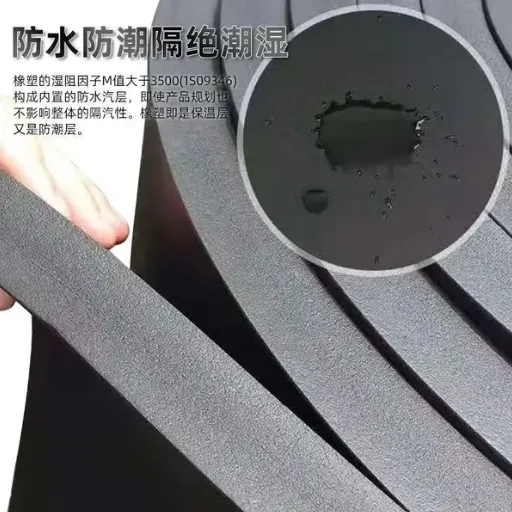
Low-temperature refinery lines, such as cooling water, instrument air, and some utility piping, can use closed-cell rubber-plastic insulation. It provides good thermal conductivity, flexibility around fittings, and built-in moisture resistance.
| Property | Rubber-Plastic Pipe Insulation |
|---|---|
| Service temperature | -40°C to +105°C |
| Thermal conductivity | 0.034–0.038 W/(m·K) |
| Fire rating | Class B1 flame retardant |
| Moisture resistance | Closed-cell, low vapor permeability |
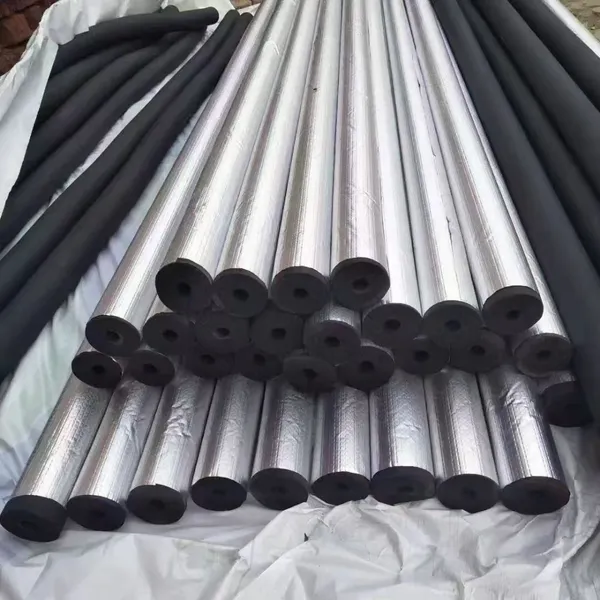
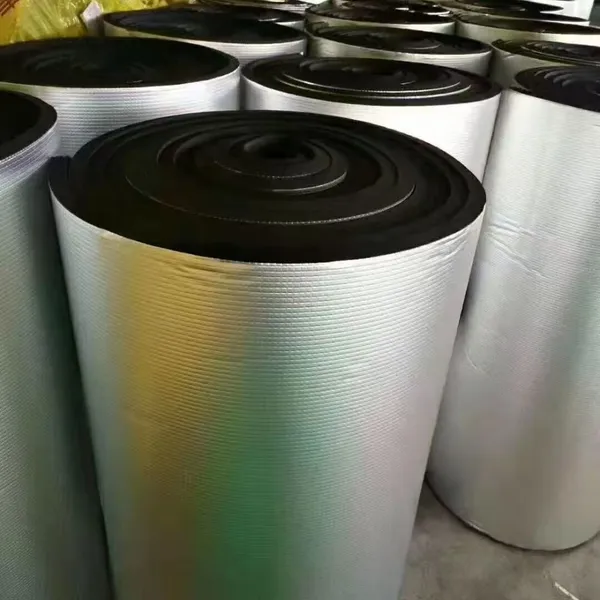
For refinery use, specify a halogen-free or low-smoke variant if the line runs through occupied areas or fire-risk zones. Our rubber-plastic pipe insulation is available in pre-formed tubes and flexible sheets for complex piping runs.
120°C to 650°C: Rock Wool / Mineral Wool for Hot Process Lines
Rock wool is the standard insulation for most refinery process lines. It is non-combustible, chemically stable, and available as pre-formed pipe sections, boards, or blankets.
| Property | Rock Wool Pipe Insulation |
|---|---|
| Service temperature | Up to 650°C |
| Thermal conductivity | 0.035–0.045 W/(m·K) at 100°C |
| Fire rating | Non-combustible A1 |
| Density | 100–160 kg/m³ for pipe sections |
Rock wool pipe sections are split longitudinally for easy installation on pipework. They are held in place with bands and finished with aluminum, stainless steel, or composite jacketing. For lines above 450°C, use high-density sections to resist compression at supports.
Above 650°C: Ceramic Fiber and Composite Systems
Lines that exceed 650°C, such as fired heater transfer lines and reformer outlets, require refractory-grade insulation. Ceramic fiber blankets or modules are often used, sometimes backed by rock wool or calcium silicate for lower shell temperatures.
| Property | Ceramic Fiber Blanket |
|---|---|
| Service temperature | Up to 1,260°C (standard grades) |
| Thermal conductivity | 0.08–0.25 W/(m·K) at 400–1,000°C |
| Density | 64–160 kg/m³ |
| Fire rating | Non-combustible |
For these high-temperature lines, the insulation system is usually designed by a refractory specialist. The specification must address expansion joints, anchor spacing, and metal jacketing that can tolerate thermal movement.
Need help matching insulation to your refinery service temperatures? Speak with our insulation engineer for a free specification review.
Preventing Corrosion Under Insulation (CUI)
CUI is one of the most common and costly failure modes in refinery pipe insulation. It occurs when water reaches the pipe surface and is trapped between the metal and the insulation. Over time, this leads to localized corrosion that is hard to detect until it is severe.
Use a Water-Repellent Insulation Facing
A water-repellent facing or coating is essential for outdoor refinery piping. Aluminum or stainless steel jacketing must be properly sealed at seams, supports, and penetrations. Some specifications also call for a moisture barrier coating on the pipe surface before insulation is applied.
Design for Drainage
Insulation systems should allow water to escape rather than collect. Pipe supports should be designed with insulation inserts that prevent compression and create a path for drainage. Horizontal lines should have slight pitch, and jacketing seams should be oriented away from prevailing rain.
Leave Inspection Access
Refineries perform regular CUI inspections during turnarounds. Insulation systems should include removable inspection plugs, panels, or sections at high-risk locations such as elbows, supports, and flanges. If the insulation cannot be removed and reinstalled without damage, inspection becomes expensive.
Specify the Right Material Chemistry
Some insulation materials can leach chlorides or other corrosive ions when wet. For austenitic stainless steel lines, specify low-chloride or chloride-free insulation and avoid materials that contain salts or sulfides. Always confirm the insulation chemistry against the process line metallurgy.
In 2020, a refinery in Southeast Asia replaced insulation on a 250°C naphtha line after repeated CUI failures. The original system used standard rock wool with aluminum jacketing that had poorly sealed seams.
DaCheng BangMei supplied water-repellent rock wool pipe sections with a double-layer aluminum jacket and sealed end caps. Two inspection cycles later, the pipe surface showed no sign of corrosion. The maintenance team reduced inspection frequency from every year to every three years.
Fire Safety Requirements for Refinery Pipe Insulation
Refineries handle flammable hydrocarbons, so fire safety is built into every specification. Insulation materials must resist ignition, limit flame spread, and maintain integrity during a fire event.
Non-Combustible Insulation
Rock wool and ceramic fiber are non-combustible. They do not burn, melt, or emit significant smoke. This makes them the default choice for process lines carrying flammable fluids above their auto-ignition temperature.
Fire-Resistant Jacketing
Metal jacketing must also perform in a fire. Aluminum melts at 660°C, so stainless steel jacketing is often required near fired heaters, flares, and other high-temperature fire-risk areas. Stainless steel also resists mechanical damage and corrosion better than aluminum.
Passive Fire Protection Standards
Many refinery projects reference standards such as API 536 for refractory materials or UL 1709 for fire resistance. Fireproofing of structural steel and vessel supports may also be required, sometimes using sprayed cementitious materials or intumescent coatings in addition to insulation.
Installation Best Practices for Refinery Pipe Insulation
Even the correct material will fail if it is installed poorly. Refinery pipe insulation requires skilled crews, proper tools, and attention to detail at every joint and support.
Surface Preparation
Pipes must be clean, dry, and free of mill scale, oil, or rust before insulation is applied. A primer or anti-corrosion coating may be specified for CUI protection. Hot lines should be insulated during shutdowns to allow safe, close-fit work.
Layering and Offset Joints
For thicker insulation, apply in multiple layers with staggered longitudinal and circumferential joints. This reduces heat loss through aligned seams and improves the effective thermal resistance of the system.
Mechanical Fastening
Pipe sections are typically secured with stainless steel bands spaced at regular intervals. Additional bands are needed near elbows, valves, and flanges. Avoid over-tightening, which can compress the insulation and reduce its thickness.
Expansion and Contraction
High-temperature refinery lines move significantly with thermal cycles. Insulation systems must include expansion joints, segmented sections, or flexible blanket layers that accommodate movement without cracking the jacketing or compressing the insulation.
Jacketing Details
Metal jacketing protects the insulation from weather, mechanical damage, and UV exposure. Seams should be overlapped and sealed with weather-resistant caulk or tape. End caps at flanges and valves must be fitted tightly to prevent water entry.
Standards and Certifications for Refinery Pipe Insulation
Most refinery projects require materials and installation practices that meet international standards. Common references include:
API 536: Post-construction refractory and materials for refinery heaters
ASTM C1695: Standard for fiber-reinforced mineral wool insulation
NACE SP0198: Control of corrosion under thermal insulation and fireproofing materials
ASTM C547: Mineral fiber pipe insulation specification
EN 13403: Thermal insulation for industrial installations
Certifications from the insulation manufacturer also matter. DaCheng BangMei holds ISO9001, ISO14001, OHSAS18001, and FM Global certification for our rock wool insulation products. These certifications support project documentation and compliance with international procurement requirements.
For the latest standards, consult the API standards store and NACE International directly.
How DaCheng BangMei Supports Refinery Insulation Projects
Refinery insulation procurement involves more than ordering pipe sections. Buyers need technical review, custom dimensions, certified materials, and reliable export logistics.
At DaCheng BangMei, we support refinery and petrochemical projects with:
Material selection guidance: Rock wool, ceramic fiber, and rubber-plastic insulation matched to service temperature and chemical exposure
Custom pipe sections and blankets: Cut to line diameter, density, and thickness requirements
CUI-resistant facing options: Aluminum, stainless steel, fiberglass cloth, and water-repellent coatings
Thermal calculations: Heat loss, surface temperature, and insulation thickness analysis
Certification packages: ISO, FM, fire test reports, and third-party inspection support
Export logistics: Sea freight packaging, container loading, and documentation for 35+ countries
Our 225,000 m² Huaneng Zhongtian manufacturing base produces 100,000 tons of rock wool and 500,000 m³ of rubber-plastic products annually. For a recent refinery upgrade in the Middle East, we supplied high-density rock wool pipe sections and high temperature insulation blanket for heater transfer lines, with stainless steel jacketing and detailed installation drawings. The system met the EPC contractor's heat-loss targets and passed third-party inspection before startup.
Ready to specify refinery pipe insulation for your project? Request a custom quote and our technical team will review your line list, operating conditions, and code requirements.
Conclusion
Refinery pipe insulation must handle extreme temperatures, thermal cycling, chemical exposure, and fire risk while remaining inspectable over a long service life. Material selection is only part of the solution. The facing, jacketing, drainage, and installation details determine whether the system performs for decades or becomes a maintenance burden.
Key takeaways:
Match the insulation material to the service temperature: rubber-plastic for low temperatures, rock wool up to 650°C, and ceramic fiber or refractory systems above that.
Design for CUI prevention: water-repellent facings, sealed jacketing, drainage paths, and inspection access reduce long-term corrosion risk.
Specify non-combustible materials for hydrocarbon lines and fire-risk zones.
Follow industry standards such as API 536, ASTM C1695, and NACE SP0198.
Plan for thermal movement with expansion joints and segmented insulation details.
If you are planning a refinery project or turnaround and need help selecting refinery pipe insulation, our engineers are available to review your specifications. We will help you choose materials that meet your process conditions, reduce energy loss, and protect your piping investment.
Recently Posted
-
Insulation for Metal Buildings: Complete Buyer's Guide 2026
June 24, 2026A warehouse manager in Texas watched his electricity bill climb every summer. The metal roof turned the building into a solar oven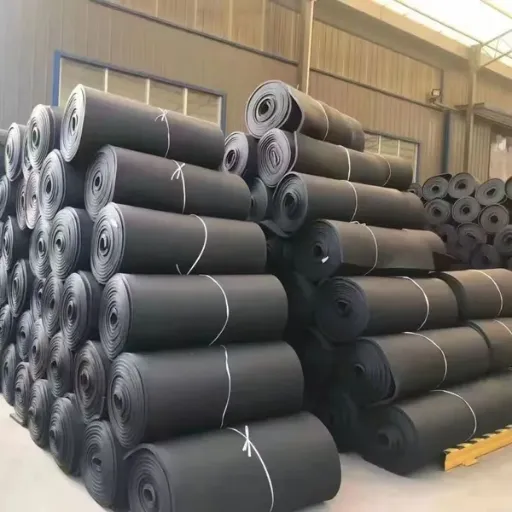 Read More
 -
Insulation Materials Comparison: How to Select the Right Type for Your Project
June 24, 2026The procurement manager stared at six quotations on her screen. Each supplier recommended a different insulation material for the Read More
 -
Thermal Conductivity of Insulation Materials: A Specifier's Guide
June 24, 2026Ahmed Hassan spent three weeks reconciling quotes for a cold storage expansion in Dubai. One supplier quoted 80 mm rubber-plastic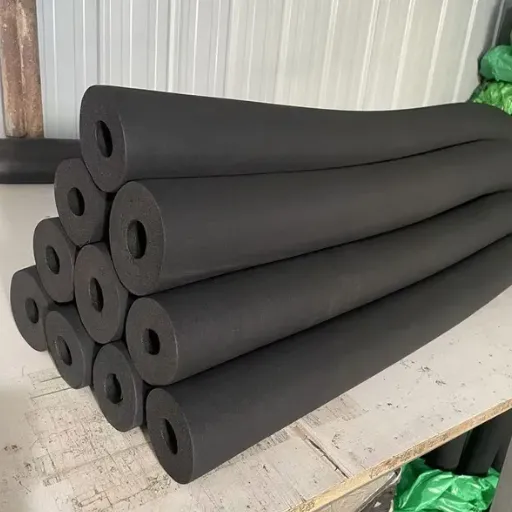 Read More
 -
Basement Insulation Board: Complete Buyer's Guide | DaCheng BangMei
June 24, 2026A homeowner in Michigan finished their basement with standard fiberglass batts and drywall. Two winters later, the bottom plates w Read More

Contact Us
Recommended Products
-
 Eco-Friendly Aluminum Foil Foam Board for Underfloor Heating SolutionsNegotiableMOQ: 100 Pieces
 -
Rubber Plastic Insulation Board Waterproof for Industrial Thermal InsulationNegotiableMOQ: 500 Square Meters
-
Premium Soft Silica Nano Aerogel Felt Sheets for Industrial Heat InsulationNegotiableMOQ: 50 Meters
-
Customizable PVC Magnetic Door Curtain Roll for Home & Kitchen UseNegotiableMOQ: 500 Kilograms
-
XPS Waterproof Board for Underground Garage Moisture BarrierNegotiableMOQ: 50 Square Meters
-
Heavy Duty Titanium Steel Mesh Magnetic Door Curtain With Reinforced EdgesNegotiableMOQ: 10 Pieces
-
Rubber Plastic Insulation Tube for Refrigeration & Cold Storage PipelineNegotiableMOQ: 500 Square Meters
-
Durable Aluminum Dry Floor Heating Panel With High Thermal ConductivityNegotiableMOQ: 100 Pieces
-
Nano Aerogel Felt Insulation Material for Cold Protection and Energy EfficiencyNegotiableMOQ: 50 Meters
-
High-Temperature Nano Silica Aerogel Felt for Pipe Fire and Thermal InsulationNegotiableMOQ: 50 Meters
-
Insulated PVC Magnetic Door Curtain for Thermal Insulation in Bedroom & KitchenNegotiableMOQ: 500 Kilograms
-
Professional Aluminum Foil Foam Board for Dry Underfloor Heating SystemsNegotiableMOQ: 100 Pieces
-
Aluminum Underfloor Heating Module for Commercial and Residential UseNegotiableMOQ: 100 Pieces
-
XPS Waterproof Board 10mm Thickness for Roofing InsulationNegotiableMOQ: 50 Square Meters
-
Custom Size Titanium Steel Mesh Magnetic Door Curtain for Warehouse Pest ControlNegotiableMOQ: 10 Pieces
-
Flame Retardant Thermal Insulation Sponge for Rubber & Plastic Pipes - Fireproof Factory DirectNegotiableMOQ: 500 Square Meters
-
Cold Insulation Rubber Plastic Board for HVAC and Industrial Pipeline ApplicationsNegotiableMOQ: 500 Square Meters
-
20mm XPS Thermal Insulation Panel for Dry Underfloor Heating SystemsNegotiableMOQ: 100 Pieces
-
High Temperature Resistant Foam Insulation Tube for Air Conditioner DuctsNegotiableMOQ: 500 Meters
-
XPS Tile Backer Board Waterproof Insulation for Wall & BathroomNegotiableMOQ: 500 Square Meters