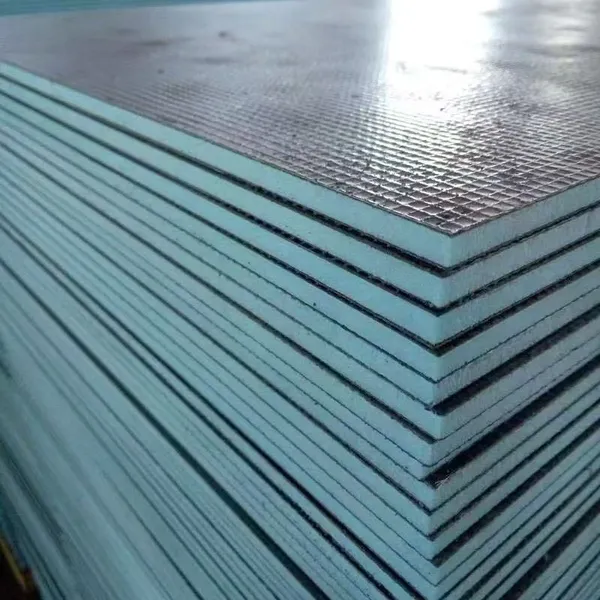

 Business License

Insulation Under Concrete Slab: A Complete Specification and Installation Guide
The warehouse floor in Calgary looked perfect on opening day. Polished concrete, level, and built to handle forklift traffic. Within 18 months, hairline cracks appeared along the slab edges, and the heating bills were 30% higher than the engineer had modeled. The problem was beneath the concrete. The insulation under the concrete slab had been underspecified for both compressive load and ground moisture, and the thermal break the building needed was slowly disappearing into the soil.
Specifying insulation under concrete slab is one of the most consequential decisions in a building's envelope. Get it right, and the slab becomes a stable thermal foundation that reduces energy loads for decades. Get it wrong, and the building inherits a permanent defect that is expensive to repair after the concrete is poured.
This guide explains how to select, specify, and install insulation under concrete slab for commercial, industrial, and cold-storage applications. You will learn which rigid foam materials perform best below grade, how to calculate compressive strength requirements, how to manage moisture, and the installation details that separate durable slabs from failed ones.
At DaCheng BangMei, part of Huaneng Zhongtian's 40-year manufacturing group, we supply XPS waterproof insulation boards for under-slab and foundation projects worldwide. Here is how our technical team approaches slab insulation specification.
Need the thermal numbers first? Review our XPS insulation R value guide for thickness-specific performance data.
Why Insulation Under Concrete Slab Matters
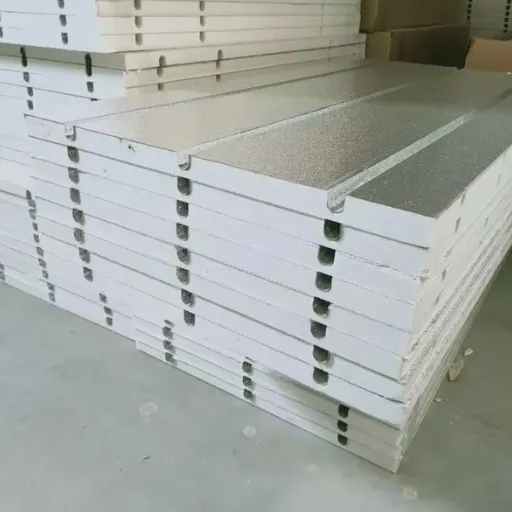
Concrete is a poor thermal insulator. Its thermal conductivity ranges from 1.0 to 1.5 W/(m·K), meaning heat flows through it easily. Without insulation beneath it, a concrete slab becomes a thermal bridge that connects the heated interior directly to the ground.
The consequences extend beyond energy loss. Cold slabs create uncomfortable floor surface temperatures. They increase the risk of condensation near the slab edge. In cold-storage and freezer buildings, inadequate under-slab insulation can cause frost heave as moisture in the soil freezes and expands, lifting and cracking the concrete.
Building codes increasingly recognize this risk. Energy standards such as ASHRAE 90.1 and the International Energy Conservation Code specify minimum slab edge and under-slab insulation for heated buildings in many climate zones. Projects that ignore these requirements may fail inspection or deliver poor operating performance.
A properly insulated slab provides:
Reduced heat loss to the ground
More stable interior floor temperatures
Lower heating and cooling loads
Protection against condensation and mold
Reduced risk of frost heave in cold climates
Compliance with modern energy codes
What Is the Best Insulation for Under Concrete Slab?
Not all insulation materials can survive below a concrete slab. The material must resist compression, moisture, and soil chemicals while maintaining thermal performance over decades.
XPS: The Most Common Choice
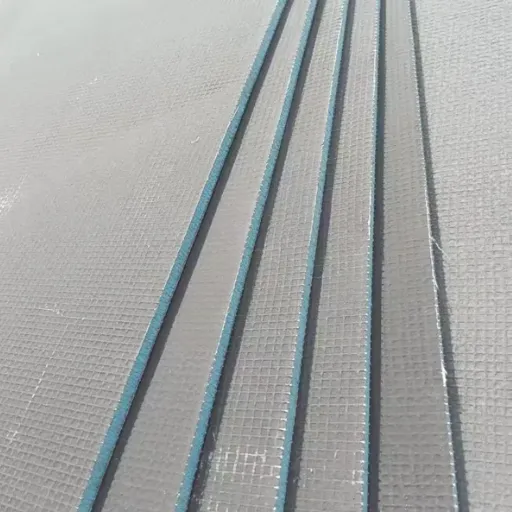
Extruded polystyrene (XPS) is the most widely specified insulation under concrete slab. Its closed-cell structure provides low water absorption, high compressive strength, and stable thermal conductivity across a wide temperature range.
Key properties of XPS under-slab insulation board:
Thermal conductivity: 0.028-0.036 W/(m·K)
Compressive strength: 150-700 kPa depending on grade
Water absorption: typically below 0.7% by volume
Closed-cell structure resists soil moisture
Long-term thermal resistance (LTTR) remains stable
For most commercial and industrial slabs, XPS with 150-300 kPa compressive strength is sufficient. Heavy-load applications such as forklift aisles, truck docks, and column footings may require 500-700 kPa grades.
EPS: Lower Cost, Lower Strength
Expanded polystyrene (EPS) is lighter and less expensive than XPS. It offers reasonable thermal performance but absorbs more water over time and has lower compressive strength. Standard EPS boards range from 70-250 kPa compressive strength.
EPS can work under lightly loaded residential slabs or protected floor systems. For commercial slabs with significant loads or exposure to groundwater, XPS is usually the safer specification.
Polyiso: Higher R-Value, Higher Moisture Risk
Polyisocyanurate offers higher R-value per inch than XPS but is more sensitive to moisture absorption if the facings are compromised. It is rarely used directly under slab-on-grade applications unless it is fully protected by a vapor barrier and limited-load design.
For under-slab work, the combination of moisture resistance and compressive strength generally makes XPS the preferred material.
A cold-storage contractor in Minnesota learned this lesson after specifying EPS under a freezer slab to save on material cost. Within three years, the EPS had absorbed enough groundwater to lose 40% of its thermal resistance. The slab surface temperature dropped, energy consumption rose, and the owner eventually paid to excavate and replace the insulation with 300 kPa XPS. The XPS assembly has now performed for 12 years without degradation.
How to Calculate Compressive Strength Requirements
The insulation under a concrete slab must support the slab weight, live loads, and any concentrated loads from columns, walls, or equipment. Compressive strength is measured in kilopascals (kPa) or pounds per square inch (psi).
Common Load Scenarios
| Application | Typical Live Load | Recommended XPS Strength |
|---|---|---|
| Residential slab | 1.5-2.5 kPa | 150 kPa |
| Light commercial floor | 2.5-5.0 kPa | 200-250 kPa |
| Warehouse with rack storage | 5.0-15.0 kPa | 300-500 kPa |
| Forklift traffic aisles | 10.0-25.0 kPa | 300-700 kPa |
| Truck loading docks | 20.0-50.0 kPa | 500-700 kPa |
These values are guidelines. Always consult a structural engineer for project-specific calculations that account for slab thickness, subgrade modulus, load distribution, and safety factors.
Load Distribution Matters
A common mistake is matching the insulation compressive strength directly to the wheel load of a forklift. The concrete slab distributes point loads over a wider area before they reach the insulation. A structural engineer can calculate the actual stress on the insulation layer using the slab thickness, reinforcement, and subgrade support.
For most commercial slabs on compacted granular subgrade, 250-300 kPa XPS provides adequate safety margin for typical distributed loads. Concentrated loads at columns and heavy traffic paths may require higher-density boards or localized thickened slabs.
Moisture Management Below the Slab
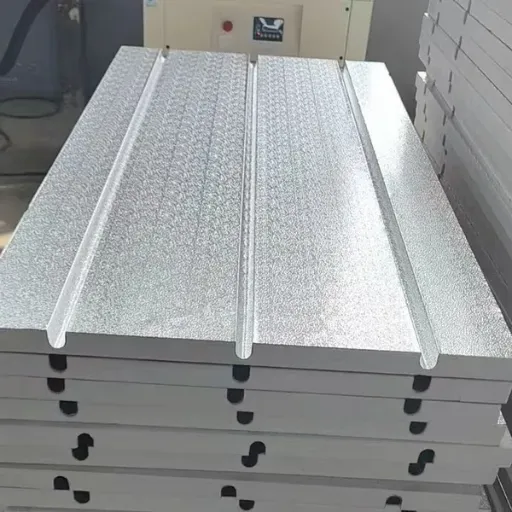
Water is the enemy of under-slab insulation. Even small amounts of moisture can degrade thermal performance and create conditions for mold or odor. A comprehensive moisture strategy includes drainage, a vapor barrier, and moisture-resistant insulation.
Site Drainage
Before any insulation is placed, the subgrade should be compacted and sloped to drain water away from the building. Perimeter drainage, including footing drains and granular backfill, prevents water from accumulating against the slab.
Vapor Barrier
A polyethylene vapor barrier between the insulation and the concrete slab prevents liquid water and soil vapor from entering the slab. Common specifications include 0.15 mm (6 mil) polyethylene minimum, with 0.20 mm (8 mil) or 0.25 mm (10 mil) used in high-moisture soils or cold-storage applications.
Seams in the vapor barrier should overlap by at least 150 mm and be sealed with compatible tape. The barrier should extend to the foundation walls and be sealed to the perimeter waterproofing.
Insulation Moisture Resistance
XPS absorbs far less water than EPS or unfaced polyiso. ASTM C578 long-term water absorption tests for XPS typically show values below 0.7% by volume. This makes XPS the safer choice where groundwater, seasonal moisture, or condensation risk exists.
In very wet conditions, consider specifying boards with drainage channels or combining XPS with a capillary break layer of clean crushed stone beneath the insulation.
Installation Best Practices for Under-Slab Insulation
Proper installation is as important as material selection. Even high-quality XPS can fail if joints are gapped, boards are not level, or the vapor barrier is punctured.
Prepare the Subgrade
Remove organic material, loose soil, and debris. Compact the subgrade to at least 95% of standard Proctor density for the top 150-300 mm. Place a level layer of crushed stone or sand as a base if the soil is uneven or expansive.
Place the Vapor Barrier
Lay the vapor barrier directly on the prepared subgrade or base layer. Overlap seams and seal them. Extend the barrier up the foundation walls and protect it from damage during construction.
Install Insulation Boards
Place XPS boards in a staggered pattern, similar to bricklaying. Staggered joints reduce thermal bridging through gaps. Cut boards tightly to fit around penetrations, columns, and edges.
Key installation rules:
Butt joints tightly without forcing boards out of plane
Use multiple layers if high R-value is needed, staggering seams between layers
Do not leave gaps larger than 6 mm at edges or penetrations
Protect boards from foot traffic and equipment before concrete placement
Cover boards with the vapor barrier if one is not already below
Protect During Concrete Placement
Concrete placement is one of the most damaging phases for under-slab insulation. Pump hoses, rebar carts, and worker traffic can crush or gouge boards. Use plywood walkways over insulation where heavy equipment must cross, and schedule placement to minimize trafficking.
A project manager in Ontario watched a 10,000 m² warehouse slab fail inspection because workers had walked rebar carts repeatedly over the installed XPS before the concrete pour. The boards compressed at the wheel paths, creating visible depressions in the finished slab. The remediation required grinding and a self-leveling overlay that added two weeks to the schedule.
Thermal Design: R-Value and Thickness Selection
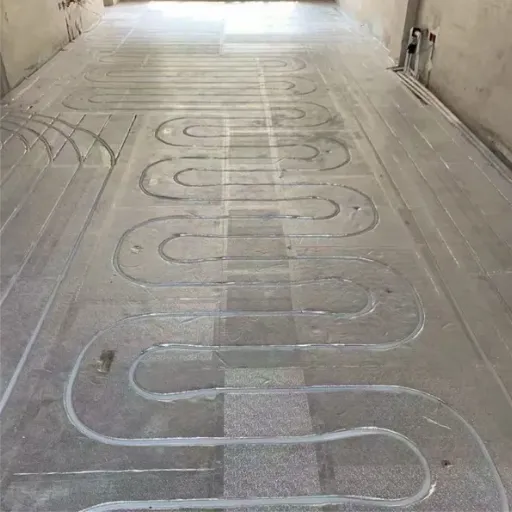
The required thickness of insulation under concrete slab depends on climate zone, building use, energy code, and soil conditions. There is no universal answer, but there are reliable design principles.
Code Minimums
ASHRAE 90.1 and IECC specify minimum insulation levels for slab-on-grade construction. These vary by climate zone and whether the slab is heated. In cold climates, R-values of 1.76-2.64 m²·K/W are common, which translates to 50-75 mm of XPS for standard grades.
Cold Storage Requirements
Freezer and cold-room slabs require much higher insulation values. Typical specifications range from 100-200 mm of XPS, often in multiple layers, to maintain the thermal envelope and prevent frost heave in the subgrade.
Edge Insulation
The perimeter of the slab loses more heat than the center. Slab edge insulation is critical and often more important than under-slab insulation for overall heat loss. Rigid edge boards should extend from the top of the slab down to the footing or below the frost line, depending on local code.
| Climate Zone | Typical Under-Slab XPS Thickness | Typical Slab Edge XPS Thickness |
|---|---|---|
| Warm climate | 25-40 mm | 25-40 mm |
| Mixed climate | 50-75 mm | 50-75 mm |
| Cold climate | 75-100 mm | 75-100 mm |
| Cold storage | 100-200 mm | 100-150 mm |
For precise calculations, a thermal model using the building's heating degree days, soil conductivity, and slab geometry will produce more accurate results than rules of thumb.
Cost Considerations and Total Cost of Ownership
Material cost for under-slab insulation is a small fraction of total slab cost, but mistakes become expensive after concrete is placed.
Material Cost
XPS generally costs more per board foot than EPS but less than high-density specialty boards. The price difference between 150 kPa and 300 kPa XPS is usually modest, often 10-20% more for the higher-strength grade.
Installation Cost
Labor to install under-slab insulation is relatively low because boards are lightweight and easy to cut. The main cost drivers are site preparation, vapor barrier installation, and protection during concrete placement.
Failure Cost
The cost of replacing failed under-slab insulation is extremely high because it usually requires slab removal or extensive interior remediation. Investing in higher compressive strength, better moisture protection, and adequate thickness during initial construction almost always costs less than failure repair.
A developer in Germany initially saved €8,000 by specifying 150 kPa XPS instead of 250 kPa XPS for a logistics warehouse. After the first year of operation, slab cracking at the loading dock required repairs costing €45,000. The higher-grade boards would have added less than 0.3% to the total slab budget.
Common Mistakes in Under-Slab Insulation
Avoiding these mistakes will prevent most under-slab insulation failures:
Underspecifying compressive strength. Standard residential-grade insulation cannot handle commercial loads. Match the board strength to the actual slab loads.
Ignoring moisture conditions. Groundwater, capillary rise, and vapor drive will degrade moisture-sensitive materials over time.
Skipping the vapor barrier. The insulation alone does not stop liquid water or soil vapor from reaching the slab.
Leaving large gaps at joints. Gaps create thermal bridges and allow soil fines to migrate upward.
Walking heavy equipment over installed boards. Construction traffic causes compression that shows up as slab irregularities.
Forgetting slab edge insulation. More heat is often lost at the perimeter than through the center of the slab.
Using non-compatible adhesives or tapes. Some sealants can chemically attack polystyrene insulation. Verify compatibility.
Failing to protect boards from UV. If boards are exposed to sunlight before concrete placement, UV can degrade the surface. Cover exposed insulation promptly.
Under-Slab Insulation Specification Checklist
Use this checklist when writing or reviewing an under-slab insulation specification:
Determine slab loads including live loads, equipment loads, and concentrated loads
Select compressive strength grade with appropriate safety factor
Calculate required R-value based on climate zone and building use
Specify insulation thickness and number of layers
Design moisture management including drainage and vapor barrier
Include slab edge insulation details
Require staggered board joints and tight edge fit
Specify protection requirements during construction
Require compatible tapes, sealants, and adhesives
Include inspection hold point before concrete placement
How DaCheng BangMei Supports Under-Slab Insulation Projects
DaCheng BangMei supplies XPS waterproof insulation boards engineered for below-grade and under-slab applications. We support contractors, developers, and specifiers with:
High compressive strength grades: 150 kPa, 200 kPa, 250 kPa, 300 kPa, 500 kPa, and 700 kPa XPS boards
Custom dimensions: Boards cut to project-specific thickness, width, and length
Moisture-resistant construction: Closed-cell XPS with low long-term water absorption
Surface options: Smooth, rough, or grooved surfaces to match vapor barrier and concrete bonding requirements
Technical consultation: U-value calculations, thickness recommendations, and condensation risk analysis
Export packaging: Palletized boards with moisture protection for sea freight
Our technical team recently supported a cold-storage distribution center in Southeast Asia that required 200 mm of XPS insulation under a 250 mm concrete slab. We supplied 300 kPa boards in custom 1200 mm by 2400 mm dimensions with staggered layering details. The assembly met the thermal target while supporting heavy rack loads without compression.
Planning an under-slab insulation project? Request a custom quote with your slab loads, climate zone, and R-value target.
Conclusion
Insulation under concrete slab is a long-term investment in building performance. The right specification combines moisture-resistant materials, adequate compressive strength, proper thickness, and careful installation. XPS remains the material of choice for most commercial, industrial, and cold-storage slabs because it balances thermal performance, load capacity, and water resistance better than alternatives.
Key takeaways:
Match compressive strength to loads. Commercial and industrial slabs need 250-700 kPa XPS, not residential-grade foam.
Manage moisture with a system. Drainage, vapor barrier, and moisture-resistant insulation work together.
Do not skip slab edge insulation. Perimeter heat loss often exceeds center-of-slab loss.
Protect insulation during construction. Traffic and equipment cause compression defects that appear in the finished slab.
Calculate total cost of ownership. Upgrading insulation is far cheaper than repairing a failed slab.
If you are specifying insulation under concrete slab for a warehouse, cold-storage facility, or commercial building, our team can review your loads and thermal targets. We will recommend the right XPS grade, thickness, and installation details to ensure the slab performs for the life of the building.
Recently Posted
-
Insulation for Metal Buildings: Complete Buyer's Guide 2026
June 24, 2026A warehouse manager in Texas watched his electricity bill climb every summer. The metal roof turned the building into a solar oven Read More
 -
Insulation Materials Comparison: How to Select the Right Type for Your Project
June 24, 2026The procurement manager stared at six quotations on her screen. Each supplier recommended a different insulation material for the Read More
 -
Thermal Conductivity of Insulation Materials: A Specifier's Guide
June 24, 2026Ahmed Hassan spent three weeks reconciling quotes for a cold storage expansion in Dubai. One supplier quoted 80 mm rubber-plastic Read More
 -
Basement Insulation Board: Complete Buyer's Guide | DaCheng BangMei
June 24, 2026A homeowner in Michigan finished their basement with standard fiberglass batts and drywall. Two winters later, the bottom plates w Read More

Contact Us
Recommended Products
-
 Eco-Friendly Aluminum Foil Foam Board for Underfloor Heating SolutionsNegotiableMOQ: 100 Pieces
 -
Rubber Plastic Insulation Board Waterproof for Industrial Thermal InsulationNegotiableMOQ: 500 Square Meters
-
Premium Soft Silica Nano Aerogel Felt Sheets for Industrial Heat InsulationNegotiableMOQ: 50 Meters
-
Customizable PVC Magnetic Door Curtain Roll for Home & Kitchen UseNegotiableMOQ: 500 Kilograms
-
XPS Waterproof Board for Underground Garage Moisture BarrierNegotiableMOQ: 50 Square Meters
-
Heavy Duty Titanium Steel Mesh Magnetic Door Curtain With Reinforced EdgesNegotiableMOQ: 10 Pieces
-
Rubber Plastic Insulation Tube for Refrigeration & Cold Storage PipelineNegotiableMOQ: 500 Square Meters
-
Durable Aluminum Dry Floor Heating Panel With High Thermal ConductivityNegotiableMOQ: 100 Pieces
-
Nano Aerogel Felt Insulation Material for Cold Protection and Energy EfficiencyNegotiableMOQ: 50 Meters
-
High-Temperature Nano Silica Aerogel Felt for Pipe Fire and Thermal InsulationNegotiableMOQ: 50 Meters
-
Insulated PVC Magnetic Door Curtain for Thermal Insulation in Bedroom & KitchenNegotiableMOQ: 500 Kilograms
-
Professional Aluminum Foil Foam Board for Dry Underfloor Heating SystemsNegotiableMOQ: 100 Pieces
-
Aluminum Underfloor Heating Module for Commercial and Residential UseNegotiableMOQ: 100 Pieces
-
XPS Waterproof Board 10mm Thickness for Roofing InsulationNegotiableMOQ: 50 Square Meters
-
Custom Size Titanium Steel Mesh Magnetic Door Curtain for Warehouse Pest ControlNegotiableMOQ: 10 Pieces
-
Flame Retardant Thermal Insulation Sponge for Rubber & Plastic Pipes - Fireproof Factory DirectNegotiableMOQ: 500 Square Meters
-
Cold Insulation Rubber Plastic Board for HVAC and Industrial Pipeline ApplicationsNegotiableMOQ: 500 Square Meters
-
20mm XPS Thermal Insulation Panel for Dry Underfloor Heating SystemsNegotiableMOQ: 100 Pieces
-
High Temperature Resistant Foam Insulation Tube for Air Conditioner DuctsNegotiableMOQ: 500 Meters
-
XPS Tile Backer Board Waterproof Insulation for Wall & BathroomNegotiableMOQ: 500 Square Meters