
 Business License

Waterproof Backer Board for Tile: Why XPS Outperforms Cement Board in Wet Areas
In March 2025, a contractor in Southeast Asia removed the tile walls from a hotel bathroom renovation completed just 18 months earlier. The cement backer board behind the marble-look porcelain was saturated with moisture. Black mold had spread through the wall cavity.
The "water-resistant" label on the original board had lulled the project team into a false sense of security. The remediation cost exceeded the original installation budget by 40%.
If you have ever wondered whether your tile backer board will truly hold up in showers, commercial kitchens, or pool surrounds, you are not alone. The choice of substrate is one of the most consequential yet overlooked decisions in wet-area tile installation. Get it right, and the assembly lasts decades. Get it wrong, and you are looking at hidden moisture damage, mold remediation, and expensive rework.
This guide explains what a waterproof backer board for tile actually is, why traditional cement board often disappoints in truly wet environments, and why extruded polystyrene (XPS) boards are increasingly specified by contractors who understand the difference between "water-resistant" and "waterproof." You will also learn the key specifications to evaluate, installation best practices, and how to select the right board thickness and compressive strength for your project.
What Is a Waterproof Backer Board for Tile?
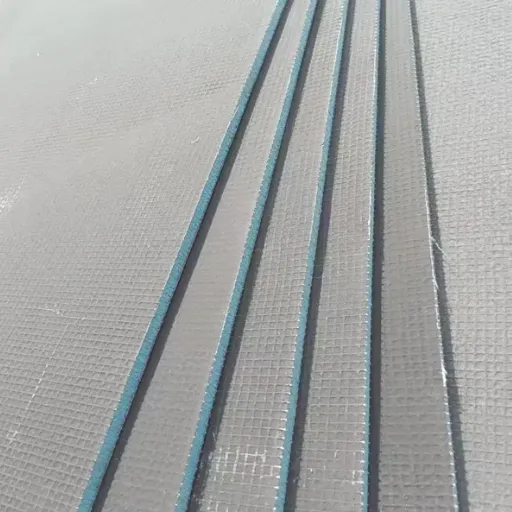
A waterproof backer board for tile is a rigid substrate installed behind ceramic, porcelain, or natural stone tile in areas exposed to water. Unlike standard drywall or plywood, it is engineered to resist moisture penetration, support the weight of tile and grout, and provide a stable bonding surface for thin-set mortar.
True waterproof backer boards fall into three main categories:
Cementitious boards (fiber-cement or cement-coated mesh): These are water-resistant but not inherently waterproof. They absorb moisture over time and require a separate liquid or sheet membrane to achieve full waterproofing.
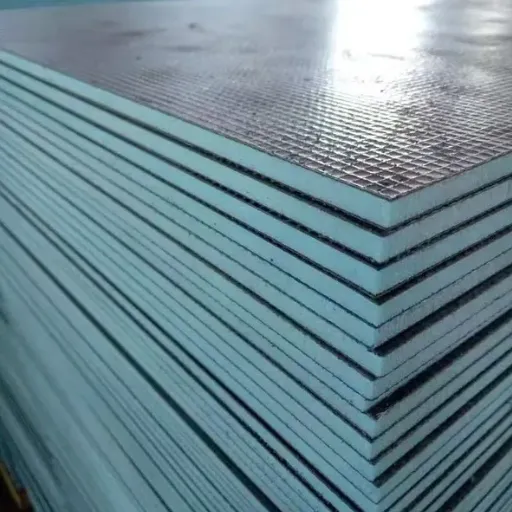
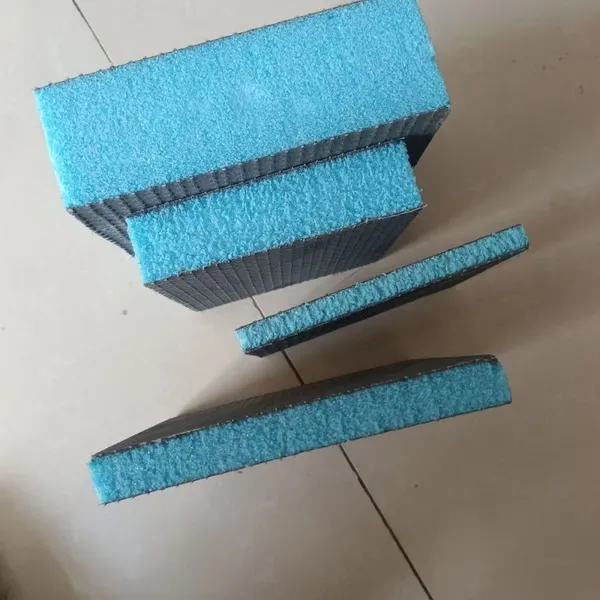
Foam-core boards (XPS or polyurethane core with fleece or cement facing): These are inherently waterproof because the closed-cell foam core does not absorb water. Many integrate a waterproof bonding layer.
Glass-mat gypsum boards: Water-resistant gypsum panels faced with fiberglass. Suitable for intermittent moisture but not continuous water exposure.
For commercial bathrooms, shower enclosures, pool decks, and commercial kitchens, only a truly waterproof substrate, or a water-resistant substrate paired with a redundant membrane system, meets the performance standard that protects the building envelope.
Key distinction: "Water-resistant" means the material tolerates moisture without immediate degradation. "Waterproof" means the material itself blocks water penetration. In wet-area tilework, that distinction can determine whether a wall assembly lasts 5 years or 25 years.
Why Cement Board Falls Short in Wet Areas
Cement backer board has been the default choice for tile contractors for decades, and for good reason. It is non-combustible, dimensionally stable, and readily available. However, labeling it "waterproof" is a common and costly misconception.
The Absorption Problem
Standard cement board consists of cement and reinforcing fibers formed into a sheet. While the cement matrix resists water, the board is porous. In a 24-hour immersion test, cement board can absorb 15-20% of its weight in water. In a shower wall application, that means the substrate behind your tile is acting like a sponge during every use.
Over time, repeated wet-dry cycles cause several problems:
Mold growth: Trapped moisture in the wall cavity creates ideal conditions for mold behind supposedly "water-resistant" surfaces.
Tile delamination: As cement board absorbs moisture, it expands slightly. Repeated cycling stresses the thin-set bond and can cause tiles to loosen or crack.
Efflorescence: Water migrating through cement board dissolves soluble salts and deposits them on the tile surface, creating unsightly white stains.
The Weight and Handling Burden
A standard 12.5 mm cement backer board weighs approximately 17-18 kg per square meter. For a large commercial shower installation, that adds significant dead load to walls and increases handling fatigue for installation crews. It also requires specialized cutting tools, generates silica dust, and demands more fasteners per square meter than lighter alternatives.
When Viktor, a project manager for a resort renovation in Bali, switched from cement board to XPS waterproof backer boards for 240 bathroom units, his crew completed tile backing 30% faster. The boards cut with a standard utility knife, produced no silica dust, and required fewer fasteners. More importantly, the resort's facilities team reported zero moisture-related warranty calls in the first 12 months, compared to three remediation events in the previous phase that used cement board with a liquid membrane.
XPS Extruded Polystyrene: The Waterproof Tile Backer Solution
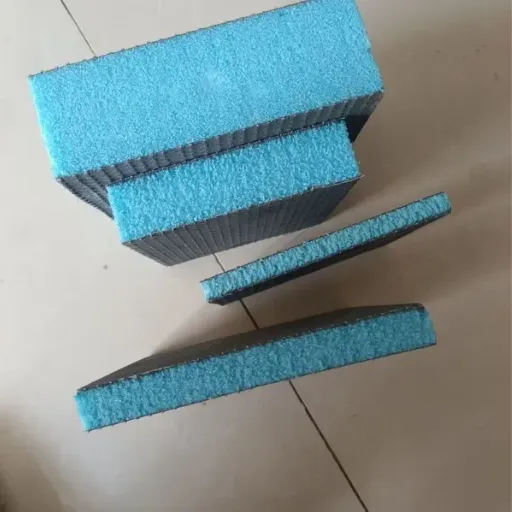
Extruded polystyrene (XPS) insulation boards have long been specified for foundation walls, roof insulation, and beneath slab applications because of their closed-cell structure and near-zero water absorption. Those same properties make XPS an exceptional waterproof backer board for tile when manufactured to the appropriate compressive strength and surface finish specifications.
Why XPS Works as a Tile Backer
XPS is produced through an extrusion process that creates a homogeneous closed-cell structure. Each cell is sealed, which means:
Water absorption: Less than 0.3% by volume over 28 days, compared to 15-20% for cement board. Water simply does not penetrate the core.
Dimensional stability: XPS does not swell, warp, or degrade when exposed to continuous moisture or freeze-thaw cycles.
Thermal insulation: XPS adds R-value to the wall assembly, reducing thermal bridging and condensation risk in climate-controlled wet areas.
Lightweight: At approximately 2.5-4.0 kg per square meter depending on density, XPS backer boards reduce structural load and handling strain.
DaCheng BangMei XPS Board Specifications for Tile Backing Applications
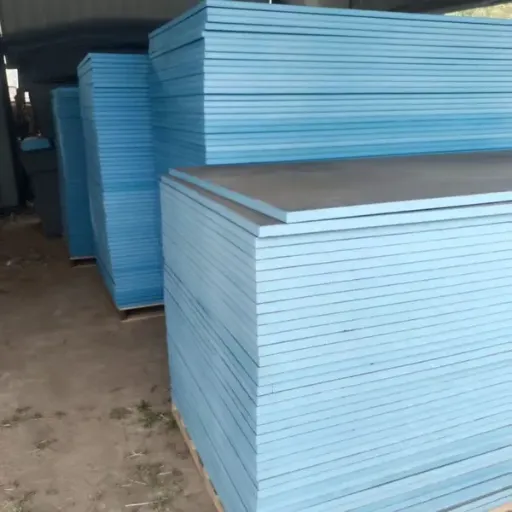
At DaCheng BangMei, operating under Huaneng Zhongtian's 40-year manufacturing base, our XPS extruded polystyrene boards are engineered with the compressive strength and dimensional tolerance required for tile backing in commercial and residential wet areas.
| Property | XPS Board Value | Cement Board (Typical) |
|---|---|---|
| Density | 35-45 kg/m³ | 1,100-1,300 kg/m³ |
| Compressive strength | 150-700 kPa | N/A (rigid but brittle) |
| Water absorption (28 days) | <0.3% by volume | 15-20% by weight |
| Thermal conductivity | 0.028-0.034 W/(m·K) | ~0.45 W/(m·K) |
| Weight per m² (20 mm) | ~2.8 kg | ~17 kg |
| Dimensional stability | <2% change | Swells with moisture |
| Fire rating | Class B1/B2 (customizable) | Non-combustible |
For tile backing, we recommend XPS boards with a minimum compressive strength of 250 kPa and a facing treatment that ensures proper thin-set mortar adhesion. Custom thicknesses from 6 mm to 100 mm are available, with 20-30 mm being the most common specification for wall tile applications.
Waterproofing Integration
One of the most significant advantages of XPS backer boards is that the board itself is the waterproofing layer. Unlike cement board, which requires a separate liquid-applied or sheet membrane to achieve true waterproofing, an XPS core with an appropriate fleece or cementitious facing creates a substrate that does not need redundancy to perform.
That said, for the highest-risk applications (steam showers, commercial pools, exterior facades in wet climates), best practice still includes sealing joints with waterproof tape and polymer-modified mortar. The difference is that with XPS, the substrate itself is not the failure point if the secondary seal is compromised.
How to Choose the Right Waterproof Backer Board for Your Project
Not every XPS board is suitable for tile backing, and not every tile application demands the same specification. Use this decision framework to match the board to the job.
Step 1: Assess the Moisture Exposure Level
Intermittent exposure (powder room vanity backsplash, residential kitchen): Water-resistant gypsum or standard XPS with basic facing is acceptable.
Regular exposure (residential shower, commercial restroom): XPS backer board with fleece or mesh facing rated for direct thin-set bonding.
Continuous immersion or high-pressure exposure (swimming pool, steam room, commercial kitchen wash-down areas): High-density XPS (minimum 300 kPa compressive strength) with fully sealed joints and redundant membrane detailing.
Step 2: Evaluate Load and Substrate Requirements
Wall applications: 20-30 mm XPS board with 150-250 kPa compressive strength is typically sufficient.
Floor applications: 30-50 mm XPS with 300-700 kPa compressive strength to support traffic loads without compression.
Countertop or horizontal surfaces: Minimum 300 kPa compressive strength to prevent flexural stress on grout joints.
Step 3: Verify Tile Compatibility
Large-format tiles (greater than 600 mm on any side) and natural stone impose higher bond and flexural demands on the substrate. For these applications, specify XPS boards with a cementitious or polymer-modified facing that is explicitly rated for large-format tile (LFT) mortar bonding. Standard fleece-faced boards work well for ceramic and porcelain mosaics up to 300 mm.
Want to see how XPS boards perform in real wet-area installations?
Browse our XPS extruded polystyrene product specifications to review compressive strength options and custom thickness availability for your tile backing project.
Installation Best Practices for XPS Waterproof Backer Boards
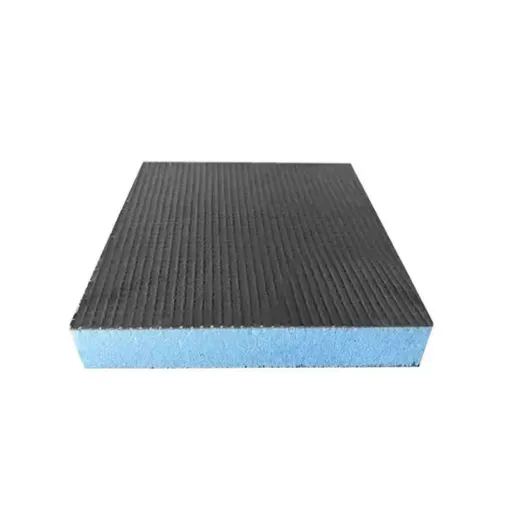
Even the best waterproof backer board for tile will fail if installed incorrectly. Follow these guidelines to ensure a lasting assembly.
Surface Preparation
The substrate behind the backer board (stud framing, concrete block, or existing wall) must be plumb, clean, and structurally sound. XPS boards can be installed on wood or metal studs spaced at standard 400 or 600 mm centers.
Cutting and Fitting
XPS boards cut cleanly with a fine-tooth saw or sharp utility knife. Unlike cement board, there is no silica dust hazard, so respiratory protection is not required for cutting operations. Cut openings for plumbing fixtures before adhering the board to avoid on-site dust and debris.
Fastening
For stud wall applications:
Apply a continuous bead of polymer-modified thin-set mortar to the back of the XPS board using a notched trowel.
Press the board firmly against the studs or substrate.
Secure with corrosion-resistant screws and washers designed for foam-core boards. Space fasteners at approximately 200 mm on center along studs.
Do not overdrive fasteners. The washer should sit flush with the board surface without crushing the foam core.
Joint Treatment
This is the critical step that separates professional installations from callbacks.
Fill all board joints with polymer-modified mortar.
Embed alkaline-resistant fiberglass mesh tape (minimum 50 mm width) into the mortar over every joint.
At corners and plumbing penetrations, use pre-formed waterproof sealing tape or liquid-applied membrane for redundancy.
Allow joint treatment to cure per mortar manufacturer specifications before setting tile.
Tile Setting
Use a polymer-modified thin-set mortar that is rated for the specific tile type (ceramic, porcelain, or natural stone) and compatible with the board facing material. For large-format tiles, use a medium-bed mortar to accommodate substrate tolerance.
Cost Analysis: XPS vs. Cement Board vs. Foam Board
Procurement teams often evaluate waterproof backer boards on material cost alone, but the true cost of ownership includes installation labor, accessory materials, and long-term performance.
| Cost Factor | XPS Backer Board | Cement Backer Board | Generic Foam Board |
|---|---|---|---|
| Material cost per m² | Moderate | Low | Low to moderate |
| Labor cost per m² | Lower (fast cutting, light weight) | Higher (special tools, more fasteners) | Lower |
| Waterproofing membrane | Often not required | Required (adds $8-15/m²) | Varies by product |
| Fasteners and washers | Fewer, corrosion-resistant | More, specialized | Standard |
| Transport cost per m² | Lower (lightweight) | Higher (heavy) | Lower |
| 10-year maintenance risk | Very low | Moderate to high | Moderate |
Bottom line: XPS backer boards often achieve cost parity or savings when the total installed cost is calculated, particularly in commercial projects where labor rates are high and waterproofing membranes add significant material expense to cement board installations.
When the facilities team at a medical clinic in Kuala Lumpur audited their 10-year maintenance records, they discovered that bathrooms built with cement backer board and liquid membrane averaged $45 per square meter in waterproofing-related repairs over the decade. Clinics renovated with XPS waterproof backer boards showed zero moisture-related repair costs in the same period. For a 200 m² facility, that difference translated to $9,000 in avoided maintenance.
Common Mistakes to Avoid with Waterproof Backer Boards
Even experienced contractors make these errors. Avoid them to protect your reputation and your client's investment.
Mistake 1: Using "Water-Resistant" Board Without a Membrane
Green board, glass-mat gypsum, and standard cement board are water-resistant, not waterproof. In shower installations, they must be paired with a redundant waterproofing system. Treating them as standalone waterproofing is a recipe for wall cavity damage.
Mistake 2: Ignoring Compressive Strength Ratings
Not all foam boards support tile loads. EPS (expanded polystyrene) bead board, commonly used for packaging and craft applications, has insufficient compressive strength for tile backing and will compress under mortar and tile weight. Always verify that the board is XPS extruded polystyrene with a published compressive strength of at least 150 kPa for walls and 300 kPa for floors.
Mistake 3: Skipping Joint Reinforcement
The board itself may be waterproof, but the joints between boards are the weak link. Every seam must be taped and mudded with appropriate mesh and polymer mortar. Corner details around tubs, showers, and windows require special attention.
Mistake 4: Using the Wrong Mortar
Standard unmodified thin-set does not bond reliably to all XPS facing materials. Verify compatibility between your thin-set mortar and the board facing (fleece, cementitious, or polymer-modified). When in doubt, use a premium polymer-modified mortar rated for exterior or wet-area use.
XPS Waterproof Backer Boards in Commercial and Industrial Applications
While residential bathrooms are the most common application, XPS waterproof backer boards are increasingly specified in demanding commercial environments.
Commercial Kitchens and Food Processing
Health codes in many jurisdictions require washable, impervious wall surfaces in food preparation areas. XPS backer boards behind ceramic tile provide a wall assembly that withstands daily high-pressure wash-down without water penetration into wall cavities. The thermal insulation value also helps maintain temperature control in refrigerated prep areas.
Healthcare and Laboratory Facilities
Infection control standards demand wall surfaces that do not harbor moisture or microbial growth. XPS-backed tile walls, when properly sealed at joints, eliminate the hidden moisture reservoirs that can develop behind cement board in high-humidity clinical environments.
Exterior Facades and Balconies
Exterior tile installations on balconies, terraces, and facade cladding systems in wet climates demand a substrate that withstands rain, freeze-thaw cycles, and thermal movement. XPS boards with adequate compressive strength and UV-stable facing provide a stable, waterproof substrate that outperforms cement board in exterior exposure.
Ready to specify XPS for your wet-area tile project? Request a custom quote with your project dimensions, tile type, and exposure conditions. Our technical team will recommend the optimal board thickness, density, and facing specification.
Conclusion
Choosing the right waterproof backer board for tile is not merely a product decision. It is a risk management decision that affects installation efficiency, long-term building health, and maintenance liability for years after the tile is set.
Cement backer board has earned its place in construction history, but it is not truly waterproof. In wet areas where moisture is constant and failure is expensive, XPS extruded polystyrene boards offer a lighter, faster, and genuinely waterproof alternative that eliminates the hidden moisture absorption problems of cementitious substrates.
Key takeaways:
"Water-resistant" and "waterproof" are not interchangeable. Cement board is the former. XPS is the latter.
XPS boards reduce installation labor, structural load, and long-term moisture risk compared to cement board.
Always match compressive strength and facing type to the application: 150-250 kPa for walls, 300+ kPa for floors and countertops.
Joint treatment is critical. Even waterproof boards fail if seams are not properly sealed.
Total installed cost often favors XPS when labor and waterproofing membrane costs are included.
At DaCheng BangMei, backed by Huaneng Zhongtian's 225,000 m² manufacturing facility and 40 years of building materials expertise, we produce XPS extruded polystyrene boards with the compressive strength, dimensional stability, and closed-cell waterproof performance that wet-area tile installations demand. Custom dimensions, densities from 150 kPa to 700 kPa, and export packing for international projects are all available from our factory-direct supply chain.
Recently Posted
-
Insulation for Metal Buildings: Complete Buyer's Guide 2026
June 24, 2026A warehouse manager in Texas watched his electricity bill climb every summer. The metal roof turned the building into a solar oven Read More
 -
Insulation Materials Comparison: How to Select the Right Type for Your Project
June 24, 2026The procurement manager stared at six quotations on her screen. Each supplier recommended a different insulation material for the Read More
 -
Thermal Conductivity of Insulation Materials: A Specifier's Guide
June 24, 2026Ahmed Hassan spent three weeks reconciling quotes for a cold storage expansion in Dubai. One supplier quoted 80 mm rubber-plastic Read More
 -
Basement Insulation Board: Complete Buyer's Guide | DaCheng BangMei
June 24, 2026A homeowner in Michigan finished their basement with standard fiberglass batts and drywall. Two winters later, the bottom plates w Read More

Contact Us
Recommended Products
-
 Eco-Friendly Aluminum Foil Foam Board for Underfloor Heating SolutionsNegotiableMOQ: 100 Pieces
 -
Rubber Plastic Insulation Board Waterproof for Industrial Thermal InsulationNegotiableMOQ: 500 Square Meters
-
Premium Soft Silica Nano Aerogel Felt Sheets for Industrial Heat InsulationNegotiableMOQ: 50 Meters
-
Customizable PVC Magnetic Door Curtain Roll for Home & Kitchen UseNegotiableMOQ: 500 Kilograms
-
XPS Waterproof Board for Underground Garage Moisture BarrierNegotiableMOQ: 50 Square Meters
-
Heavy Duty Titanium Steel Mesh Magnetic Door Curtain With Reinforced EdgesNegotiableMOQ: 10 Pieces
-
Rubber Plastic Insulation Tube for Refrigeration & Cold Storage PipelineNegotiableMOQ: 500 Square Meters
-
Durable Aluminum Dry Floor Heating Panel With High Thermal ConductivityNegotiableMOQ: 100 Pieces
-
Nano Aerogel Felt Insulation Material for Cold Protection and Energy EfficiencyNegotiableMOQ: 50 Meters
-
High-Temperature Nano Silica Aerogel Felt for Pipe Fire and Thermal InsulationNegotiableMOQ: 50 Meters
-
Insulated PVC Magnetic Door Curtain for Thermal Insulation in Bedroom & KitchenNegotiableMOQ: 500 Kilograms
-
Professional Aluminum Foil Foam Board for Dry Underfloor Heating SystemsNegotiableMOQ: 100 Pieces
-
Aluminum Underfloor Heating Module for Commercial and Residential UseNegotiableMOQ: 100 Pieces
-
XPS Waterproof Board 10mm Thickness for Roofing InsulationNegotiableMOQ: 50 Square Meters
-
Custom Size Titanium Steel Mesh Magnetic Door Curtain for Warehouse Pest ControlNegotiableMOQ: 10 Pieces
-
Flame Retardant Thermal Insulation Sponge for Rubber & Plastic Pipes - Fireproof Factory DirectNegotiableMOQ: 500 Square Meters
-
Cold Insulation Rubber Plastic Board for HVAC and Industrial Pipeline ApplicationsNegotiableMOQ: 500 Square Meters
-
20mm XPS Thermal Insulation Panel for Dry Underfloor Heating SystemsNegotiableMOQ: 100 Pieces
-
High Temperature Resistant Foam Insulation Tube for Air Conditioner DuctsNegotiableMOQ: 500 Meters
-
XPS Tile Backer Board Waterproof Insulation for Wall & BathroomNegotiableMOQ: 500 Square Meters