
 Business License

Foam Tile Backer Board: How to Choose the Right Foam Substrate for Wet-Area Tilework
In early 2024, a renovation crew in Miami peeled back the tiles in a luxury condominium shower. The foam tile backer board behind the porcelain looked intact. But when they pressed a moisture meter against the surface, the reading told a different story. The board's open-cell structure had wicked water into the wall cavity for three years. The studs behind it were rotting. The insurance claim hit $48,000. The contractor had chosen a foam backer board marketed as "water-resistant" that was actually an open-cell product never intended for continuous water exposure.
This mistake is more common than most contractors expect. Not every foam backer board performs the same way when it sits behind tile in a shower, pool surround, or commercial kitchen. The cell structure, facing material, and density all determine whether the substrate survives its design life or becomes the weak link in the assembly.
You are right to research this carefully. Selecting the wrong foam tile backer board for a wet zone can cost tens of thousands in hidden moisture damage and rework. In this guide, you will learn which foam types are truly waterproof, which are merely water-repellent, and how to match the right foam tile backer board to each application.
Here is what we will cover:
What makes a foam tile backer board waterproof (and why cell structure matters)
Three main types of foam backer boards with performance data
How foam backer boards compare to cement board and gypsum alternatives
Application-specific guidance for showers, pool decks, floors, and exteriors
Installation best practices that protect your warranty
At DaCheng BangMei, backed by Huaneng Zhongtian's 40 years of manufacturing expertise, we produce XPS extruded polystyrene boards engineered for tile backing, foundation insulation, and moisture-exposed building assemblies. This guide draws on our technical team's experience supplying closed-cell foam substrates to contractors and distributors across 35+ countries.
Need help selecting a foam backer board for a wet-area tile project? Speak with our technical engineers for complimentary specification review and compressive strength data.
What Is a Foam Tile Backer Board?
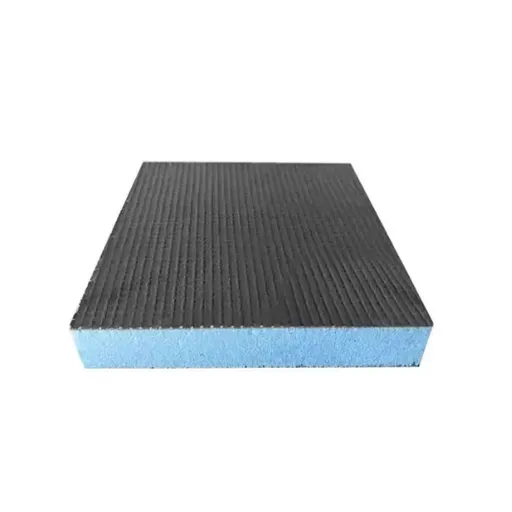
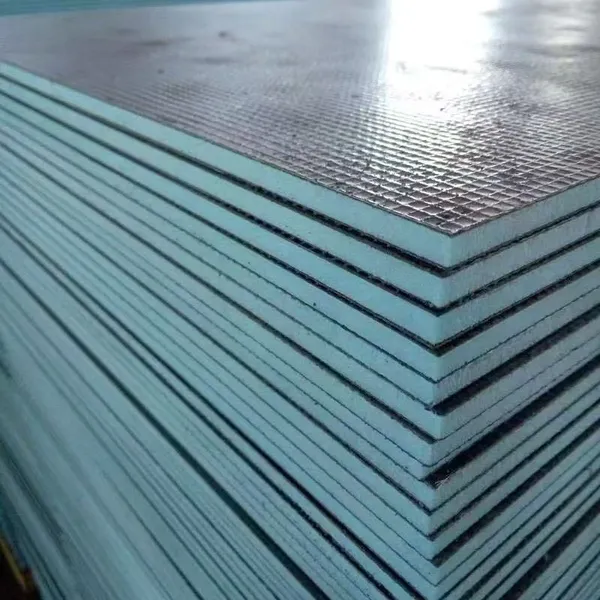
A foam tile backer board is a rigid or semi-rigid substrate made from synthetic foam, installed beneath ceramic, porcelain, or natural stone tile in areas exposed to water. Unlike traditional cement backer board or water-resistant drywall, foam backer boards use a closed-cell or composite foam core that resists moisture absorption while providing a stable bonding surface for thin-set mortar.
Foam backer boards fall into three main categories based on their core material:
XPS foam backer boards: Extruded polystyrene with a closed-cell structure, often faced with a cementitious or polymer-modified coating to improve tile bond. These are the most waterproof option available.
Polyurethane (PUR/PIR) foam backer boards: Sprayed or molded foam cores with fiberglass or polymer facings. Lower thermal conductivity than XPS but can degrade under sustained moisture in some formulations.
Composite foam backer boards: A hybrid construction using a foam core laminated with cementitious boards or glass-fiber mats on both faces. These aim to combine the lightness of foam with the familiarity of cement board installation.
For wet areas, only boards with a true closed-cell core should be specified. Learn more about building insulation types and how moisture resistance varies by foam structure.
Closed-Cell vs Open-Cell Foam for Tile Backing
The difference between closed-cell and open-cell foam is not a minor technical detail. It is the single property that determines whether the board survives moisture exposure.
Closed-cell foam: Each cell is sealed. Water cannot penetrate the core. XPS extruded polystyrene is the primary example. Water absorption is typically less than 0.5% by volume.
Open-cell foam: Cells are interconnected. Water wicks through the material like a sponge. Some polyethylene and polyurethane boards use open-cell formulations that should never be installed behind tile in wet areas.
Always verify the closed-cell content before specifying a foam tile backer board for showers, pool decks, or exterior facades.
XPS Foam: The Leading Foam Tile Backer Board
For wet-area tilework, XPS extruded polystyrene is the most widely specified foam tile backer board globally. Its closed-cell extruded structure gives it properties that no other foam backer board can match for moisture-exposed applications.
Why XPS Dominates Wet-Area Tile Backing
XPS insulation boards absorb less than 0.5% water by volume even after years of exposure. The extrusion process creates a continuous network of tiny sealed cells that block liquid water penetration. Unlike open-cell alternatives, XPS does not swell, warp, or lose compressive strength when wet.
For shower enclosures, where the substrate sits in constant contact with water vapor and occasional direct spray, XPS is the only foam backer board that tolerates this condition without degradation. No alternative foam maintains its dimensional stability and bond strength under sustained moisture exposure.
XPS Foam Tile Backer Board Specifications
| Property | Standard XPS Backer | High-Density XPS Backer |
|---|---|---|
| Density | 35-45 kg/m3 | 45-60 kg/m3 |
| Compressive strength | 150-300 kPa | 300-700 kPa |
| Water absorption (by volume) | Less than 0.5% | Less than 0.3% |
| Thermal conductivity | 0.028-0.034 W/(m*K) | 0.028-0.030 W/(m*K) |
| Weight per m2 (20 mm) | 2.5-3.5 kg | 3.5-5.0 kg |
| Dimensional stability | Less than 2% change | Less than 1.5% change |
| Service temperature | -50C to +75C | -50C to +75C |
When XPS Saved a Hotel Renovation
When Marco Silva managed the bathroom renovation for a 180-room hotel in Lisbon in 2023, his first specification used 12 mm cement backer board with a liquid waterproofing membrane. The membrane application was labor-intensive, and three units failed flood testing due to pinholes in the coating. He switched to 20 mm XPS foam tile backer boards with an integral waterproof facing. The boards required no additional membrane, cut installation time by 35%, and every unit passed flood testing on the first attempt. The project finished two weeks ahead of schedule, and the hotel reported zero moisture warranty calls in the first 18 months.
Polyurethane and Polyisocyanurate Foam Backer Boards
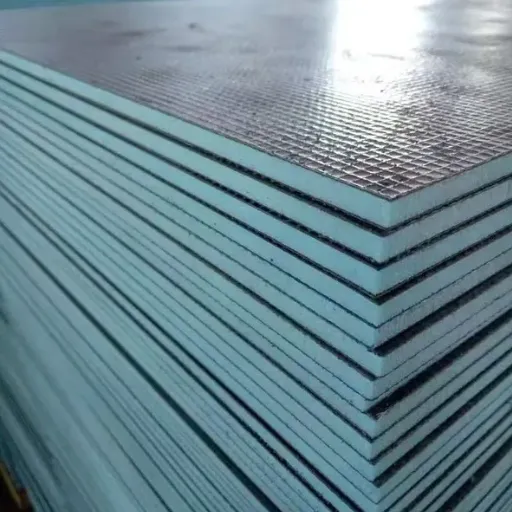
While XPS dominates rigid foam backer applications, polyurethane (PUR) and polyisocyanurate (PIR) boards offer an alternative for specific use cases. These materials are produced by reacting isocyanates with polyols, creating a foam core that can be faced with fiberglass, aluminum foil, or cementitious coatings.
Where PUR and PIR Fit
Polyurethane foam backer boards typically offer lower thermal conductivity than XPS, usually in the range of 0.022-0.028 W/(m*K). This makes them attractive for applications where thermal insulation value is a secondary benefit of the tile substrate, such as exterior facade systems or heated floor assemblies.
However, not all PUR and PIR formulations are suitable for wet areas. Some open-cell or semi-rigid polyurethane boards absorb moisture over time, leading to core degradation and delamination of the tile bond. Only closed-cell PUR or PIR boards with verified water absorption data should be considered for shower or pool applications.
PUR Foam Backer Performance
| Property | Closed-Cell PUR | Closed-Cell PIR |
|---|---|---|
| Density | 30-50 kg/m3 | 30-45 kg/m3 |
| Thermal conductivity | 0.022-0.028 W/(m*K) | 0.022-0.026 W/(m*K) |
| Water absorption | 2-5% by volume (varies) | 1-3% by volume (varies) |
| Compressive strength | 100-250 kPa | 120-300 kPa |
| Service temperature | -30C to +100C | -30C to +120C |
| Fire rating | Class B2-B3 (varies) | Class B1-B2 (varies) |
For applications requiring the lowest thermal conductivity in dry conditions, PIR is an excellent choice. For sustained moisture contact, XPS remains the more reliable foam tile backer board.
Composite Foam Backer Boards
Composite foam backer boards combine a lightweight foam core with cementitious or fiberglass facings on both sides. The goal is to deliver the handling ease and waterproof core of foam with the tile-bonding familiarity and surface hardness of cement board.
Construction and Performance
A typical composite board uses a 20-40 mm XPS or polyurethane core laminated with 3-5 mm cementitious boards or glass-fiber reinforced mats. The facing provides a rough surface that accepts thin-set mortar directly, while the foam core reduces weight and blocks moisture.
Composite boards can be a good choice for contractors transitioning from cement board who want a lighter material without changing their installation workflow. However, the lamination layer is a potential failure point. If water penetrates the facing at fastener holes or cut edges, it can become trapped between the facing and the foam core.
| Property | Composite Foam-Cement | Composite Foam-Glass |
|---|---|---|
| Total thickness | 20-50 mm | 20-40 mm |
| Weight per m2 | 6-10 kg | 4-7 kg |
| Water absorption (core) | Less than 0.5% | Less than 0.5% |
| Bond strength to tile | High (cement facing) | Moderate (mat facing) |
| Fastener requirement | Standard screws | Standard screws |
| Cutting method | Score and snap or saw | Utility knife or saw |
Foam Tile Backer Board vs Cement Board: A Direct Comparison
Many contractors still default to cement backer board out of habit. The table below shows why a foam tile backer board, specifically XPS, outperforms cement board in wet-area applications.
| Property | XPS Foam Backer | Cement Backer Board |
|---|---|---|
| Water absorption | Less than 0.5% by volume | 15-20% by weight |
| Weight per m2 (20 mm) | 2.5-3.5 kg | 17-18 kg |
| Compressive strength | 150-700 kPa | Brittle, no rating |
| Cutting method | Utility knife | Carbide blade or shears |
| Dust during cutting | None | Silica dust hazard |
| Fastener requirement | Fewer per m2 | More per m2 |
| Additional waterproofing | Often not required | Membrane always required |
| Thermal insulation | Yes (R-value added) | No (thermal bridge) |
The Weight Advantage
On a large commercial project, the weight difference between foam and cement board is significant. For a 500 m2 hotel wet area, cement backer board adds approximately 7,500 kg of dead load to the structure. XPS foam tile backer board adds approximately 1,500 kg. That 6,000 kg difference reduces structural load, simplifies handling, and speeds installation.
The Waterproofing Advantage
Cement board is not waterproof. It is water-resistant at best. To make a cement board assembly waterproof, contractors must apply a liquid or sheet membrane over the entire surface, including seams and fastener penetrations. This adds labor, material cost, and potential failure points.
A closed-cell XPS foam tile backer board is inherently waterproof. The core does not absorb water. Many XPS backer boards also feature an integral waterproof facing that eliminates the need for a separate membrane in residential and light commercial applications.
Applications Where Foam Tile Backer Board Excels
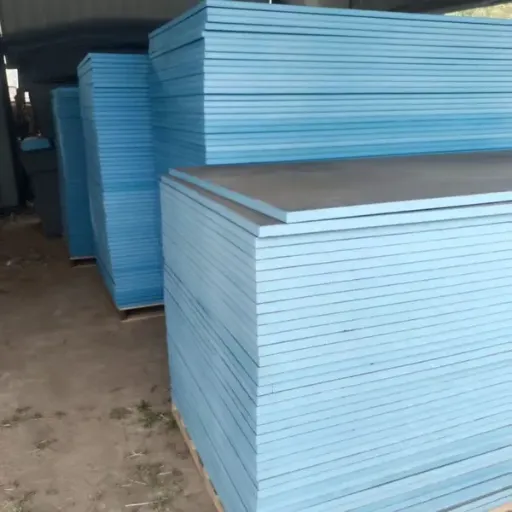
In practice, specifying the wrong substrate for a moisture-exposed tile installation is one of the most common and costly errors in wet-area construction. These are the zones where foam tile backer board selection matters most.
Shower Enclosures and Steam Rooms
Shower walls face the most concentrated water exposure of any interior building zone. Daily direct spray, saturated air, and temperature cycling create conditions where only a closed-cell foam backer board should be used. XPS boards with a cementitious or polymer-modified facing provide a waterproof substrate that accepts tile bond directly.
For steam rooms, the substrate must tolerate both moisture and elevated temperature. XPS is rated to +75C, which covers residential steam room conditions. For commercial steam rooms operating above this threshold, specialized high-temperature backer boards should be specified.
Pool Surrounds and Pool Decks
Outdoor pool areas expose the substrate to chlorine-laden water, UV radiation, and freeze-thaw cycling. XPS foam tile backer boards tolerate all three conditions when properly installed. The closed-cell structure prevents water from entering the core even if the grout or tile surface cracks.
Commercial Kitchens and Food Processing Areas
Commercial kitchens require substrates that resist grease, hot water, and aggressive cleaning chemicals. Foam backer boards with appropriate facings meet these demands while providing a thermal break that reduces condensation on cold walls.
Exterior Facades and Balconies
Exterior tile installations on balconies and building facades face driving rain, temperature extremes, and structural movement. High-density XPS foam tile backer boards (300-700 kPa compressive strength) provide the structural support and moisture resistance required for these demanding applications.
How to Install Foam Tile Backer Board
Even the best foam tile backer board can fail if installed poorly. Follow these guidelines to achieve the full performance your specification demands.
Substrate Preparation
The wall or floor surface must be clean, dry, and structurally sound. Remove any loose material, oil, or debris. For floor applications, verify that the subfloor meets the deflection requirements for the tile size and type being installed.
Cutting and Fitting
XPS foam backer boards cut easily with a standard utility knife or fine-tooth saw. Measure carefully and cut boards to fit tightly against walls, pipes, and fixtures. Leave a 3-5 mm expansion gap at perimeter walls and between boards where specified by the manufacturer.
Fastening
Use corrosion-resistant screws or staples designed for foam backer boards. Space fasteners according to manufacturer guidelines, typically every 200-300 mm along edges and 300 mm in the field. Do not over-tighten, as this can compress the foam and create a depression in the surface.
Sealing Joints and Penetrations
Seal all board joints with manufacturer-recommended waterproof tape or sealant. Pay special attention to corners, pipe penetrations, and changes in plane. These are the most common failure points in wet-area tile assemblies.
Tile Bonding
Apply a polymer-modified thin-set mortar suitable for foam substrates. Use a notched trowel to achieve full coverage. Press tiles firmly into the mortar and check for full contact by occasionally lifting a tile to verify coverage.
Frequently Asked Questions About Foam Tile Backer Board
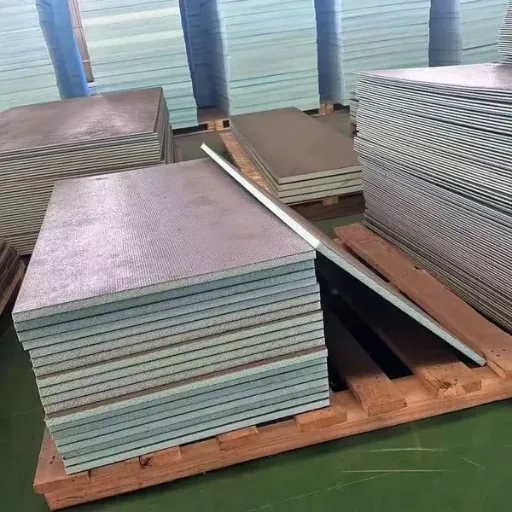
What Is the Best Foam Tile Backer Board for Showers?
XPS extruded polystyrene is the best foam tile backer board for shower enclosures and steam rooms. Its closed-cell structure absorbs less than 0.5% water by volume, it does not support mold growth, and it maintains dimensional stability under continuous moisture exposure. Look for boards with a cementitious or polymer-modified facing for optimal tile bond.
Is Foam Backer Board Better Than Cement Board?
For wet-area applications, a closed-cell foam tile backer board outperforms cement board in several key ways. It is significantly lighter, easier to cut, produces no silica dust, absorbs virtually no water, and often requires no additional waterproofing membrane. However, cement board may still be preferred for high-temperature applications or where non-combustible substrates are required by code.
Can I Use XPS Insulation Board as a Tile Backer?
Standard XPS insulation boards can be used as tile backers if they meet the minimum compressive strength and surface finish requirements for tile bonding. Boards with a density of 35-45 kg/m3 and compressive strength of 150-300 kPa are suitable for wall applications. For floor applications, specify high-density boards with 300-700 kPa compressive strength to prevent compression under tile and grout loads.
Do Foam Backer Boards Need a Waterproof Membrane?
Closed-cell XPS foam tile backer boards are inherently waterproof and often do not require an additional membrane in residential and light commercial applications. However, many building codes and warranty programs still require a redundant waterproofing system at seams, corners, and penetrations. Always verify local code requirements and manufacturer warranty conditions before omitting a membrane.
How Thick Should a Foam Tile Backer Board Be?
Thickness depends on the application and the tile size. For shower walls, 10-20 mm is typical. For floors, 20-30 mm provides adequate compressive strength and deflection resistance. For exterior facades and balconies, 30-50 mm may be required depending on the structural system and insulation requirements. Our technical team can calculate the optimal thickness for your specific project.
What Is the Fire Rating of Foam Backer Boards?
XPS foam backer boards typically carry a Class B1 or B2 fire rating depending on the formulation and density. They are not non-combustible. For applications requiring A1 or A2 fire ratings, such as high-rise facades or fire-rated partitions, rock wool or other non-combustible backer boards must be used instead of foam.
Conclusion
The choice of substrate is one of the most consequential decisions in wet-area tile installation, yet it is often treated as an afterthought. Foam tile backer boards, particularly XPS extruded polystyrene, offer a combination of waterproof performance, light weight, and ease of installation that cement board cannot match.
XPS dominates shower enclosures, pool surrounds, and commercial wet areas because its closed-cell extruded structure blocks water absorption better than any alternative foam. Polyurethane and polyisocyanurate offer lower thermal conductivity for specialized applications but require careful verification of moisture resistance. Composite foam boards bridge the gap for contractors transitioning from cement board but introduce potential failure points at lamination layers.
The contractor who treats substrate selection as a primary specification criterion, not a default habit, installs tile assemblies that perform as designed across decades. Foam tile backer board selection begins with understanding the real moisture exposure of each zone and matching the foam's cell structure and compressive strength to that exposure.
At DaCheng BangMei, our XPS foam boards are manufactured with water absorption as low as 0.3% by volume and compressive strength ranging from 150 kPa to 700 kPa. We supply custom thicknesses, densities, and facings matched to your project's wet-area performance targets.
Ready to specify foam tile backer board for your project? Request a custom quote or speak with our technical team about compressive strength data and application-specific recommendations.
Recently Posted
-
Insulation for Metal Buildings: Complete Buyer's Guide 2026
June 24, 2026A warehouse manager in Texas watched his electricity bill climb every summer. The metal roof turned the building into a solar oven Read More
 -
Insulation Materials Comparison: How to Select the Right Type for Your Project
June 24, 2026The procurement manager stared at six quotations on her screen. Each supplier recommended a different insulation material for the Read More
 -
Thermal Conductivity of Insulation Materials: A Specifier's Guide
June 24, 2026Ahmed Hassan spent three weeks reconciling quotes for a cold storage expansion in Dubai. One supplier quoted 80 mm rubber-plastic Read More
 -
Basement Insulation Board: Complete Buyer's Guide | DaCheng BangMei
June 24, 2026A homeowner in Michigan finished their basement with standard fiberglass batts and drywall. Two winters later, the bottom plates w Read More

Contact Us
Recommended Products
-
 Eco-Friendly Aluminum Foil Foam Board for Underfloor Heating SolutionsNegotiableMOQ: 100 Pieces
 -
Rubber Plastic Insulation Board Waterproof for Industrial Thermal InsulationNegotiableMOQ: 500 Square Meters
-
Premium Soft Silica Nano Aerogel Felt Sheets for Industrial Heat InsulationNegotiableMOQ: 50 Meters
-
Customizable PVC Magnetic Door Curtain Roll for Home & Kitchen UseNegotiableMOQ: 500 Kilograms
-
XPS Waterproof Board for Underground Garage Moisture BarrierNegotiableMOQ: 50 Square Meters
-
Heavy Duty Titanium Steel Mesh Magnetic Door Curtain With Reinforced EdgesNegotiableMOQ: 10 Pieces
-
Rubber Plastic Insulation Tube for Refrigeration & Cold Storage PipelineNegotiableMOQ: 500 Square Meters
-
Durable Aluminum Dry Floor Heating Panel With High Thermal ConductivityNegotiableMOQ: 100 Pieces
-
Nano Aerogel Felt Insulation Material for Cold Protection and Energy EfficiencyNegotiableMOQ: 50 Meters
-
High-Temperature Nano Silica Aerogel Felt for Pipe Fire and Thermal InsulationNegotiableMOQ: 50 Meters
-
Insulated PVC Magnetic Door Curtain for Thermal Insulation in Bedroom & KitchenNegotiableMOQ: 500 Kilograms
-
Professional Aluminum Foil Foam Board for Dry Underfloor Heating SystemsNegotiableMOQ: 100 Pieces
-
Aluminum Underfloor Heating Module for Commercial and Residential UseNegotiableMOQ: 100 Pieces
-
XPS Waterproof Board 10mm Thickness for Roofing InsulationNegotiableMOQ: 50 Square Meters
-
Custom Size Titanium Steel Mesh Magnetic Door Curtain for Warehouse Pest ControlNegotiableMOQ: 10 Pieces
-
Flame Retardant Thermal Insulation Sponge for Rubber & Plastic Pipes - Fireproof Factory DirectNegotiableMOQ: 500 Square Meters
-
Cold Insulation Rubber Plastic Board for HVAC and Industrial Pipeline ApplicationsNegotiableMOQ: 500 Square Meters
-
20mm XPS Thermal Insulation Panel for Dry Underfloor Heating SystemsNegotiableMOQ: 100 Pieces
-
High Temperature Resistant Foam Insulation Tube for Air Conditioner DuctsNegotiableMOQ: 500 Meters
-
XPS Tile Backer Board Waterproof Insulation for Wall & BathroomNegotiableMOQ: 500 Square Meters