
 Business License

Cement Board vs Foam Board: Choosing the Right Building Panel for Your Project
In 2023, a commercial development team in Kuala Lumpur specified cement backer board for the entire exterior envelope of a mid-rise office building. Six months after completion, tenants reported excessive heat gain, energy costs were 40% above projections, and the facade showed early signs of thermal stress cracking. The root cause was not defective materials. It was a specification error: cement board had been chosen where rigid foam insulation board was needed.
If you have ever stood in front of a specification sheet wondering whether cement board or foam board is the right substrate for your wall, roof, or facade assembly, you are not alone. These two panel types are frequently compared, yet they serve fundamentally different engineering purposes. One provides structural rigidity and fire resistance. The other delivers thermal resistance and moisture control.
In this guide, we will break down the material science, performance data, and real-world applications for both cement board and foam board. By the end, you will have a clear decision framework for specifying the correct panel type, or combination, based on structural loads, climate conditions, energy codes, and budget. At DaCheng BangMei, backed by Huaneng Zhongtian's 40 years of manufacturing expertise in building envelope materials, we supply both XPS foam insulation boards and work alongside contractors specifying multi-layer facade systems. This article draws on that field experience across 35+ countries.
What Is Cement Board?
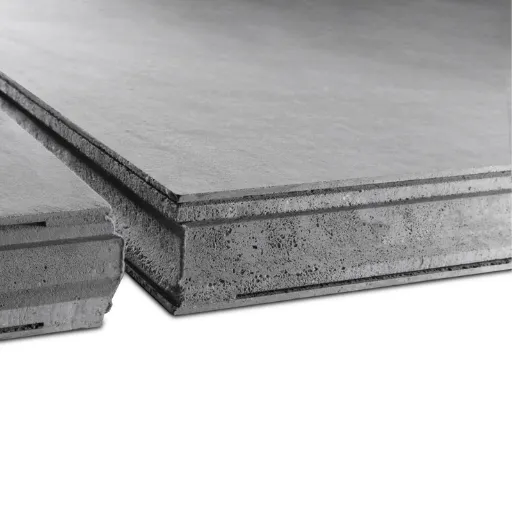
Cement board, also called cement backer board, fibre cement board, or cementitious panel, is a rigid building material composed of cement, reinforced cellulose fibers, and sometimes silica or glass fiber matting. It is manufactured by forming a slurry of Portland cement and reinforcing fibers into sheets, then curing them under pressure to create a dense, durable panel.
Key Specifications of Cement Board
| Property | Typical Value |
|---|---|
| Density | 1,200–1,400 kg/m³ |
| Thickness range | 6–20 mm |
| Flexural strength | 15–20 MPa |
| Water absorption | 10–20% (varies by grade) |
| Fire rating | Non-combustible (Class A) |
| Thermal conductivity | ~0.40 W/(m·K) |
Cement board's primary advantage is its structural rigidity and fire resistance. Because it is essentially a thin concrete sheet, it will not burn, rot, or warp under normal building conditions. It provides an excellent bonding surface for tile, stucco, and exterior finishes. However, it is not a thermal insulator. With a thermal conductivity of approximately 0.40 W/(m·K), cement board conducts heat readily and offers negligible R-value per inch.
Common Applications for Cement Board
Tile backer in wet areas: Bathrooms, kitchens, and commercial wet zones where mortar adhesion and moisture resistance are critical
Exterior facade substrate: Under stucco, EIFS, or cladding systems where a rigid, fire-safe base is required
Fire-rated partitions: Interior wall assemblies requiring non-combustible sheathing
Floor underlayment: Providing a stable, flat surface over plywood or concrete subfloors before tiling
What Is Foam Board?
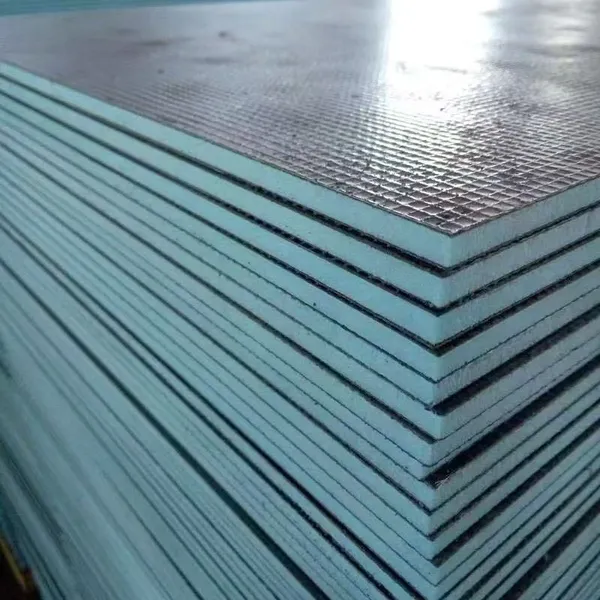
Foam board in construction typically refers to rigid foam insulation panels made from polystyrene, polyisocyanurate, or polyurethane. The most common types are expanded polystyrene (EPS), extruded polystyrene (XPS), and polyiso. These panels are manufactured by expanding plastic resins with blowing agents to create a closed-cell structure with trapped air or gas pockets.
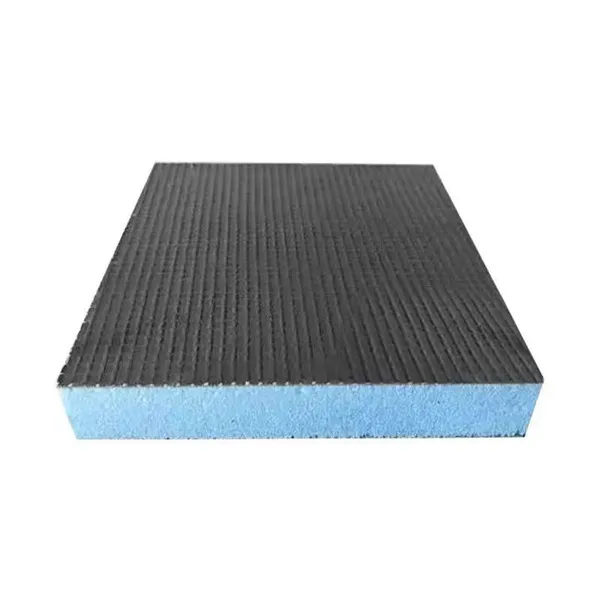
At DaCheng BangMei, our XPS extruded polystyrene boards are engineered for high compressive strength and low thermal conductivity, making them suitable for foundation walls, roof insulation, and under-slab applications.
Key Specifications of XPS Foam Board
| Property | Typical Value |
|---|---|
| Density | 25–40 kg/m³ |
| Thickness range | 20–120 mm |
| Compressive strength | 150–700 kPa |
| Water absorption | <1% (XPS) |
| Fire rating | Class B1–B2 (flammable; may require barrier) |
| Thermal conductivity | 0.028–0.035 W/(m·K) |
Foam board's primary advantage is its thermal resistance. With thermal conductivity values roughly one-tenth that of cement board, XPS and similar foam boards deliver meaningful R-values in thin profiles. A 50 mm XPS board provides approximately R-2.5, while a 50 mm cement board provides less than R-0.15. Foam boards also resist moisture absorption and provide continuous insulation that reduces thermal bridging through framing members.
Common Applications for Foam Board
Exterior wall continuous insulation: Placed outside the structural sheathing to reduce thermal bridging
Foundation and basement insulation: XPS boards below grade resist soil moisture and ground temperature
Roof insulation: Flat and low-slope roof assemblies where compressive strength matters
Under-slab insulation: Preventing heat loss through ground-contact floors
Insulated concrete forms (ICF): As stay-in-place formwork for cast-in-place walls
Performance Comparison: Cement Board vs Foam Board
Structural Strength and Durability
Cement board dominates in structural applications. With flexural strength of 15–20 MPa and density exceeding 1,200 kg/m³, it can support tile, stone, and heavy cladding without deflection. It withstands impact and point loads that would crush standard foam insulation.
XPS foam board, while not structural in the same sense, offers compressive strength ranging from 150 kPa to 700 kPa depending on grade. High-density XPS can support pedestrian traffic and light mechanical loads when properly distributed, but it is not designed to bear concentrated structural loads without a protective overlay.
Recommendation: For structural substrates under tile, stone, or heavy cladding, specify cement board. For thermal insulation layers that may see distributed compressive loads, XPS foam board is appropriate.
Moisture and Water Resistance
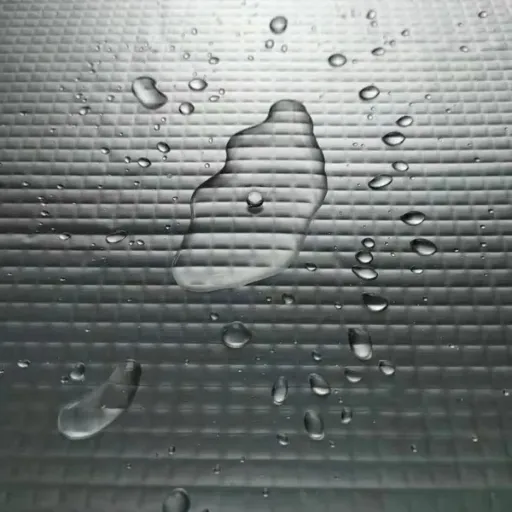
Both materials resist moisture, but through different mechanisms. Cement board absorbs water (10–20% by weight) but does not degrade when wet. It dries out without losing dimensional stability or structural integrity. This makes it ideal for wet-area tile substrates where occasional moisture exposure is expected.
XPS foam board absorbs virtually no water, typically less than 1% by volume. Its closed-cell structure prevents water migration, which is why it is the standard choice for below-grade and exterior continuous insulation. Unlike cement board, XPS does not wick moisture and maintains its thermal performance even in damp conditions.
When Maria Santos, a project manager in Manila, was specifying materials for a beachfront resort renovation, she initially planned to use cement board for the exterior envelope because of its "waterproof" reputation. Our technical team explained that while cement board tolerates moisture, it does not insulate. For the exterior walls, she switched to a multi-layer assembly: XPS foam board for continuous thermal insulation, covered by cement board as the facade substrate for stucco adhesion. Energy modeling showed a 35% reduction in cooling load compared to the original all-cement-board specification.
Recommendation: For wet-area interiors, cement board is the proven choice. For exterior continuous insulation and below-grade applications, XPS foam board outperforms cement board in moisture management and thermal retention.
Thermal Performance
This is where the two materials diverge most dramatically. Cement board has a thermal conductivity of approximately 0.40 W/(m·K). Foam board ranges from 0.028 to 0.035 W/(m·K). That means foam board is roughly 10 to 15 times more thermally efficient per unit thickness.
In practical terms:
A 100 mm cement board provides an R-value of approximately 0.25
A 50 mm XPS foam board provides an R-value of approximately 2.5
To match the thermal resistance of 50 mm XPS, you would need roughly 500 mm of cement board, an impractical thickness
Recommendation: Never specify cement board as a thermal insulation layer. For energy code compliance and occupant comfort, foam board insulation is required. Cement board belongs in the structural or finish layer of the assembly.
Weight and Installation
Cement board is heavy. A standard 1,200 × 2,400 mm sheet of 12 mm cement board weighs approximately 55–60 kg. This adds significant dead load to framing and requires two-person handling. Cutting cement board generates silica dust, requiring proper PPE and dust control measures.
Foam board is lightweight. A comparable XPS board weighs less than 5 kg. It can be cut with a utility knife, produces no hazardous dust, and is easy to handle on site. However, foam boards require mechanical fastening or adhesive attachment, and most foam products must be protected from UV exposure and covered with a thermal barrier in habitable spaces.
Recommendation: For fast installation on large surface areas, foam board is significantly more efficient. For small-area, high-strength substrates like shower enclosures, cement board justifies the extra weight and handling effort.
When to Specify Cement Board
Use cement board when the priority is one or more of the following:
Tile or stone substrate: Cement board provides the ideal bonding surface for thin-set mortar and prevents crack transmission from the substrate
Fire-rated assemblies: Non-combustible cement board contributes to fire resistance ratings in walls and ceilings
Structural rigidity: Applications requiring a stiff, impact-resistant panel under finishes
Interior wet areas: Bathrooms, commercial kitchens, and laundry rooms where moisture tolerance and mold resistance are critical
Exterior facade base: As a substrate for stucco or EIFS systems where a rigid, dimensionally stable base is needed
When to Specify Foam Board
Use foam board insulation when the priority is one or more of the following:
Thermal insulation: Meeting energy code requirements for wall, roof, or foundation R-values
Continuous insulation: Reducing thermal bridging through studs and framing members
Below-grade moisture control: Foundation walls and underslab insulation where water resistance is critical
Lightweight fill: Applications where minimizing dead load matters, such as rooftop assemblies
Cost-effective R-value: Delivering thermal resistance at a lower cost per R-value than most alternatives
For buyers sourcing XPS foam boards for large commercial or infrastructure projects, DaCheng BangMei manufactures extruded polystyrene boards with compressive strengths from 150 kPa to 700 kPa and thermal conductivity as low as 0.028 W/(m·K). Custom thicknesses and dimensions are available for project-specific envelope requirements.
Cost Considerations
Material costs vary by region, thickness, and order volume, but general observations from factory-direct sourcing:
Cement board typically costs more per square meter than basic foam board, but pricing is driven by thickness and fiber reinforcement grade
XPS foam board pricing depends on density and compressive strength; high-density boards for heavy-load applications command a premium
Installation labor for cement board is higher due to weight, cutting time, and dust-control requirements
Lifecycle cost heavily favors foam board in energy-critical assemblies because the thermal performance reduces heating and cooling loads over the building's service life
Because cement board provides no meaningful thermal resistance, assemblies using cement board without an insulation layer will incur higher energy costs. When evaluating total cost of ownership, procurement teams should factor in the energy penalty of under-insulated walls and roofs.
Can You Use Cement Board and Foam Board Together?
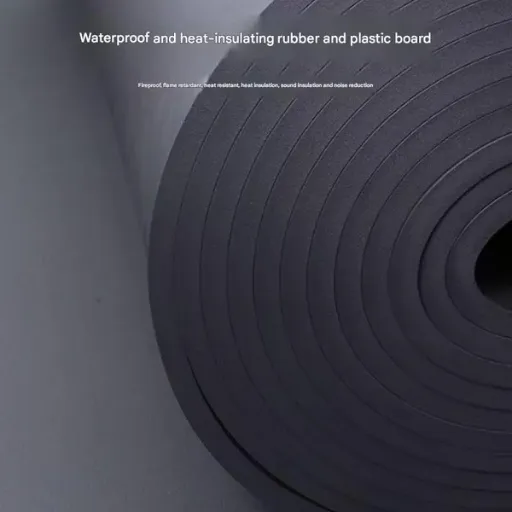
Yes. In fact, many high-performance building envelopes use both materials in layered assemblies. The cement board provides structural rigidity, fire resistance, and a finish substrate. The foam board provides thermal insulation and moisture control. The key is placing each material in the correct layer of the assembly.
A typical high-performance wall assembly might look like this (exterior to interior):
Exterior finish (stucco, cladding, or EIFS)
Cement board or similar rigid substrate
Air and moisture barrier membrane
XPS foam board (continuous insulation layer)
Structural sheathing and framing with cavity insulation
Interior vapor retarder (climate-dependent)
Interior finish (gypsum board)
This approach leverages the strengths of both materials while compensating for their individual weaknesses. The cement board protects the foam insulation from impact and provides a fire-resistant surface. The foam board delivers the thermal performance that cement board cannot.
For a mixed-use development in Jakarta, the specifying architect initially proposed a single-layer cement board facade for the retail podium, citing durability concerns. After thermal modeling revealed code non-compliance and excessive heat gain, the team revised the specification to include 60 mm XPS continuous insulation behind the cement board substrate. The revised assembly met the local energy code, reduced the HVAC capacity requirement by 18%, and maintained the desired exterior finish durability. The incremental material cost was recovered within three years through reduced cooling energy.
Need help calculating the optimal insulation thickness for your wall assembly? Our technical team provides complimentary U-value calculations and condensation risk analysis for project specifications. Speak with our insulation engineers about your envelope requirements.
Conclusion
Cement board and foam board are not interchangeable. They are complementary building materials with distinct engineering purposes. Cement board provides structural strength, fire safety, and a durable substrate for finishes. Foam board provides thermal resistance, moisture control, and energy efficiency.
Key takeaways:
Specify cement board for tile substrates, fire-rated assemblies, and structural rigidity where thermal performance is not the priority
Specify XPS foam board for continuous insulation, below-grade moisture control, and energy code compliance
For high-performance envelopes, combine both materials in a layered assembly rather than choosing one or the other
Always calculate total cost of ownership, including energy performance, not just material unit price
If you are sourcing insulation materials for a multi-layer building envelope, DaCheng BangMei supplies XPS extruded polystyrene boards, rock wool thermal insulation, and rubber-plastic insulation from Huaneng Zhongtian's ISO9001 and FM-certified manufacturing facility. We can review your assembly drawings, recommend the optimal insulation system, and provide factory-direct pricing with full export documentation.
Ready to specify? Request a custom quote for your project or download our complete product data sheets for detailed thermal and mechanical performance data.
Recently Posted
-
Insulation for Metal Buildings: Complete Buyer's Guide 2026
June 24, 2026A warehouse manager in Texas watched his electricity bill climb every summer. The metal roof turned the building into a solar oven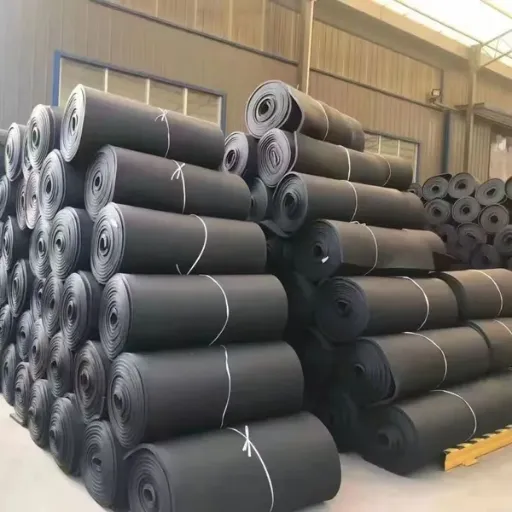 Read More
 -
Insulation Materials Comparison: How to Select the Right Type for Your Project
June 24, 2026The procurement manager stared at six quotations on her screen. Each supplier recommended a different insulation material for the Read More
 -
Thermal Conductivity of Insulation Materials: A Specifier's Guide
June 24, 2026Ahmed Hassan spent three weeks reconciling quotes for a cold storage expansion in Dubai. One supplier quoted 80 mm rubber-plastic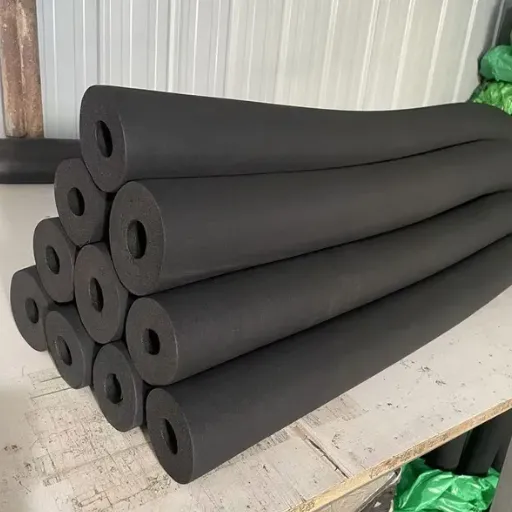 Read More
 -
Basement Insulation Board: Complete Buyer's Guide | DaCheng BangMei
June 24, 2026A homeowner in Michigan finished their basement with standard fiberglass batts and drywall. Two winters later, the bottom plates w Read More

Contact Us
Recommended Products
-
 Eco-Friendly Aluminum Foil Foam Board for Underfloor Heating SolutionsNegotiableMOQ: 100 Pieces
 -
Rubber Plastic Insulation Board Waterproof for Industrial Thermal InsulationNegotiableMOQ: 500 Square Meters
-
Premium Soft Silica Nano Aerogel Felt Sheets for Industrial Heat InsulationNegotiableMOQ: 50 Meters
-
Customizable PVC Magnetic Door Curtain Roll for Home & Kitchen UseNegotiableMOQ: 500 Kilograms
-
XPS Waterproof Board for Underground Garage Moisture BarrierNegotiableMOQ: 50 Square Meters
-
Heavy Duty Titanium Steel Mesh Magnetic Door Curtain With Reinforced EdgesNegotiableMOQ: 10 Pieces
-
Rubber Plastic Insulation Tube for Refrigeration & Cold Storage PipelineNegotiableMOQ: 500 Square Meters
-
Durable Aluminum Dry Floor Heating Panel With High Thermal ConductivityNegotiableMOQ: 100 Pieces
-
Nano Aerogel Felt Insulation Material for Cold Protection and Energy EfficiencyNegotiableMOQ: 50 Meters
-
High-Temperature Nano Silica Aerogel Felt for Pipe Fire and Thermal InsulationNegotiableMOQ: 50 Meters
-
Insulated PVC Magnetic Door Curtain for Thermal Insulation in Bedroom & KitchenNegotiableMOQ: 500 Kilograms
-
Professional Aluminum Foil Foam Board for Dry Underfloor Heating SystemsNegotiableMOQ: 100 Pieces
-
Aluminum Underfloor Heating Module for Commercial and Residential UseNegotiableMOQ: 100 Pieces
-
XPS Waterproof Board 10mm Thickness for Roofing InsulationNegotiableMOQ: 50 Square Meters
-
Custom Size Titanium Steel Mesh Magnetic Door Curtain for Warehouse Pest ControlNegotiableMOQ: 10 Pieces
-
Flame Retardant Thermal Insulation Sponge for Rubber & Plastic Pipes - Fireproof Factory DirectNegotiableMOQ: 500 Square Meters
-
Cold Insulation Rubber Plastic Board for HVAC and Industrial Pipeline ApplicationsNegotiableMOQ: 500 Square Meters
-
20mm XPS Thermal Insulation Panel for Dry Underfloor Heating SystemsNegotiableMOQ: 100 Pieces
-
High Temperature Resistant Foam Insulation Tube for Air Conditioner DuctsNegotiableMOQ: 500 Meters
-
XPS Tile Backer Board Waterproof Insulation for Wall & BathroomNegotiableMOQ: 500 Square Meters