
 Business License

Thin Insulation Materials: How to Save Space Without Losing Thermal Performance
The retrofit team in London had only 28 millimeters of cavity depth to work with. The heritage facade could not be altered, and the interior drywall had to stay in place. Standard mineral wool would have eaten the entire cavity and still underperformed on thermal conductivity.
Space was the constraint. Performance was the requirement.
If you have ever faced a wall cavity that is too shallow, a pipe chase that is too tight, or an electric vehicle battery pack that needs every millimeter of range, you already understand the problem. Thin insulation materials solve it by delivering high thermal resistance in a fraction of the thickness of conventional products. In this guide, we will compare the main thin insulation technologies, show where they outperform bulky alternatives, and explain how to choose the right option for your project. At DaCheng BangMei, backed by Huaneng Zhongtian's 40 years of manufacturing experience, we produce ultra thin insulation and space saving insulation solutions including nano aerogel insulation and XPS insulation boards for space-critical applications across 35+ countries.
Need help specifying a thin insulation system? Our technical team provides complimentary thickness calculations and material selection support for space-constrained projects.
What Makes Thin Insulation Materials Different?
Conventional insulation works by trapping still air in a thick layer. The thicker the layer, the lower the heat transfer. That relationship is straightforward, but it is also the source of the problem.
Many buildings, vehicles, and industrial systems do not have room for 100 mm or 150 mm of insulation. Thin insulation changes the math.
Thin insulation materials break the thickness-versus-performance trade-off by using advanced structures that reduce thermal conductivity below that of still air. Instead of simply trapping more air, they evacuate it, gel it, or replace it with lower-conductivity media. The result is a thinner board or blanket that achieves the same thermal resistance as a much thicker conventional layer.
The key metric is thermal conductivity, measured in W/(m·K). Lower values mean less heat flow per unit thickness. Standard fiberglass or mineral wool typically ranges from 0.030–0.040 W/(m·K).
High-performance thin insulation materials can reach 0.018–0.024 W/(m·K). That allows equivalent R-value at roughly one-third to one-half the thickness. For retrofit projects where every millimeter counts, that difference is the difference between a viable specification and an impossible one.
Types of Thin Insulation Materials
Not all thin insulation works the same way. Each technology achieves its thin profile through a different mechanism, and each has a distinct cost, fire rating, and handling profile.
Nano Aerogel Insulation
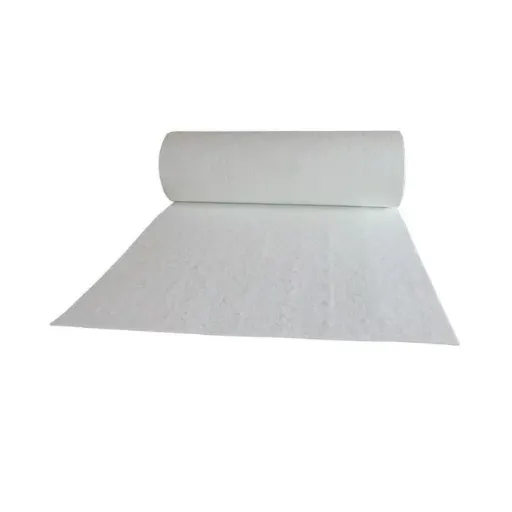
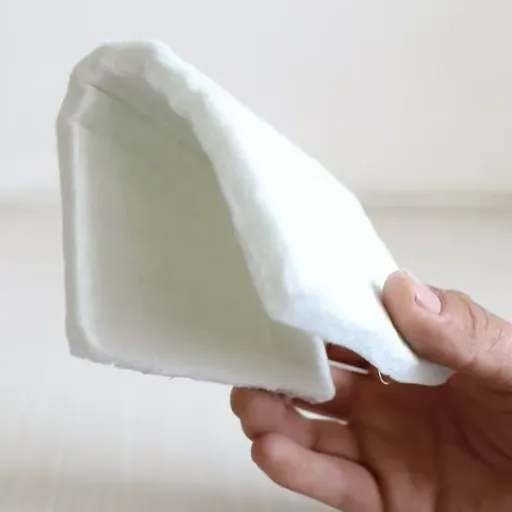
Nano aerogel insulation is currently the thinnest high-performance thermal insulation available in flexible blanket form. It is the benchmark for ultra thin insulation when both flexibility and extreme low thermal conductivity are required. Aerogels are silica-based solids with a nanoporous structure that traps air in pores smaller than the mean free path of gas molecules. This suppresses gas conduction and gives the material extremely low thermal conductivity.
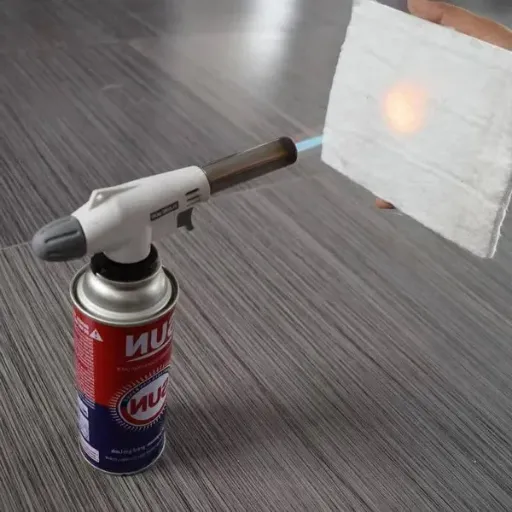
Typical aerogel blankets achieve thermal conductivity values of 0.018–0.024 W/(m·K) at 3–10 mm thickness. They are hydrophobic, flexible enough to wrap around pipes and curved surfaces, and serviceable from -200°C to +650°C depending on the reinforcement fiber. The downside is cost. Aerogel remains significantly more expensive per square meter than fiberglass or rubber-plastic, so it is usually reserved for applications where space savings justify the premium.
At DaCheng BangMei, our nano aerogel insulation is supplied in rolls and cut sheets for industrial equipment, cryogenic lines, and high-temperature pipe insulation where conventional thickness is not an option.
Vacuum Insulated Panels
Vacuum insulated panels, or VIPs, take the opposite approach. Instead of trapping air in pores, they remove it entirely. A VIP consists of a microporous core sealed inside a metallized polymer barrier film under vacuum. With almost no gas molecules to conduct heat, VIPs can reach thermal conductivity values as low as 0.004–0.008 W/(m·K).
That performance makes VIPs the thinnest option of all. A 20 mm VIP can match the thermal resistance of 100 mm of mineral wool. The catch is fragility.
If the barrier film is punctured, air enters and performance collapses. VIPs are therefore best used inside protected assemblies such as refrigerated containers, appliance walls, or façade systems where they will not be cut or penetrated on site.
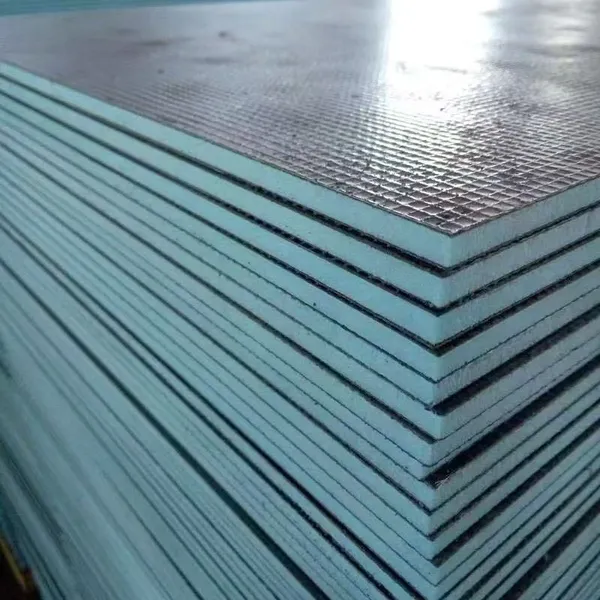
XPS Insulation Boards
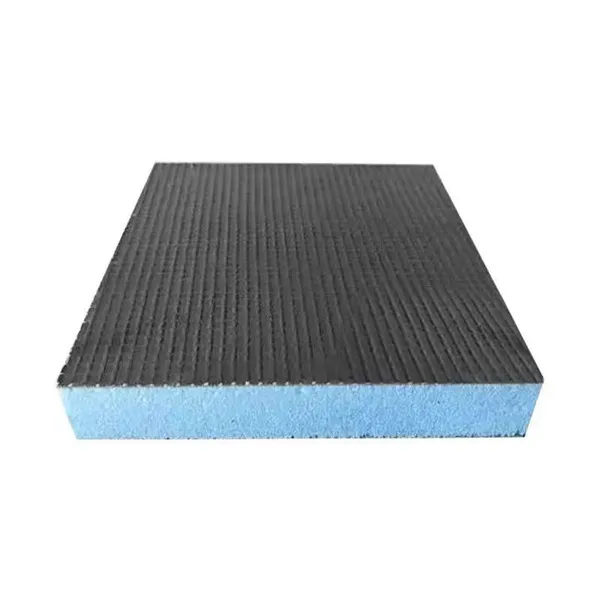
Extruded polystyrene, or XPS, is not always thought of as a thin insulation material, but high-density XPS insulation board can deliver meaningful R-value at 20–50 mm thickness. XPS is a closed-cell rigid foam with thermal conductivity around 0.028–0.034 W/(m·K). It is moisture-resistant, dimensionally stable, and easy to cut and mechanically fix.
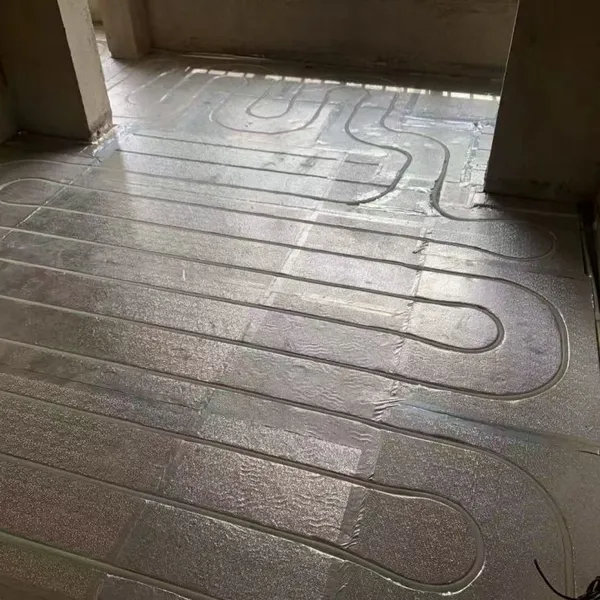
XPS is most competitive where some thickness is acceptable but the budget is tighter. Underfloor heating systems, basement walls, and flat roof build-ups often use 20–40 mm XPS as a thin yet effective thermal layer. It does not match aerogel or VIP performance per millimeter, but it costs far less and handles site conditions better.
Thin Rubber-Plastic Foam
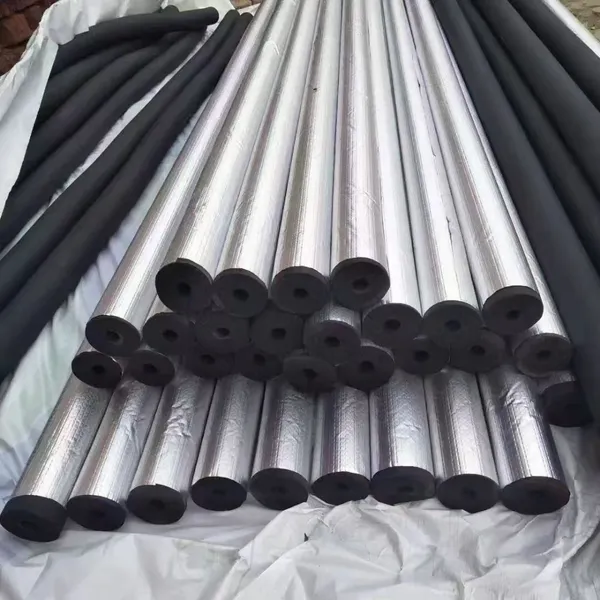
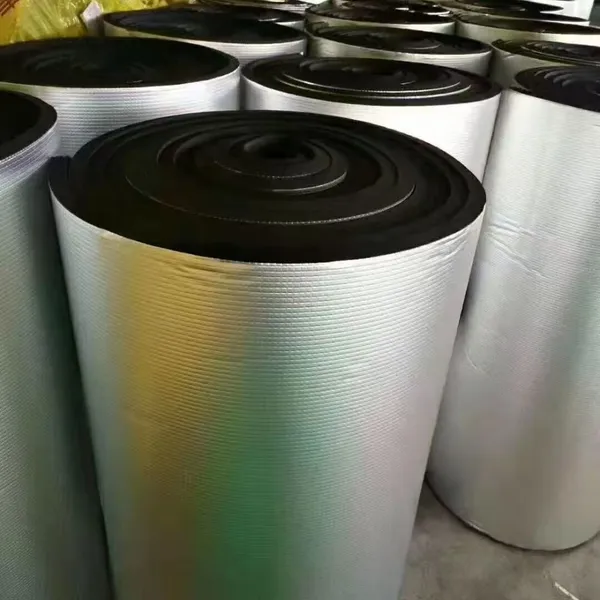
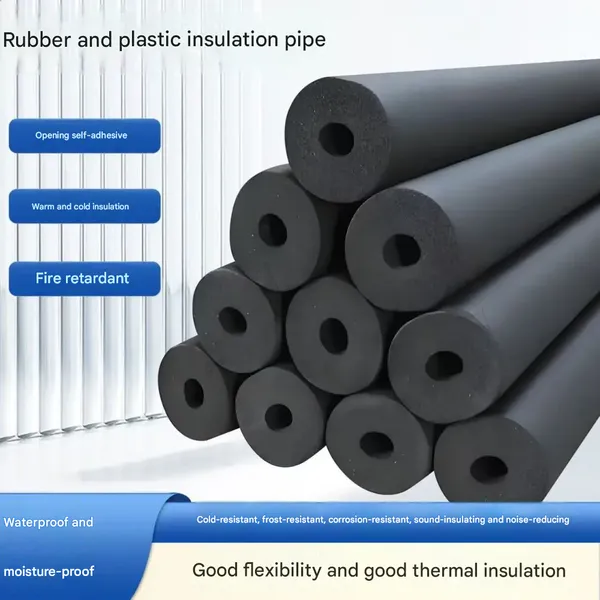
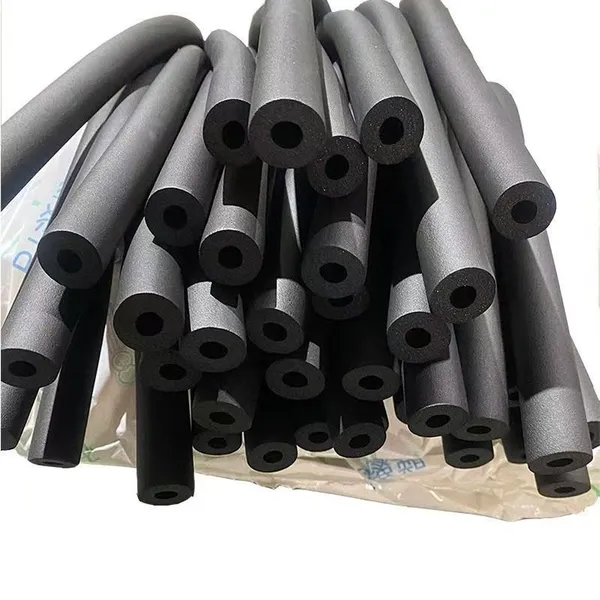
For pipe and duct applications, standard closed-cell rubber-plastic insulation is already relatively thin compared to fiberglass. At 6–25 mm thickness, rubber-plastic insulation prevents condensation on chilled water and refrigeration lines without the bulk of rigid board systems. Its flexibility also means it can fit into crowded mechanical rooms where rigid insulation would require custom fabrication.
While rubber-plastic is not in the same ultra-thin category as aerogel or VIPs, it is a practical thin insulation material for mechanical systems. For contractors working in tight pipe risers or ship compartments, the ability to bend and adhere the insulation in place often matters more than achieving the absolute lowest thermal conductivity.
Where Thin Insulation Materials Deliver the Most Value
Thin insulation is not a universal replacement for conventional insulation. It is a targeted solution. It adds value in specific situations where space, weight, or geometry creates a constraint that standard materials cannot satisfy. The most cost-effective space saving insulation deployments match the material to the constraint rather than forcing one product across every surface.
Building Retrofits and Heritage Facades
Older buildings often have narrow cavities and fixed interior dimensions. Adding 100 mm of internal insulation would reduce room sizes, alter window reveals, and require relocation of skirting boards and radiators. Thin insulation materials can achieve the required U-value improvement with 20–40 mm of internal or external build-up, preserving floor area and architectural details.
When Elena, a conservation architect in Lisbon, upgraded a 19th-century apartment block, local heritage rules prohibited changes to the exterior facade. The interior walls could only accommodate 35 mm of build-up before encroaching on the listed plaster cornices. Standard EPS would have missed the target U-value.
She specified a hybrid system: 10 mm aerogel blanket bonded to 25 mm XPS board. The combined build-up met the regulatory U-value, the facade remained untouched, and the apartments retained their original room proportions. The project passed inspection on the first submission.
HVAC and Refrigeration in Tight Spaces
Ships, offshore platforms, and compact mechanical rooms have dense pipe runs with limited clearance. HVAC insulation solutions for tight spaces use thin insulation materials to maintain clearances between pipes, walls, and walkways while still preventing condensation and energy loss. Aerogel blankets are increasingly used on LNG and cryogenic lines where both low temperature and space are critical.
Electric Vehicle and Battery Thermal Management
EV battery packs have limited vertical space between cells and enclosure walls. Effective thermal runaway protection and temperature management require insulation that is thin, lightweight, and thermally stable at high temperatures. Aerogel and ceramic-coated thin insulation materials are now common in battery pack designs because they provide fire resistance and thermal barrier performance in just a few millimeters.
Data Centers and Server Rooms
Data centers need thermal separation without reducing usable floor area or airflow volume. Thin insulation on walls, ceilings, and chilled water lines helps maintain precise temperature zones while leaving room for cable trays and equipment. In raised-floor plenums, thin boards prevent thermal bypass without blocking airflow.
Performance Trade-offs Every Specifier Should Understand
Thin insulation materials deliver space savings, but they also introduce trade-offs that must be evaluated against project priorities. Every advantage has a cost.
Thermal Conductivity vs. Cost
The thinner the material, the more advanced the technology required. VIPs and aerogels offer the best thermal performance per millimeter but cost several times more than XPS or rubber-plastic. The decision should be based on total project value, not just material price.
If reclaiming floor area increases rental income or avoids structural modifications, the premium can pay for itself.
Fire Rating and Smoke Toxicity
Not all thin insulation materials share the same fire behavior. XPS is combustible and requires fire-rated encapsulation in many building applications. Standard aerogel blankets are non-combustible when reinforced with glass or ceramic fibers, but the specific rating depends on the product.
VIP barrier films can melt and release gases under fire conditions. Always verify the fire classification against local codes before specifying.
Compression and Mechanical Durability
VIPs cannot be punctured or compressed without losing performance. Aerogel blankets are more robust than VIPs but can shed dust if the outer encapsulation is damaged. XPS handles compression well but is rigid and must be cut accurately.
Rubber-plastic is flexible and forgiving but operates within a narrower temperature range. Match the material to the installation environment, not just the thermal target.
Long-Term Stability
Some thin insulation materials degrade predictably over time. VIPs slowly lose vacuum as gas permeates the barrier film, causing thermal conductivity to drift upward over 15–25 years. Aerogel blankets are hydrophobic and chemically stable but may become brittle if flexed repeatedly at high temperature.
XPS is resistant to moisture but can degrade under prolonged UV exposure unless protected. Ask manufacturers for accelerated aging data and warranty terms.
How to Select the Right Thin Insulation for Your Project
A structured selection process prevents over-specifying expensive materials or under-specifying cheap ones. Start with the constraint. Then match the material.
Step 1: Define the Thermal Target
Calculate the required U-value or R-value for the assembly. Then determine how much thickness is available. If conventional insulation can meet the target within the available space, use it. If not, thin insulation materials become the logical choice.
Step 2: Identify the Space Constraint Type
Different constraints favor different materials:
Very thin cavity, high thermal target → Nano aerogel insulation or VIP
Thin cavity, moderate target, cost-sensitive → XPS insulation board
Pipes and ducts in tight mechanical spaces → Thin rubber-plastic foam
Curved or irregular surfaces → Flexible aerogel blanket or rubber-plastic
Step 3: Check Fire and Environmental Requirements
Match the material's fire classification to the application. For occupied buildings, non-combustible or low-smoke options may be mandatory. For outdoor or wet environments, verify water absorption, UV resistance, and vapor permeability.
Step 4: Evaluate Installation Practicality
VIPs require careful handling and should not be field-cut. Aerogel blankets can be cut with scissors but need encapsulation for dust containment in some applications. XPS cuts cleanly with standard tools.
Rubber-plastic installs with adhesive and contact cement. The best material is the one that can be installed correctly under your project conditions.
Step 5: Compare Total Cost of Ownership
Include material, labor, protection, and lifecycle energy cost. A more expensive thin insulation material that avoids structural changes or reclaims floor area may deliver lower total cost than a thicker, cheaper alternative. For volume projects, factory-direct sourcing from a manufacturer like DaCheng BangMei reduces per-unit cost and improves lead time consistency.
Ready to compare options? Request a custom quote for thin insulation materials tailored to your U-value target, thickness constraint, and fire rating requirements.
Why Manufacturer Certification Matters for Thin Insulation
Thin insulation materials perform only when their stated thermal conductivity is real and stable. The difference between 0.018 W/(m·K) and 0.030 W/(m·K) can determine whether a retrofit passes inspection or a battery pack stays safe. Buyers should verify certification documentation for every critical claim:
Thermal conductivity test reports with listed standards such as GB/T 10294 or ASTM C518
Fire test certificates from accredited laboratories
Factory quality management certification such as ISO 9001
Batch traceability and inspection reports
At Huaneng Zhongtian's 225,000 m² manufacturing base, our 5G smart factory tracks every batch of nano aerogel, XPS, and rubber-plastic insulation digitally. This traceability supports quality audits and ensures that the thermal conductivity, density, and fire rating you specify are the values that ship to your project.
When a Norwegian shipyard sourced thin insulation materials for a new series of expedition vessels, they needed documentation for classification society approval. Because we maintain certified test reports and digital batch records, the insulation package cleared approval in days rather than weeks. The vessels sailed on schedule with traceable thermal performance data for every critical line.
Conclusion
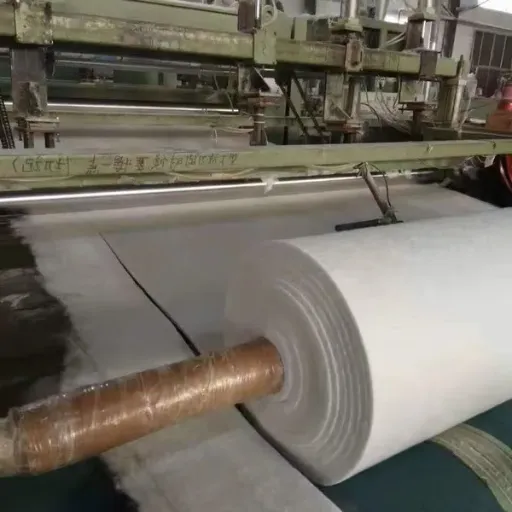
Thin insulation materials are not simply a thinner version of conventional insulation. They are engineered systems. They use aerogel nanopores, vacuum chambers, or closed-cell foams to achieve high thermal resistance in limited space. For retrofit facades, crowded mechanical rooms, electric vehicle battery packs, and data centers, they can solve problems that thicker materials cannot.
Key takeaways:
Use nano aerogel insulation when you need maximum thermal performance in the thinnest flexible blanket.
Use vacuum insulated panels when protected assemblies allow the lowest possible thermal conductivity.
Use XPS insulation board when cost and moisture resistance matter more than extreme thinness.
Use thin rubber-plastic foam for pipe and duct applications where flexibility and condensation control are priorities.
Always verify fire ratings, long-term stability, and installation requirements before specifying.
If you are working on a space-constrained project and need help selecting the right thin insulation materials, our technical team can review your drawings, calculate U-values, and recommend the optimal grade based on local codes and performance requirements.
Ready to specify? Request a custom quote or download our complete insulation data sheets for detailed thermal, fire, and mechanical performance data.
Recently Posted
-
Insulation for Metal Buildings: Complete Buyer's Guide 2026
June 24, 2026A warehouse manager in Texas watched his electricity bill climb every summer. The metal roof turned the building into a solar oven Read More
 -
Insulation Materials Comparison: How to Select the Right Type for Your Project
June 24, 2026The procurement manager stared at six quotations on her screen. Each supplier recommended a different insulation material for the Read More
 -
Thermal Conductivity of Insulation Materials: A Specifier's Guide
June 24, 2026Ahmed Hassan spent three weeks reconciling quotes for a cold storage expansion in Dubai. One supplier quoted 80 mm rubber-plastic Read More
 -
Basement Insulation Board: Complete Buyer's Guide | DaCheng BangMei
June 24, 2026A homeowner in Michigan finished their basement with standard fiberglass batts and drywall. Two winters later, the bottom plates w Read More

Contact Us
Recommended Products
-
 Eco-Friendly Aluminum Foil Foam Board for Underfloor Heating SolutionsNegotiableMOQ: 100 Pieces
 -
Rubber Plastic Insulation Board Waterproof for Industrial Thermal InsulationNegotiableMOQ: 500 Square Meters
-
Premium Soft Silica Nano Aerogel Felt Sheets for Industrial Heat InsulationNegotiableMOQ: 50 Meters
-
Customizable PVC Magnetic Door Curtain Roll for Home & Kitchen UseNegotiableMOQ: 500 Kilograms
-
XPS Waterproof Board for Underground Garage Moisture BarrierNegotiableMOQ: 50 Square Meters
-
Heavy Duty Titanium Steel Mesh Magnetic Door Curtain With Reinforced EdgesNegotiableMOQ: 10 Pieces
-
Rubber Plastic Insulation Tube for Refrigeration & Cold Storage PipelineNegotiableMOQ: 500 Square Meters
-
Durable Aluminum Dry Floor Heating Panel With High Thermal ConductivityNegotiableMOQ: 100 Pieces
-
Nano Aerogel Felt Insulation Material for Cold Protection and Energy EfficiencyNegotiableMOQ: 50 Meters
-
High-Temperature Nano Silica Aerogel Felt for Pipe Fire and Thermal InsulationNegotiableMOQ: 50 Meters
-
Insulated PVC Magnetic Door Curtain for Thermal Insulation in Bedroom & KitchenNegotiableMOQ: 500 Kilograms
-
Professional Aluminum Foil Foam Board for Dry Underfloor Heating SystemsNegotiableMOQ: 100 Pieces
-
Aluminum Underfloor Heating Module for Commercial and Residential UseNegotiableMOQ: 100 Pieces
-
XPS Waterproof Board 10mm Thickness for Roofing InsulationNegotiableMOQ: 50 Square Meters
-
Custom Size Titanium Steel Mesh Magnetic Door Curtain for Warehouse Pest ControlNegotiableMOQ: 10 Pieces
-
Flame Retardant Thermal Insulation Sponge for Rubber & Plastic Pipes - Fireproof Factory DirectNegotiableMOQ: 500 Square Meters
-
Cold Insulation Rubber Plastic Board for HVAC and Industrial Pipeline ApplicationsNegotiableMOQ: 500 Square Meters
-
20mm XPS Thermal Insulation Panel for Dry Underfloor Heating SystemsNegotiableMOQ: 100 Pieces
-
High Temperature Resistant Foam Insulation Tube for Air Conditioner DuctsNegotiableMOQ: 500 Meters
-
XPS Tile Backer Board Waterproof Insulation for Wall & BathroomNegotiableMOQ: 500 Square Meters