
 Business License

PVC Magnetic Door Curtain: How to Choose a Self-Sealing Industrial Screen
Every summer, a warehouse manager in Florida watched his electricity bill climb. The loading dock doors stayed open for forklifts, and the cooled air escaped into the humid yard. Standard strip curtains helped, but workers constantly pushed through overlapping PVC strips that tangled and slowed traffic.
He needed a screen that sealed itself automatically and let people walk through hands-free.
That is exactly what a PVC magnetic door curtain does. It combines clear or tinted PVC strips with embedded magnets that pull the curtain closed after each pass. The result is a barrier that controls temperature, blocks dust and insects, and still allows fast pedestrian or light forklift traffic.
In this guide, you'll learn how PVC magnetic door curtains work, where they are used, what specifications matter, and how to size and install them correctly. We will also compare them to standard PVC strip curtains and swinging traffic doors so you can choose the right option for your opening.
At DaCheng BangMei, part of Huaneng Zhongtian's industrial product group, we supply flexible PVC curtain systems alongside our thermal insulation materials. Here's what our team looks for when specifying a PVC magnetic door curtain for warehouses, food plants, and cold storage facilities.
What Is a PVC Magnetic Door Curtain?
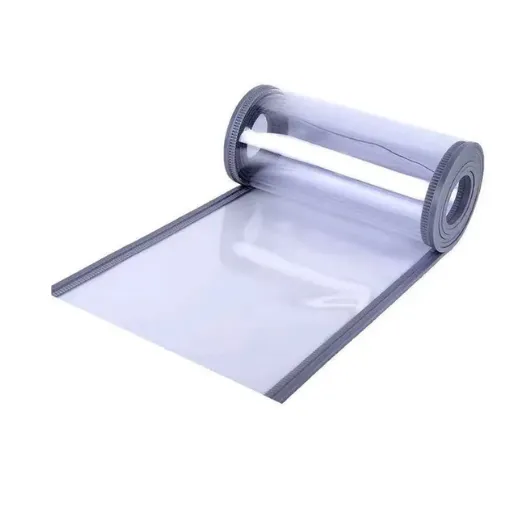
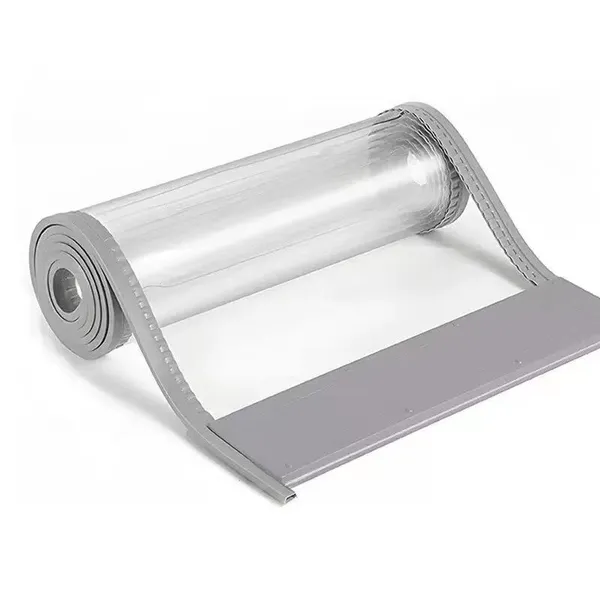
A PVC magnetic door curtain is a flexible doorway screen made from overlapping vertical strips of PVC plastic. Magnets sewn, bonded, or inserted along the edges of each strip allow the curtain to separate when pushed and snap back together automatically.
Unlike a single swinging door, the curtain has no rigid frame or threshold. It hangs from a top-mounted track and covers the full width and height of the opening. When a person or cart passes through, the magnets separate, then reconnect behind them to restore the seal.
Common widths range from 90 cm for pedestrian doors to 180 cm for pallet-jack or light forklift openings. Standard strip thickness is 2 mm to 3 mm, with heavier 4 mm options available for high-traffic or cold-storage applications.
PVC magnetic door curtains are often used in:
Warehouses and distribution centers
Food processing and packaging plants
Cold storage and freezer rooms
Pharmaceutical clean areas
Automotive service bays
Retail back-of-house corridors
Want to control temperature in a cold room or freezer? Read our guide on cold storage insulation to combine curtain systems with the right insulation materials.
How PVC Magnetic Door Curtains Work
The working principle is simple but effective. Gravity holds the strips vertical. Magnets embedded along the strip edges create a continuous contact line down the center and sometimes along the sides. When pressure is applied, the magnets release. Once pressure is gone, magnetic force pulls the strips back into alignment.
Key Design Features
| Feature | Function |
|---|---|
| Magnetic strips | Self-sealing closure after each pass |
| Transparent PVC | Visibility through the curtain for safety |
| Reinforced top edge | Supports weight and resists tearing at the track |
| Optional weighted bottom | Keeps strips stable in drafts or fan-driven areas |
| Side mounting rails | Hold curtain edges against the frame to limit air bypass |
Why Magnets Instead of Overlapping Strips?
Standard PVC strip curtains rely on gravity and overlap to create a seal. Over time, strips curl, stick together, or hang unevenly. Gaps form, especially at the bottom and edges. A magnetic door curtain solves this by actively pulling the center seam closed. The seal is more reliable, even after thousands of openings per day.
In a busy kitchen supply warehouse in Texas, staff pushed carts through a standard strip curtain more than 200 times per day. Within six months, the strips had twisted and no longer overlapped properly.
The facility switched to a PVC magnetic door curtain with reinforced edges. The new curtain maintained its seal for over two years, and the maintenance supervisor reported fewer insect complaints and more stable temperatures near the loading area.
Common Applications and Industry Uses

PVC magnetic door curtains are versatile because they solve several problems at once: temperature control, pest control, dust control, and traffic flow. Different industries prioritize different benefits.
Warehouses and Distribution Centers
In loading dock areas, the main goal is usually reducing conditioned air loss while keeping traffic moving. A magnetic door curtain lets forklift operators and pedestrians pass without stopping to open a door. The transparent strips also improve visibility and reduce collisions.
Food Processing Plants
Food facilities must control insects, dust, and airborne contaminants. A PVC magnetic door curtain acts as a physical barrier while allowing staff to move between production, packaging, and storage zones. For food-contact areas, specify FDA-compliant PVC and a design that is easy to clean.
Cold Storage and Freezers
Cold rooms lose energy every time a door opens. Magnetic curtains reduce infiltration and help maintain temperature. Freezer-grade PVC remains flexible at low temperatures, but the curtain should be paired with a proper insulated door for high-traffic freezer openings.
Pharmaceutical and Clean Areas
In cleanroom corridors, the curtain limits particle migration between zones. Anti-static or smooth-surface PVC is easier to wipe down. However, magnetic curtains are not a replacement for certified cleanroom airlocks in strict GMP environments.
Retail and Commercial Kitchens
Restaurants and supermarkets use smaller magnetic curtains at back-of-house doors and walk-in coolers. They keep flies out of kitchen prep areas and reduce cold air loss from beverage coolers.
Material Specifications That Matter
Not all PVC magnetic door curtains are the same. The right specification depends on traffic type, temperature range, hygiene requirements, and exposure to UV or chemicals.
PVC Strip Thickness
| Thickness | Best For |
|---|---|
| 2 mm | Light pedestrian traffic, indoor use, warm environments |
| 3 mm | Moderate pedestrian and cart traffic, general warehouses |
| 4 mm | Heavy traffic, cold storage, areas with equipment impact risk |
Thicker strips last longer and seal better, but they are heavier and require a stronger mounting track. For openings with frequent forklift traffic, 3 mm to 4 mm is usually the better choice.
Temperature Rating
Standard PVC becomes stiff below 0°C and brittle at very low temperatures. For freezer applications, specify low-temperature or polar-grade PVC that remains flexible down to -25°C or lower.
Clarity and Color
Clear PVC provides the best visibility and is the most common choice. Tinted options, such as yellow, red, or blue, can mark hazard zones or differentiate departments. Some facilities use frosted or opaque strips for privacy.
Magnetic Strength
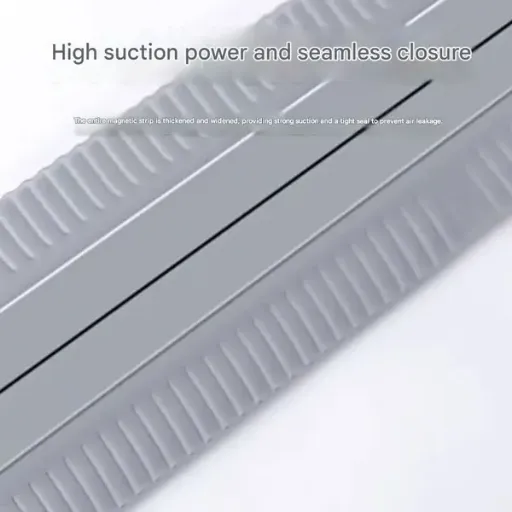
Magnets must be strong enough to seal the curtain but not so strong that workers struggle to push through. High-quality curtains use ferrite or neodymium magnets spaced evenly along the strip edges. Magnet spacing of 5 cm to 10 cm is typical.
Reinforcement
The top edge where strips hang from the track is the highest-stress area. Reinforced nylon webbing or a metal grommet strip prevents tearing. Some designs also include a weighted bottom hem to reduce strip movement from air currents.
Not sure which PVC specification fits your opening? Speak with our technical team for a free sizing and material recommendation.
Sizing and Installation Guide
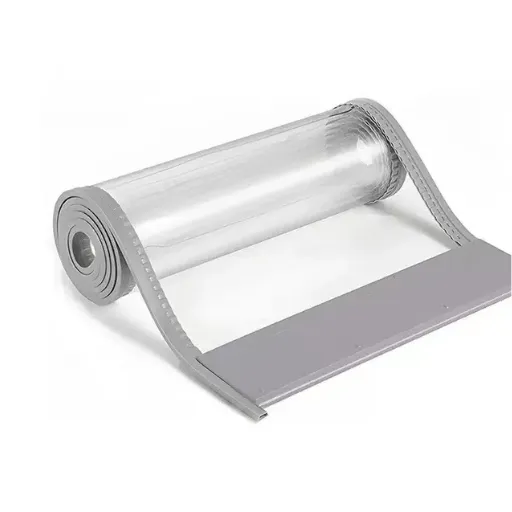
A poorly sized curtain will not seal properly. Measure the opening carefully before ordering.
Measuring the Opening
Measure the clear width of the door frame at the top, middle, and bottom.
Measure the clear height from the top of the mounting surface to the floor.
Note any obstructions such as door closers, heaters, or sensors.
Check the wall or frame material to determine the mounting hardware needed.
Most suppliers add 2 cm to 5 cm of overlap on each side beyond the opening width. This overlap helps seal the edges against the frame.
Mounting Height
The curtain should hang slightly above the floor, typically 1 cm to 2 cm clearance. If it drags, strips will wear quickly. If it is too high, insects and drafts will pass underneath.
Track Types
Sliding track: Allows the entire curtain to be moved to one side when full access is needed
Fixed rail: Simple and economical; curtain stays in place
Hinged mount: Lets the curtain swing away for cleaning or equipment movement
Installation Steps
Mark the mounting height and drill holes for the track.
Install the track level across the opening.
Hang the strips in order, making sure magnetic edges align.
Adjust strip overlap and clearance at the floor.
Test the closure by walking through the curtain several times.
For wide openings, install a center support bracket to prevent the track from sagging.
PVC Magnetic Door Curtain vs. Other Door Options
Choosing the right industrial door depends on traffic, insulation needs, and budget. Here is how magnetic curtains compare to common alternatives.
| Feature | PVC Magnetic Curtain | Standard PVC Strip Curtain | Swinging Traffic Door | High-Speed Roll Door |
|---|---|---|---|---|
| Initial cost | Low | Low | Medium | High |
| Seal quality | Good | Fair | Good | Excellent |
| Pedestrian traffic | Excellent | Good | Good | Fair |
| Forklift traffic | Moderate | Moderate | Good | Excellent |
| Visibility | Good | Fair to good | Limited | Optional window |
| Installation | Simple | Simple | Moderate | Complex |
| Maintenance | Low | Moderate | Moderate | Higher |
PVC magnetic curtains fill a practical middle ground. They cost less than high-speed doors and seal better than basic strip curtains. They are best for openings where doors stay open much of the day but still need a thermal and contamination barrier.
Maintenance and Cleaning
Regular maintenance extends the life of a PVC magnetic door curtain and keeps it sealing properly.
Daily Inspection
Check for torn strips, missing magnets, or gaps at the center seam. Replace damaged strips promptly to maintain the barrier.
Cleaning
Wipe PVC strips with mild detergent and warm water. Avoid abrasive cleaners that scratch the surface and reduce clarity. In food plants, follow your sanitation schedule and use approved cleaning chemicals.
Magnet Care
Metal debris can stick to magnets and prevent proper closure. Wipe magnet edges weekly in industrial environments. If magnets detach from the strip, replace the strip rather than trying to re-glue them.
Storage
If the curtain is removed for seasonal use, roll or fold it loosely and store it away from direct sunlight. UV exposure yellows PVC and makes it brittle over time.
How DaCheng BangMei Supports PVC Magnetic Door Curtain Projects
DaCheng BangMei supplies flexible PVC curtain systems as part of our industrial and cold-storage product range. We support buyers with:
Custom sizing: Curtains cut to your exact opening width and height
Material options: Standard, low-temperature, anti-static, and tinted PVC
Mounting hardware: Tracks, brackets, and side rails for wall or frame installation
Technical consultation: Help selecting thickness, magnet spacing, and reinforcement
Export packaging: Palletized or rolled shipment with sea-freight protection
Combined sourcing: Pair your curtain order with insulation boards, rubber-plastic pipe insulation, or other building materials
Our team recently supplied a food distribution center in Southeast Asia with 3 mm clear PVC magnetic door curtains for twelve loading dock openings. Each curtain was sized to overlap the frame by 5 cm and included a sliding track for full access during peak shipping hours.
The facility reported a measurable drop in cooler energy use and fewer pest control issues within the first quarter.
Ready to specify a PVC magnetic door curtain for your facility? Request a custom quote with your opening dimensions and traffic requirements.
Conclusion
A PVC magnetic door curtain is a practical, low-cost way to control temperature, block contaminants, and keep traffic moving through industrial and commercial openings. The self-sealing magnets solve the common problem of gaps that develop in standard strip curtains over time.
Key takeaways:
Match the PVC thickness to your traffic: 2 mm for light pedestrian use, 3 mm for general warehouse traffic, 4 mm for heavy or cold-storage use.
Choose the right PVC grade: Standard PVC for ambient areas, low-temperature PVC for freezers and coolers.
Measure carefully: Allow edge overlap and small floor clearance for a proper seal.
Maintain the curtain: Clean strips and check magnets regularly to preserve closure performance.
Pair with insulation: For cold storage and loading docks, combine curtains with proper thermal insulation for the best energy results.
If you are planning a facility upgrade and need help selecting or sizing a PVC magnetic door curtain, our team is available to review your requirements. We will help you choose the right material, dimensions, and mounting system for your specific opening.
Recently Posted
-
Insulation for Metal Buildings: Complete Buyer's Guide 2026
June 24, 2026A warehouse manager in Texas watched his electricity bill climb every summer. The metal roof turned the building into a solar oven Read More
 -
Insulation Materials Comparison: How to Select the Right Type for Your Project
June 24, 2026The procurement manager stared at six quotations on her screen. Each supplier recommended a different insulation material for the Read More
 -
Thermal Conductivity of Insulation Materials: A Specifier's Guide
June 24, 2026Ahmed Hassan spent three weeks reconciling quotes for a cold storage expansion in Dubai. One supplier quoted 80 mm rubber-plastic Read More
 -
Basement Insulation Board: Complete Buyer's Guide | DaCheng BangMei
June 24, 2026A homeowner in Michigan finished their basement with standard fiberglass batts and drywall. Two winters later, the bottom plates w Read More

Contact Us
Recommended Products
-
 Eco-Friendly Aluminum Foil Foam Board for Underfloor Heating SolutionsNegotiableMOQ: 100 Pieces
 -
Rubber Plastic Insulation Board Waterproof for Industrial Thermal InsulationNegotiableMOQ: 500 Square Meters
-
Premium Soft Silica Nano Aerogel Felt Sheets for Industrial Heat InsulationNegotiableMOQ: 50 Meters
-
Customizable PVC Magnetic Door Curtain Roll for Home & Kitchen UseNegotiableMOQ: 500 Kilograms
-
XPS Waterproof Board for Underground Garage Moisture BarrierNegotiableMOQ: 50 Square Meters
-
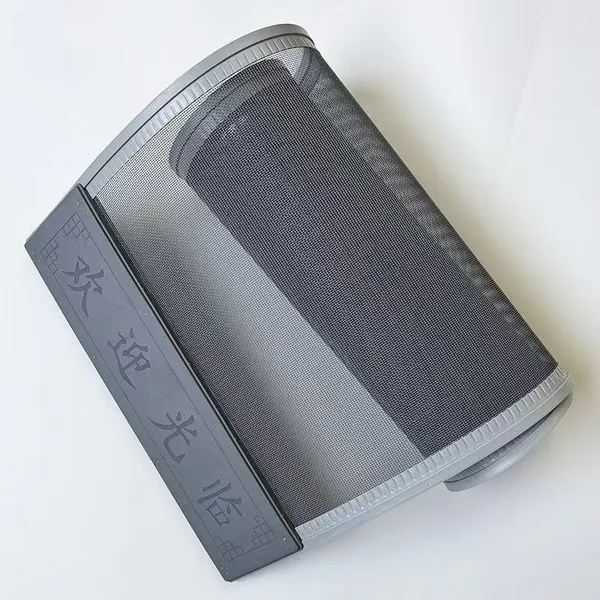
Heavy Duty Titanium Steel Mesh Magnetic Door Curtain With Reinforced EdgesNegotiableMOQ: 10 Pieces
-
Rubber Plastic Insulation Tube for Refrigeration & Cold Storage PipelineNegotiableMOQ: 500 Square Meters
-
Durable Aluminum Dry Floor Heating Panel With High Thermal ConductivityNegotiableMOQ: 100 Pieces
-
Nano Aerogel Felt Insulation Material for Cold Protection and Energy EfficiencyNegotiableMOQ: 50 Meters
-
High-Temperature Nano Silica Aerogel Felt for Pipe Fire and Thermal InsulationNegotiableMOQ: 50 Meters
-
Insulated PVC Magnetic Door Curtain for Thermal Insulation in Bedroom & KitchenNegotiableMOQ: 500 Kilograms
-
Professional Aluminum Foil Foam Board for Dry Underfloor Heating SystemsNegotiableMOQ: 100 Pieces
-
Aluminum Underfloor Heating Module for Commercial and Residential UseNegotiableMOQ: 100 Pieces
-
XPS Waterproof Board 10mm Thickness for Roofing InsulationNegotiableMOQ: 50 Square Meters
-
Custom Size Titanium Steel Mesh Magnetic Door Curtain for Warehouse Pest ControlNegotiableMOQ: 10 Pieces
-
Flame Retardant Thermal Insulation Sponge for Rubber & Plastic Pipes - Fireproof Factory DirectNegotiableMOQ: 500 Square Meters
-
Cold Insulation Rubber Plastic Board for HVAC and Industrial Pipeline ApplicationsNegotiableMOQ: 500 Square Meters
-
20mm XPS Thermal Insulation Panel for Dry Underfloor Heating SystemsNegotiableMOQ: 100 Pieces
-
High Temperature Resistant Foam Insulation Tube for Air Conditioner DuctsNegotiableMOQ: 500 Meters
-
XPS Tile Backer Board Waterproof Insulation for Wall & BathroomNegotiableMOQ: 500 Square Meters