
 Business License

Cold Room Door Curtain: A Complete Guide to Cutting Energy Loss at the Opening
Every time a forklift passes through your cold room opening, a wave of warm air rushes in. That single exchange can raise the internal temperature by 2–4°C in seconds, forcing your compressor to work harder for the next 20 minutes. Over a year, an unprotected cold storage door can waste enough electricity to power a small office.
A cold room door curtain, also called a cold storage door curtain, is one of the simplest ways to seal that gap without blocking traffic. At DaCheng BangMei, we spend much of our time thinking about walls, floors, and ceilings, but we also know the opening is where most thermal energy escapes in a cold storage facility. This guide explains how PVC strip curtains work, how to specify them for different temperature zones, and what to look for when sourcing them for commercial kitchens, distribution centers, and industrial freezers.
Why Cold Storage Openings Lose So Much Energy

Cold rooms are designed as tight thermal envelopes. The insulated panels, floor slabs, and ceiling assemblies are engineered to keep heat out. Yet the door is almost always the weakest link.
Conventional solid doors solve part of the problem, but they're slow. In busy facilities, staff prop them open or hold them ajar while moving pallets. Each open cycle allows warm, moist air to enter. That air carries two penalties:
Sensible heat load: The temperature difference forces the refrigeration system to remove the incoming heat.
Latent heat load: Moisture condenses and freezes on evaporator coils, reducing efficiency and requiring more frequent defrost cycles.
A cold storage door curtain reduces both loads by creating a flexible air barrier. Strips of PVC hang in overlapping rows. They part easily for people and equipment, then fall back into place within seconds. The result is a continuous thermal buffer that costs far less than a high-speed roll-up door.
What Is a Cold Room Door Curtain?
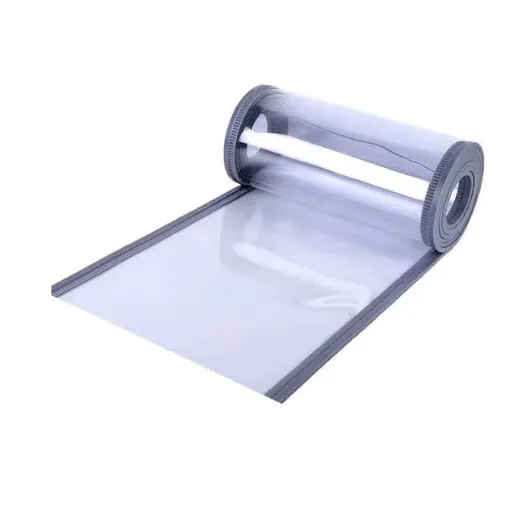
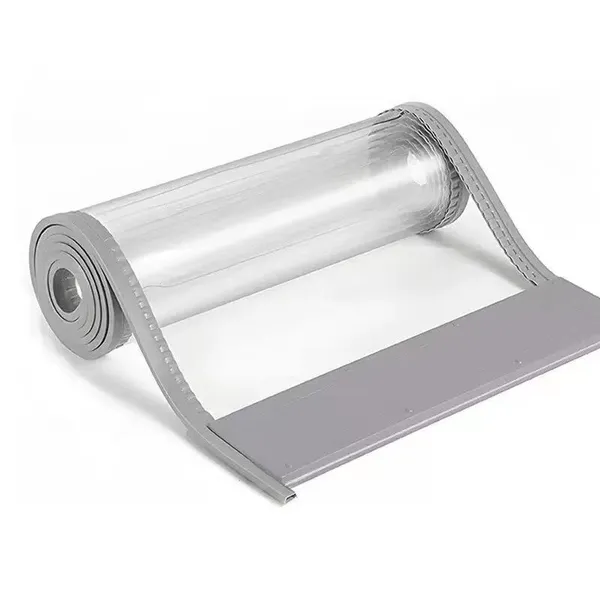
A cold room door curtain is a PVC strip curtain for cold room openings made from flexible PVC panels suspended across a doorway. Each strip is clear or translucent, allowing visibility and light penetration while blocking airflow. The strips overlap by 25–75% depending on the application, creating a seal that limits temperature transfer.
The key difference between a standard PVC strip curtain and one designed for cold storage is the material formulation. Cold room versions use polar grade PVC that stays flexible at freezer temperatures. Standard PVC becomes stiff and brittle below 0°C, so it's unsuitable for walk-in freezers or blast freezer openings.
Common Strip Specifications
| Property | Standard PVC | Polar Grade PVC |
|---|---|---|
| Temperature range | +10°C to +50°C | -40°C to +25°C |
| Thickness options | 2 mm, 3 mm | 2 mm, 3 mm, 4 mm |
| Width options | 200 mm, 300 mm | 200 mm, 300 mm |
| Overlap recommendation | 25–50% | 50–75% |
| Transparency | Clear | Clear or ribbed |
| UV stabilization | Optional | Optional |
A polar grade PVC curtain contains plasticizers that resist hardening at low temperatures. This matters because a stiff strip will not close cleanly after being pushed aside. Gaps between strips defeat the purpose of the curtain.
How a Cold Room Door Curtain Reduces Operating Costs
Therefore, the financial case for a cold storage door curtain is straightforward. Engineering references such as the ASHRAE Refrigeration Handbook note that strip curtains can cut energy loss through openings by 25–35%. The exact saving depends on traffic frequency, temperature differential, and curtain quality.
For example, consider a -18°C freezer in a +22°C warehouse with a 40°C temperature difference across the doorway. Without a curtain, warm air enters at the top and cold air spills out at the bottom every time the door opens. This stack effect is the main mechanism of energy loss. A properly sized PVC strip curtain disrupts the airflow enough to reduce the exchange by roughly one-third.
The savings compound in three ways:
Lower compressor run time: Less heat enters, so the refrigeration plant cycles less often.
Reduced defrost frequency: Less moisture means less ice buildup on coils.
Longer door life: If the curtain is paired with a solid door, the solid door stays closed longer and its seals wear more slowly.
Mini-Story: The Distribution Center in Rotterdam
In 2024, a frozen seafood distributor in Rotterdam installed polar grade PVC strip curtains across 12 loading bay openings leading into its -22°C storage hall. Before installation, the facility recorded an average of 18 door-open events per hour during the day shift. Energy monitoring showed that refrigeration power consumption spiked by 8–12% during those peak hours.
After fitting 300 mm-wide strips with 66% overlap, the same monitoring period showed a 29% reduction in compressor load during door activity. The curtains paid for themselves in under eight months through electricity savings alone. Maintenance staff also reported fewer ice formations near the doorway thresholds.
Choosing the Right Cold Room Door Curtain

However, not every strip curtain suits every cold room. The wrong choice either wastes money or fails to seal properly. Here is what to evaluate.
Temperature Zone
Match the PVC grade to the operating temperature:
Walk-in coolers (+2°C to +10°C): A walk-in cooler door curtain using standard clear PVC is usually sufficient.
Walk-in freezers (-18°C to -25°C): A freezer door curtain should use polar grade PVC.
Blast freezers (-30°C to -40°C): Use heavy-duty polar grade with thicker strips and maximum overlap.
Using standard PVC in a freezer is a common mistake. The strips harden within days, crack at the edges, and no longer hang straight. Replacement costs quickly exceed the original price difference between standard and polar grade material.
Strip Dimensions
Wider and thicker strips provide better insulation but they're heavier and harder to push through. The standard choice for cold rooms is 300 mm width and 3 mm thickness. Narrower 200 mm strips work for personnel doors where light traffic and visibility matter more than thermal sealing.
Thicker 4 mm strips suit high-traffic forklift openings or locations exposed to wind pressure from adjacent spaces. Thickness also improves durability against impact from pallet jacks and carts.
Overlap Percentage
Overlap determines how well the strips seal when at rest. Recommendations vary by temperature differential and traffic type:
Light personnel traffic, small temperature difference: 25% overlap
Forklift traffic, moderate freezer: 50% overlap
High-traffic blast freezer or cold store: 66–75% overlap
Higher overlap improves sealing but increases the effort required to pass through. In facilities where workers pass constantly, 50% overlap is usually the practical optimum.
Mounting System
Most cold room door curtains use a stainless steel or galvanized rail with hook-on strips. The rail bolts to the wall or door frame. Individual strips can be replaced without dismantling the whole curtain. For hygiene-critical food facilities, stainless steel hardware resists corrosion from cleaning chemicals and moisture.
Some systems offer swing-arm mounts or sliding rail systems for occasional full opening. These are useful when large equipment needs to pass through or when the doorway must be clear during deep cleaning.
Cold Room Door Curtain vs. Other Opening Solutions
A strip curtain is not the only way to control energy loss at a cold storage opening. Understanding the alternatives helps buyers justify the right choice.
Strip Curtain vs. Solid Door Alone
A solid insulated door provides the best thermal seal when closed. The problem is that it is only effective when people actually close it. In practice, busy operations leave doors wedged open. A strip curtain acts as a secondary barrier that remains effective even when the primary door is open.
Strip Curtain vs. High-Speed Roll-Up Door
High-speed doors open and close in 1–2 seconds, which dramatically reduces air exchange. They're excellent for high-traffic openings but cost significantly more than strip curtains. They also need electrical supply, control wiring, and regular maintenance. For medium-traffic openings, a PVC strip curtain often delivers 80% of the benefit at 20% of the cost.
Strip Curtain vs. Air Curtain
Air curtains blow a vertical or horizontal stream of air across the opening to create an invisible barrier. They work well in retail and customer-facing areas but are less effective in cold storage with large temperature differentials. They also add noise and consume electricity. Most cold storage engineers prefer physical strip curtains for freezer applications.
Cold Room Door Curtain Installation Best Practices

Importantly, even a high-quality cold room door curtain underperforms if installed poorly. Follow these guidelines to get the full benefit.
Size the Opening Correctly
Measure the clear width and height of the opening. The curtain rail should span the full width. Strips should hang 25–50 mm above the floor. If they drag on the floor, they wear quickly and create a trip hazard. If they hang too high, warm air flows underneath.
Allow for Traffic Patterns
Position the curtain so that the most common traffic path passes through the center. In wide openings, consider installing two curtains side by side with a central gap for foot traffic. This reduces unnecessary disturbance to the main curtain.
Maintain the Strips
Over time, strips become scratched, yellowed, or stiff. Plan to inspect them quarterly. Replace individual strips as soon as they crack or lose flexibility. A single damaged strip can create enough of a gap to cancel the energy savings of the whole curtain.
Clean strips with mild detergent and warm water. Avoid abrasive pads or solvents that degrade the PVC surface. In food handling areas, follow your facility's cleaning protocol to prevent contamination.
Regulatory and Hygiene Considerations
In addition, cold rooms used for food, pharmaceuticals, or medical products must meet hygiene standards. The curtain material should be food-safe and resistant to mold growth. Many suppliers offer strips with antimicrobial additives for food processing environments.
Check that the PVC complies with relevant regulations for your market. In the EU, materials in contact with food must meet EU 10/2011 requirements. In the United States, FDA-compliant PVC is preferred for food storage areas. Suppliers should provide a certificate of conformance on request.
For fire-rated cold storage areas, note that standard PVC strip curtains are combustible. If the opening is part of a fire compartmentation strategy, consult a fire engineer. The curtain may need to be removed or replaced with a fire-rated closure during a fire event.
Integrating Your Cold Room Door Curtain with the Cold Storage Envelope
A cold room door curtain is only one component of a well-designed cold storage envelope. The walls, ceiling, floor insulation, and door seals must work together. At DaCheng BangMei, we approach cold storage as a system, not a collection of products.
Our closed-cell rubber-plastic insulation and rock wool systems insulate the structural envelope of cold rooms and refrigerated warehouses. When the envelope is well insulated, the door curtain has less work to do. Conversely, even the best strip curtain can't compensate for poorly insulated walls or failed door seals.
If you're building or retrofitting a cold storage facility, consider the whole thermal path:
Insulated panels or insulation boards with the correct R-value for the temperature zone
Vapor-barrier-facing materials to prevent condensation within the envelope
Sealed floor-to-wall and ceiling joints
High-performance door seals on the primary solid door
Secondary strip curtain at high-traffic openings
This layered approach is how modern cold storage facilities achieve the low energy intensity required by sustainability certifications and rising electricity costs.
Mini-Story: The Bakery in Lisbon
Maria managed a commercial bakery that supplied bread to hotels across Lisbon. Her walk-in cooler was fitted with a solid door, but during the morning rush, bakers left it propped open while carrying trays of dough. The compressor ran almost continuously, and the electric bill kept climbing.
She installed a clear polar grade PVC strip curtain inside the existing door frame. The bakers could see through the strips while carrying trays, and the curtain closed automatically behind them. Within the first month, cooler run time dropped by 22%. Maria also noticed less condensation on the floor near the doorway, which reduced slipping risk during busy shifts.
Sourcing a Cold Room Door Curtain: What to Ask Suppliers
When evaluating suppliers, request the following information to avoid specification mismatches.
PVC grade and temperature rating: Confirm whether the material is standard or polar grade and the minimum operating temperature.
Thickness and width options: Match these to your traffic type and thermal load.
Overlap calculation: Ask how many strips are needed for your opening width to achieve the recommended overlap.
Hardware material: Stainless steel rails are preferable in humid or wash-down environments.
Certifications: Request food-contact compliance certificates if required.
Replacement strip availability: Confirm that individual strips can be ordered separately rather than replacing the whole system.
Price shouldn't be the only deciding factor. A cheaper curtain made from standard PVC in a freezer application will need replacement within months. The total cost of ownership includes energy savings, maintenance, and replacement frequency.
Conclusion
Installing the right cold room door curtain is a small investment that protects a much larger one. Every cold storage facility depends on its refrigeration plant, and that plant works hardest when warm air enters through an open doorway. By choosing the right PVC strip curtain, you reduce compressor load, cut defrost cycles, and extend the life of your door seals.
Key takeaways:
Use polar grade PVC for freezer and blast freezer openings.
Size strips for 50% overlap in most cold storage applications.
Maintain and replace strips regularly to preserve the seal.
Treat the curtain as part of the complete cold storage envelope, not a standalone fix.
Verify food-contact certifications when required for your market.
If you're planning a cold storage project or retrofit, DaCheng BangMei supplies the insulation materials and technical guidance to build an efficient, code-compliant envelope. For the door opening itself, we can help you select a walk-in cooler door curtain or freezer door curtain specification that matches your temperature zone and traffic pattern.
Ready to reduce cold storage energy loss? Contact our technical team to discuss your insulation and doorway sealing requirements, or request a project quote for your next cold room build.
Recently Posted
-
Insulation for Metal Buildings: Complete Buyer's Guide 2026
June 24, 2026A warehouse manager in Texas watched his electricity bill climb every summer. The metal roof turned the building into a solar oven Read More
 -
Insulation Materials Comparison: How to Select the Right Type for Your Project
June 24, 2026The procurement manager stared at six quotations on her screen. Each supplier recommended a different insulation material for the Read More
 -
Thermal Conductivity of Insulation Materials: A Specifier's Guide
June 24, 2026Ahmed Hassan spent three weeks reconciling quotes for a cold storage expansion in Dubai. One supplier quoted 80 mm rubber-plastic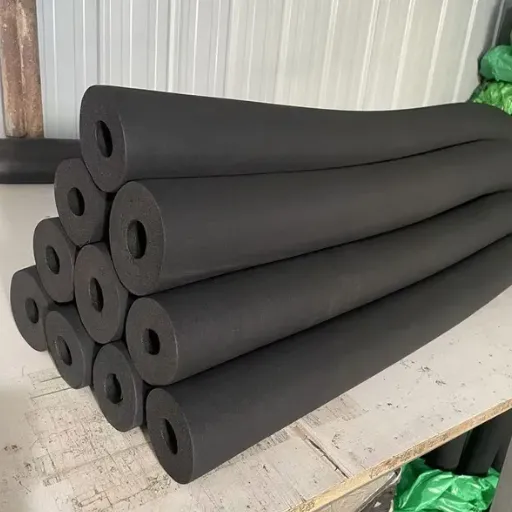 Read More
 -
Basement Insulation Board: Complete Buyer's Guide | DaCheng BangMei
June 24, 2026A homeowner in Michigan finished their basement with standard fiberglass batts and drywall. Two winters later, the bottom plates w Read More

Contact Us
Recommended Products
-
 Eco-Friendly Aluminum Foil Foam Board for Underfloor Heating SolutionsNegotiableMOQ: 100 Pieces
 -
Rubber Plastic Insulation Board Waterproof for Industrial Thermal InsulationNegotiableMOQ: 500 Square Meters
-
Premium Soft Silica Nano Aerogel Felt Sheets for Industrial Heat InsulationNegotiableMOQ: 50 Meters
-
Customizable PVC Magnetic Door Curtain Roll for Home & Kitchen UseNegotiableMOQ: 500 Kilograms
-
XPS Waterproof Board for Underground Garage Moisture BarrierNegotiableMOQ: 50 Square Meters
-
Heavy Duty Titanium Steel Mesh Magnetic Door Curtain With Reinforced EdgesNegotiableMOQ: 10 Pieces
-
Rubber Plastic Insulation Tube for Refrigeration & Cold Storage PipelineNegotiableMOQ: 500 Square Meters
-
Durable Aluminum Dry Floor Heating Panel With High Thermal ConductivityNegotiableMOQ: 100 Pieces
-
Nano Aerogel Felt Insulation Material for Cold Protection and Energy EfficiencyNegotiableMOQ: 50 Meters
-
High-Temperature Nano Silica Aerogel Felt for Pipe Fire and Thermal InsulationNegotiableMOQ: 50 Meters
-
Insulated PVC Magnetic Door Curtain for Thermal Insulation in Bedroom & KitchenNegotiableMOQ: 500 Kilograms
-
Professional Aluminum Foil Foam Board for Dry Underfloor Heating SystemsNegotiableMOQ: 100 Pieces
-
Aluminum Underfloor Heating Module for Commercial and Residential UseNegotiableMOQ: 100 Pieces
-
XPS Waterproof Board 10mm Thickness for Roofing InsulationNegotiableMOQ: 50 Square Meters
-
Custom Size Titanium Steel Mesh Magnetic Door Curtain for Warehouse Pest ControlNegotiableMOQ: 10 Pieces
-
Flame Retardant Thermal Insulation Sponge for Rubber & Plastic Pipes - Fireproof Factory DirectNegotiableMOQ: 500 Square Meters
-
Cold Insulation Rubber Plastic Board for HVAC and Industrial Pipeline ApplicationsNegotiableMOQ: 500 Square Meters
-
20mm XPS Thermal Insulation Panel for Dry Underfloor Heating SystemsNegotiableMOQ: 100 Pieces
-
High Temperature Resistant Foam Insulation Tube for Air Conditioner DuctsNegotiableMOQ: 500 Meters
-
XPS Tile Backer Board Waterproof Insulation for Wall & BathroomNegotiableMOQ: 500 Square Meters