
 Business License

XPS vs Polyiso Insulation: How to Choose the Right Rigid Foam Board
When the roofing contractor presented two insulation quotes for a commercial warehouse in Dallas, the project manager saw almost identical numbers on paper. Both options were rigid foam boards. Both promised high R-values. Both fit the budget. One was XPS. The other was polyiso.
Six months after installation, the difference became visible only from the inside. The polyiso roof showed thermal imaging hotspots along the seams, and the XPS edge boards had absorbed enough moisture to compress under foot traffic during membrane repairs. Neither failure was catastrophic, but both could have been avoided if the specification had matched each material to the actual roof conditions.
This article compares XPS vs polyiso insulation across the criteria that matter most for B2B specifiers and contractors: thermal conductivity, moisture performance, compressive strength, fire behavior, installation requirements, and total cost of ownership. You will also learn when XPS insulation board is the safer choice, when polyiso insulation delivers better value, and how to avoid common specification mistakes.
At DaCheng BangMei, part of Huaneng Zhongtian's 40-year manufacturing group, we produce XPS waterproof insulation boards alongside rock wool and rubber-plastic systems. Here is how our technical team evaluates XPS vs polyiso insulation for real building envelope projects.
Want the thermal numbers before reading on? Check our XPS insulation R value guide for thickness-specific calculations.
What Is XPS Insulation?
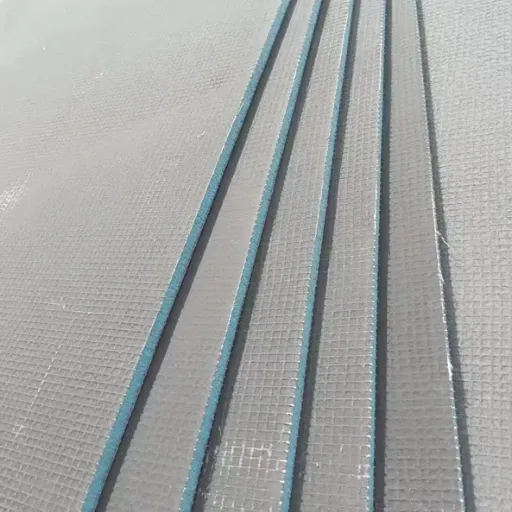
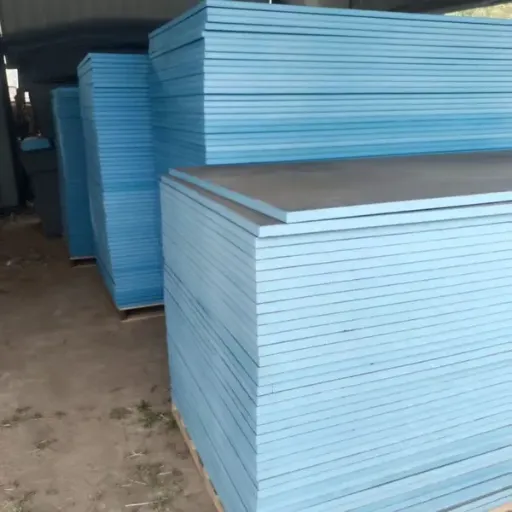
XPS stands for extruded polystyrene. It is a closed-cell rigid foam board produced by mixing polystyrene resin with a blowing agent and extruding it through a die. The result is a dense, uniform foam with small closed cells that resist both heat flow and water absorption.
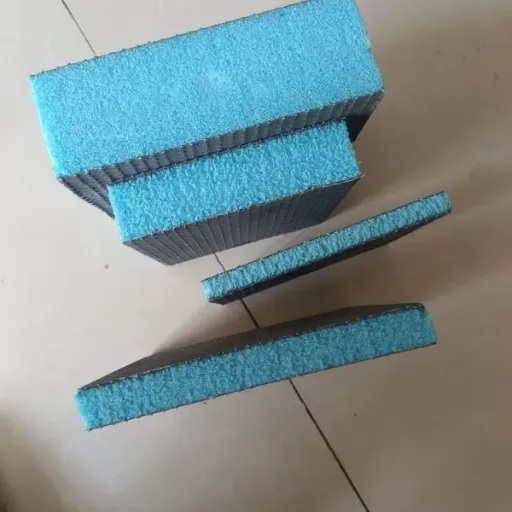
XPS boards are commonly used for roof insulation, foundation walls, plaza decks, and below-grade applications. They are recognized by their often smooth skin and common coloration: pink, blue, green, or yellow, depending on the manufacturer.
Key properties of XPS insulation board include:
Thermal conductivity: 0.028-0.036 W/(m·K)
Compressive strength: 150-700 kPa depending on grade
Closed-cell structure with low water absorption
Long-term thermal resistance (LTTR) stable over decades
Good dimensional stability across temperature cycles
DaCheng BangMei manufactures XPS boards with compressive strengths from 150 kPa to 700 kPa and thermal conductivity as low as 0.028 W/(m·K). Boards are available with or without facings and in custom dimensions for roof, wall, and below-grade applications.
What Is Polyiso Insulation?
Polyiso, short for polyisocyanurate, is a thermoset plastic foam board typically manufactured between foil, fiberglass, or paper facers. It is produced by reacting isocyanates with a polyol blowing agent, creating a rigid foam core with one of the highest R-values per inch of any common insulation material.
Polyiso insulation is widely used in commercial roofing, wall sheathing, and continuous exterior insulation. It is lightweight, easy to cut, and usually supplied with foil facings that act as a vapor retarder and radiant barrier.
Key properties of polyiso insulation include:
Thermal conductivity: 0.022-0.028 W/(m·K)
Compressive strength: 100-250 kPa for standard roofing boards
Lightweight core with foil or fiberglass facings
Thermoset chemistry that chars rather than melts under flame
R-value that declines as mean temperature drops
Because polyiso offers higher R-value per unit thickness than XPS, specifiers often choose it when space is limited, such as in low-slope roofing assemblies or retrofit projects where adding thickness is not practical.
Need help deciding which rigid foam fits your envelope? Speak with our technical team for a free specification review.
Thermal Performance: Polyiso vs XPS R Value
Thermal resistance is usually the first number buyers compare. On paper, polyiso wins. In practice, the comparison depends on temperature.
Nominal R-Value Comparison
At standard laboratory conditions around 24°C mean temperature, polyiso insulation typically delivers higher R-value per inch than XPS. A 25 mm polyiso board may achieve an R-value of 0.88-1.06 m²·K/W, while a 25 mm XPS board delivers 0.69-0.89 m²·K/W.
This means polyiso can achieve the same thermal resistance with a thinner board, which is valuable in space-constrained assemblies.
Temperature Dependency
Polyiso's R-value does not stay constant. As mean temperature drops, polyiso's thermal performance declines. At cold roof temperatures near 4°C, polyiso can lose 15-25% of its rated R-value. XPS performance is more stable across the same range.
This effect matters significantly for cold-climate roofs and below-grade walls. A roof assembly sized for polyiso's nominal R-value at 24°C may underperform in winter conditions.
| Mean Temperature | XPS Thermal Conductivity | Polyiso Thermal Conductivity |
|---|---|---|
| 24°C | 0.030-0.036 W/(m·K) | 0.022-0.028 W/(m·K) |
| 4°C | 0.032-0.038 W/(m·K) | 0.028-0.036 W/(m·K) |
| -10°C | 0.034-0.040 W/(m·K) | 0.032-0.042 W/(m·K) |
For applications where low mean temperatures are expected, XPS may deliver equivalent or better effective R-value despite its lower nominal rating. Always request manufacturer LTTR data tested at the service temperature you expect.
Moisture and Water Absorption
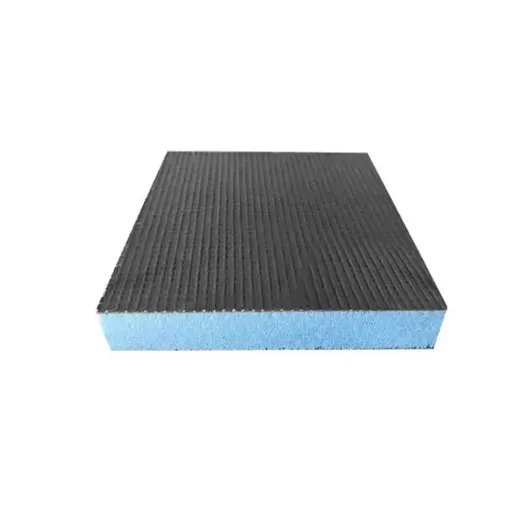
Rigid foam in building envelopes often contacts moisture from rain, groundwater, condensation, or construction-phase exposure. How each material handles water is a major differentiator.
XPS Water Resistance
XPS has a closed-cell structure that limits water absorption. ASTM C578 testing typically reports XPS water absorption below 0.7% by volume after long-term submersion. High-density XPS grades perform even better.
This makes XPS insulation board the preferred choice for:
Below-grade foundation walls
Slab edge and underslab insulation
Plaza decks and green roofs
Exposed construction staging before envelope closure
Polyiso Moisture Sensitivity
Polyiso is more sensitive to moisture. The foam core can absorb water if the facings are punctured or improperly sealed. Wet polyiso loses thermal performance and can degrade structurally over time.
However, polyiso's foil facings provide an excellent vapor retarder when seams are taped. In protected roofing assemblies with quality membrane details, moisture risk is manageable.
A facilities engineer in Miami learned this distinction the hard way. His team installed polyiso on a plaza deck with inadequate membrane protection. Within two years, water intrusion had degraded the boards at the perimeter. The replacement specification switched to 300 kPa XPS boards with a protective membrane, and the assembly has remained dry through five hurricane seasons.
Compressive Strength and Load-Bearing Applications
Compressive strength determines whether a board can support traffic, equipment, or soil loads without crushing.
XPS Compressive Strength
XPS is available in a wide range of compressive strengths, from 150 kPa for standard walls to 700 kPa for heavy-load plaza decks and parking structures. This range makes XPS suitable for load-bearing applications that polyiso typically cannot handle.
Polyiso Compressive Strength
Standard polyiso roofing boards offer compressive strengths around 100-175 kPa. High-density polyiso can reach 250 kPa, but it rarely matches the upper range of XPS.
For applications where workers will walk on the insulation, or where soil and pavement loads will bear on it, XPS is usually the safer specification.
| Application | Recommended Material | Typical Strength Requirement |
|---|---|---|
| Wall sheathing | Polyiso or XPS | 100-150 kPa |
| Low-slope roofing | Polyiso | 100-175 kPa |
| Below-grade walls | XPS | 150-300 kPa |
| Plaza decks and green roofs | XPS | 300-700 kPa |
| Slab edge insulation | XPS | 150-300 kPa |
Fire Performance and Code Compliance
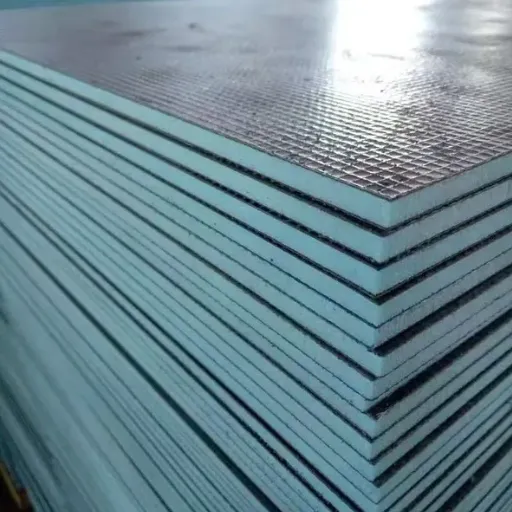
Fire behavior is a critical specification factor, especially for high-rise buildings, commercial roofing, and assemblies subject to strict building codes.
Polyiso Fire Behavior
Polyiso is a thermoset foam. When exposed to flame, it chars and forms a protective layer that slows further combustion. It does not melt and drip like thermoplastic foams. Foil-faced polyiso often achieves Class A flame-spread ratings on the exposed facing side.
XPS Fire Behavior
XPS is a thermoplastic foam. Under sustained heat, it can melt, shrink, and drip. Most XPS products require a thermal barrier, such as gypsum board, to meet code in occupied buildings. Some manufacturers offer flame-retardant additives, but the base chemistry remains thermoplastic.
For roofing applications where the membrane protects the insulation, XPS fire performance is generally acceptable. For interior or exposed applications, polyiso may have an advantage, though local code requirements should always govern the specification.
Installation and Workability
Both materials are relatively easy to handle, but installation details differ.
Cutting and Fitting
Polyiso is lighter and easier to cut with a knife or saw. Foil facings can be scored and snapped cleanly. XPS is denser and requires sharper tools, but it cuts cleanly and holds edges well.
Seaming and Air Leakage
Both materials benefit from staggered joints and tight fits. Polyiso's foil facing allows effective tape-seaming for air and vapor control. XPS joints may require additional sealing with compatible tapes or sealants to minimize air leakage.
Fastening
Polyiso is often mechanically attached or adhered in roofing assemblies. XPS is commonly installed with adhesive, mechanical fasteners, or friction-fit in foundation forms. High-density XPS can withstand more aggressive fastening without crushing.
A roofing contractor in Toronto switched from polyiso to XPS for a cold-storage roof retrofit after the polyiso boards crushed around fastener plates under foot traffic during installation. The XPS boards held their shape, and the finished roof required fewer repairs before membrane application.
Cost Comparison and Total Cost of Ownership
Material price is only one part of the cost equation. Installation labor, longevity, and energy performance over the building life all affect total cost.
Material Cost
Polyiso typically costs more per board than XPS of the same thickness. However, because polyiso offers higher R-value per inch, it may require less thickness to meet the same thermal target, partially offsetting the higher unit cost.
Installation Cost
Polyiso's lighter weight can reduce handling labor on large roofing jobs. XPS's higher density may require more cutting effort but reduces damage risk in high-traffic areas.
Long-Term Performance
XPS generally retains thermal performance longer in moist or load-bearing conditions. Polyiso may need replacement sooner if water breaches the facing or if the assembly experiences heavy mechanical stress.
| Cost Factor | XPS | Polyiso |
|---|---|---|
| Material cost per m² | Lower to moderate | Higher |
| R-value per mm | Moderate | Higher |
| Thickness needed for target R-value | Greater | Less |
| Labor handling | Moderate | Easier |
| Moisture-related replacement risk | Lower | Higher |
| Load-bearing durability | Higher | Lower |
For a cold climate warehouse roof, a specifier in Denver chose 150 mm of XPS over 120 mm of polyiso. The slightly thicker XPS assembly cost 8% more in materials but eliminated the need for protective cover boards and reduced long-term moisture risk. Over a 20-year analysis, the XPS roof had the lower total cost of ownership.
When to Specify XPS Insulation Board
Choose XPS when the project demands moisture resistance, compressive strength, or stable performance across a wide temperature range.
Below-grade walls and underslab insulation
Slab edges and foundation perimeters
Plaza decks, green roofs, and parking decks
Cold storage floors and freezer foundations
Construction staging before permanent envelope closure
Assemblies where workers or equipment will load the insulation
DaCheng BangMei supplies XPS waterproof insulation boards with compressive strengths from 150 kPa to 700 kPa. Boards can be cut to custom dimensions and supplied with or without facings for wall, roof, and below-grade projects.
When to Specify Polyiso Insulation
Choose polyiso when space is limited and the assembly is protected from moisture and mechanical abuse.
Low-slope commercial roofing with intact membrane
Continuous exterior wall insulation
Retrofit projects where adding thickness is difficult
Assemblies where lightweight handling matters
Projects where foil-facing vapor retarder is beneficial
Interior applications requiring thermoset fire behavior
XPS vs Polyiso Insulation: Side-by-Side Comparison
| Property | XPS Insulation | Polyiso Insulation |
|---|---|---|
| Thermal conductivity at 24°C | 0.028-0.036 W/(m·K) | 0.022-0.028 W/(m·K) |
| R-value stability at low temperature | Better | Declines as temperature drops |
| Water absorption | Very low | Higher if facings fail |
| Compressive strength | 150-700 kPa | 100-250 kPa typical |
| Weight | Heavier | Lighter |
| Fire behavior | Thermoplastic, may melt/drip | Thermoset, chars |
| Ease of cutting | Good, requires sharp tools | Excellent |
| Best applications | Below-grade, roofs, heavy loads | Roofing, wall sheathing, space limits |
| Cost per m² | Lower to moderate | Higher |
| Facing options | Limited | Foil, fiberglass, paper common |
Neither material is universally better. The right choice depends on the assembly, climate, load conditions, and budget.
Specification Checklist for Rigid Foam Insulation
Use this checklist to avoid the most common specification mistakes:
Confirm the service temperature range. Polyiso R-value drops in cold conditions. Size the insulation using LTTR data at the expected mean temperature.
Evaluate moisture exposure. Below-grade, plaza, and green roof applications usually favor XPS.
Check load requirements. Heavy traffic, soil, or equipment loads require XPS with adequate compressive strength.
Review fire code requirements. Interior or exposed applications may need polyiso or additional thermal barriers.
Consider total thickness limits. If the assembly cannot accommodate thicker boards, polyiso's higher R-value per inch may be necessary.
Specify board facings. Foil facings on polyiso improve vapor control. XPS facings should match the adhesive and membrane compatibility.
Request test reports. Verify thermal conductivity, compressive strength, water absorption, and fire ratings with third-party test data.
How DaCheng BangMei Supports Rigid Foam Insulation Projects
DaCheng BangMei supplies XPS waterproof insulation boards as part of our comprehensive building insulation product range. We support buyers with:
Custom XPS board dimensions: Cut to project-specific thickness, width, and length
Multiple compressive strength grades: 150 kPa, 200 kPa, 250 kPa, 300 kPa, 500 kPa, and 700 kPa options
Facing options: Smooth, rough, or grooved surfaces to match adhesives and membranes
Technical consultation: U-value calculations, thickness recommendations, and condensation risk analysis
Export packaging: Palletized boards with moisture protection for sea freight
Combined sourcing: Pair your XPS order with rock wool boards, rubber-plastic insulation, or other building materials
Our technical team recently helped a distribution center project in Southeast Asia specify 250 kPa XPS boards for a green roof assembly. The boards were supplied in custom 1200 mm by 2400 mm dimensions with a grooved surface for improved drainage membrane adhesion. The assembly met the U-value target while supporting pedestrian maintenance access without compression.
Need a specification review for your rigid foam project? Request a custom quote with your assembly details and thermal targets.
Conclusion
XPS vs polyiso insulation is not a simple winner-take-all decision. Polyiso offers higher R-value per inch and lighter handling, making it ideal for roofing and space-constrained walls. XPS delivers superior moisture resistance, compressive strength, and low-temperature stability, making it the safer choice for below-grade, plaza, and load-bearing applications.
Key takeaways:
Match material to exposure: Polyiso for protected roofs and walls; XPS for below-grade and high-load areas.
Check real service temperature: Polyiso R-value declines in cold conditions, so use LTTR data at project temperatures.
Consider compressive loads: XPS handles traffic, soil, and equipment loads better than standard polyiso.
Evaluate fire requirements: Polyiso chars; XPS melts. Local codes may dictate which is acceptable.
Calculate total cost: Factor in labor, protection, and long-term performance, not just material price.
If you are specifying rigid foam insulation for a commercial or industrial project, our team can review your assembly and recommend the right material, thickness, and grade. We will help you avoid the specification mistakes that lead to thermal underperformance and costly rework.
Recently Posted
-
Insulation for Metal Buildings: Complete Buyer's Guide 2026
June 24, 2026A warehouse manager in Texas watched his electricity bill climb every summer. The metal roof turned the building into a solar oven Read More
 -
Insulation Materials Comparison: How to Select the Right Type for Your Project
June 24, 2026The procurement manager stared at six quotations on her screen. Each supplier recommended a different insulation material for the Read More
 -
Thermal Conductivity of Insulation Materials: A Specifier's Guide
June 24, 2026Ahmed Hassan spent three weeks reconciling quotes for a cold storage expansion in Dubai. One supplier quoted 80 mm rubber-plastic Read More
 -
Basement Insulation Board: Complete Buyer's Guide | DaCheng BangMei
June 24, 2026A homeowner in Michigan finished their basement with standard fiberglass batts and drywall. Two winters later, the bottom plates w Read More

Contact Us
Recommended Products
-
 Eco-Friendly Aluminum Foil Foam Board for Underfloor Heating SolutionsNegotiableMOQ: 100 Pieces
 -
Rubber Plastic Insulation Board Waterproof for Industrial Thermal InsulationNegotiableMOQ: 500 Square Meters
-
Premium Soft Silica Nano Aerogel Felt Sheets for Industrial Heat InsulationNegotiableMOQ: 50 Meters
-
Customizable PVC Magnetic Door Curtain Roll for Home & Kitchen UseNegotiableMOQ: 500 Kilograms
-
XPS Waterproof Board for Underground Garage Moisture BarrierNegotiableMOQ: 50 Square Meters
-
Heavy Duty Titanium Steel Mesh Magnetic Door Curtain With Reinforced EdgesNegotiableMOQ: 10 Pieces
-
Rubber Plastic Insulation Tube for Refrigeration & Cold Storage PipelineNegotiableMOQ: 500 Square Meters
-
Durable Aluminum Dry Floor Heating Panel With High Thermal ConductivityNegotiableMOQ: 100 Pieces
-
Nano Aerogel Felt Insulation Material for Cold Protection and Energy EfficiencyNegotiableMOQ: 50 Meters
-
High-Temperature Nano Silica Aerogel Felt for Pipe Fire and Thermal InsulationNegotiableMOQ: 50 Meters
-
Insulated PVC Magnetic Door Curtain for Thermal Insulation in Bedroom & KitchenNegotiableMOQ: 500 Kilograms
-
Professional Aluminum Foil Foam Board for Dry Underfloor Heating SystemsNegotiableMOQ: 100 Pieces
-
Aluminum Underfloor Heating Module for Commercial and Residential UseNegotiableMOQ: 100 Pieces
-
XPS Waterproof Board 10mm Thickness for Roofing InsulationNegotiableMOQ: 50 Square Meters
-
Custom Size Titanium Steel Mesh Magnetic Door Curtain for Warehouse Pest ControlNegotiableMOQ: 10 Pieces
-
Flame Retardant Thermal Insulation Sponge for Rubber & Plastic Pipes - Fireproof Factory DirectNegotiableMOQ: 500 Square Meters
-
Cold Insulation Rubber Plastic Board for HVAC and Industrial Pipeline ApplicationsNegotiableMOQ: 500 Square Meters
-
20mm XPS Thermal Insulation Panel for Dry Underfloor Heating SystemsNegotiableMOQ: 100 Pieces
-
High Temperature Resistant Foam Insulation Tube for Air Conditioner DuctsNegotiableMOQ: 500 Meters
-
XPS Tile Backer Board Waterproof Insulation for Wall & BathroomNegotiableMOQ: 500 Square Meters