
 Business License

Closed Cell Elastomeric Insulation: Complete Technical Guide
A facilities manager in Singapore noticed water stains spreading across the ceiling of a newly renovated office tower. The chilled water pipes above the drywall had been insulated, yet condensation kept forming on the surface.
The problem was not the insulation thickness. It was the material itself. Open-cell foam was absorbing moisture like a sponge, destroying its thermal performance within months.
This scenario plays out in buildings worldwide when specifiers underestimate the importance of closed-cell structure. Closed cell elastomeric insulation solves this problem by combining a vapor-tight cellular structure with flexible installation. At DaCheng BangMei, backed by Huaneng Zhongtian's 40 years of manufacturing expertise, we produce closed-cell rubber-plastic insulation for HVAC, refrigeration, and industrial applications across 35+ countries. This guide explains how it works, where it performs best, and how to specify it correctly for your project.
What Is Closed Cell Elastomeric Insulation?
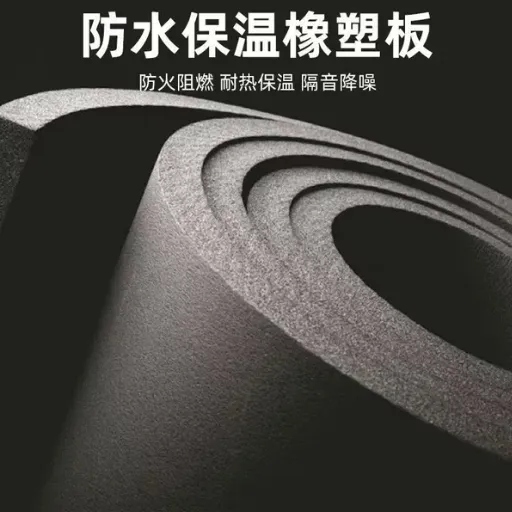
Closed cell elastomeric insulation is a flexible thermal insulation material made from synthetic rubber, typically nitrile butadiene rubber (NBR) or ethylene propylene diene monomer (EPDM), expanded into a closed-cell foam structure. Unlike open-cell foams where cells interconnect, each cell in closed cell elastomeric insulation is sealed. This creates a built-in vapor barrier that resists moisture penetration without additional jacketing.
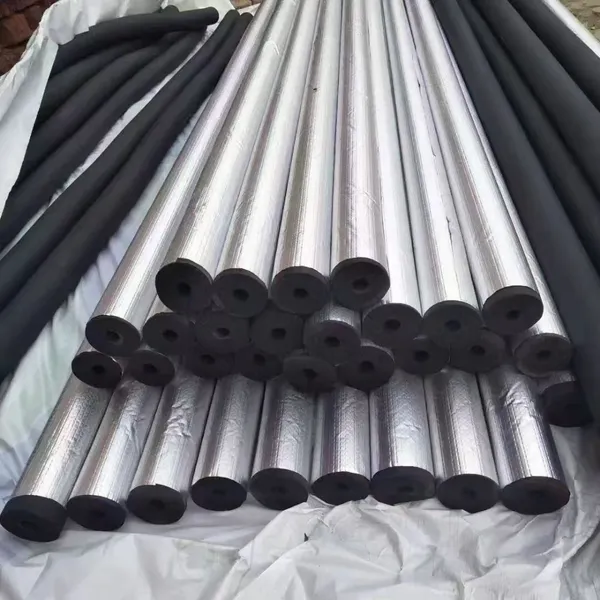
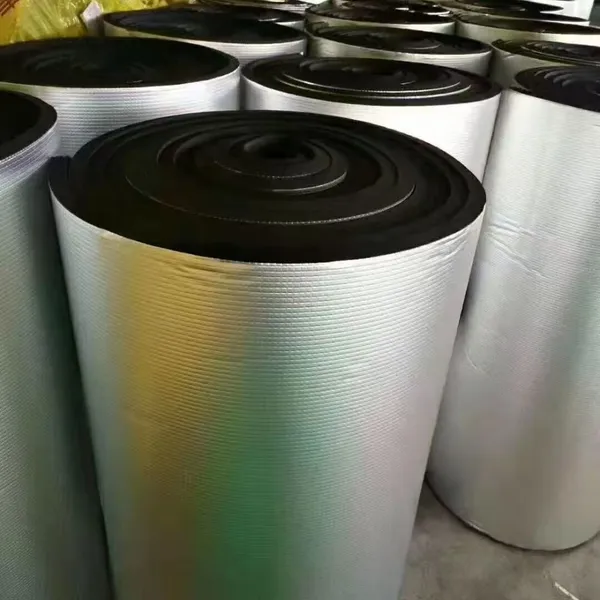
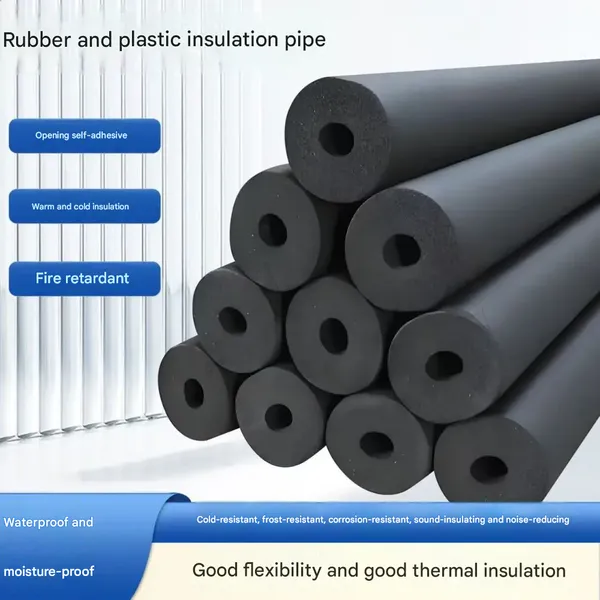
The material is commonly referred to as rubber-plastic insulation, elastomeric foam, or closed-cell rubber insulation. It is manufactured in sheets, rolls, and pre-formed tubes for pipes ranging from 6 mm to 140 mm inner diameter. The closed-cell structure gives it three defining characteristics:
Low thermal conductivity, typically 0.034–0.038 W/(m·K)
High resistance to water vapor transmission, with water vapor permeability as low as ≤1.3 ng/(Pa·s·m)
Flexibility that conforms to complex pipe and duct geometries without gaps
At our facility in Dacheng County, Hebei, the Starf 0-grade flame-retardant series and Strive rubber-plastic lines are produced with these properties for export markets. The closed-cell structure is not a surface treatment. It is formed during the foaming and vulcanization process, so the vapor resistance is consistent throughout the material thickness.
How the Closed-Cell Structure Works
Understanding why closed cell elastomeric insulation performs differently from open-cell alternatives starts with cell geometry. In open-cell foams, air and moisture travel freely through interconnected passages. In closed-cell materials, each gas-filled pocket is sealed by polymer walls. This geometry delivers measurable performance advantages.
Moisture and Vapor Resistance
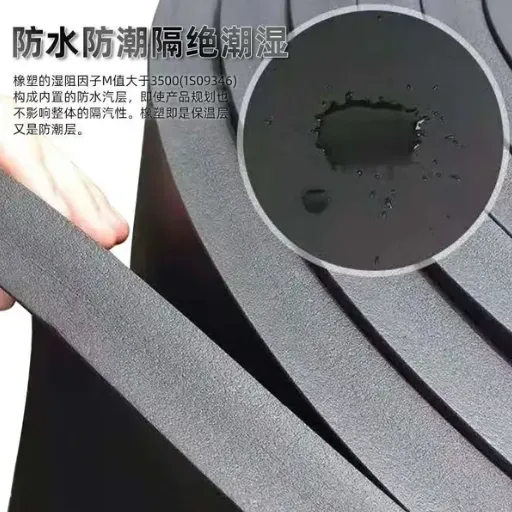
When cold water flows through a pipe, the pipe surface temperature drops below the surrounding dew point. Without adequate insulation, airborne moisture condenses on the metal. Open-cell materials allow that moisture to migrate inward, saturating the insulation and accelerating corrosion under insulation (CUI). Closed-cell rubber insulation blocks this migration because water cannot easily pass through the sealed cell walls.
A 2023 study published in the Journal of Building Engineering found that closed-cell elastomeric insulation maintained over 95% of its original thermal conductivity after five years in chilled water applications, while open-cell alternatives degraded by 30–50% due to moisture absorption. This longevity makes closed-cell rubber insulation the standard for condensation prevention in commercial HVAC systems.
Thermal Performance
The gas trapped inside closed cells, typically a blend of air and blowing agent residues, has lower thermal conductivity than still air at atmospheric pressure. Combined with the polymer cell walls, this gives closed cell elastomeric insulation thermal conductivity values in the 0.034–0.038 W/(m·K) range. For comparison, standard fiberglass blanket insulation ranges from 0.030–0.040 W/(m·K), but fiberglass requires an external vapor retarder in cold applications.
The closed-cell structure also maintains performance under compression. Because each cell acts as a tiny pressure vessel, the foam returns to shape after temporary loading. Our Yalong rubber-plastic boards achieve ≥70% compression resilience, which matters in mechanical rooms where maintenance traffic can compress insulation on floor-mounted pipes.
Technical Note: For cryogenic service below -40°C, standard closed-cell rubber-plastic reaches its limit. Our Deep Cold Polymer series is engineered for LNG and refrigeration applications down to -196°C while retaining closed-cell integrity.
Key Specifications and Performance Data
Specifying closed cell elastomeric insulation requires looking beyond thermal conductivity. The table below summarizes the critical properties of our Yalong and Strive rubber-plastic insulation boards.
| Property | Typical Value | Test Standard |
|---|---|---|
| Density | 40–80 kg/m³ | GB/T 6343 |
| Thermal conductivity | 0.034–0.038 W/(m·K) | GB/T 10294 |
| Service temperature | -40°C to +105°C | GB/T 17794 |
| Fire rating | Class B1 flame retardant | GB 8624 |
| Water vapor permeability | ≤1.3 ng/(Pa·s·m) | GB/T 17146 |
| Compression resilience | ≥70% | GB/T 6669 |
| Tensile strength | ≥1.0 MPa | GB/T 6344 |
For high-occupancy buildings such as hospitals, rail transit, and data centers, the Starf 0-grade series adds enhanced flame-retardant performance with low smoke emission. This grade meets stricter fire safety requirements without sacrificing the closed-cell moisture resistance that makes the material valuable.
Where to Use Closed Cell Elastomeric Insulation
The material excels wherever flexible installation, condensation control, and moderate-temperature performance intersect. The most common applications include:
Chilled Water and Refrigeration Piping
This is the primary application. Cold pipes operating below the ambient dew point are vulnerable to condensation. Closed cell elastomeric insulation forms both a thermal barrier and a vapor barrier in a single layer.
Pre-slit tubes slide over small-diameter pipes, while sheets wrap larger lines and fittings. Because the material is flexible, installers can cut miters around elbows and tees without leaving thermal bridges.
HVAC Ductwork
Flexible sheets conform to rectangular and round ductwork, including transitions and offsets that rigid board insulation cannot follow easily. The closed-cell surface resists the air leakage and moisture accumulation that degrade duct liner performance over time. For acoustic-sensitive applications, denser grades of rubber-plastic can also provide vibration damping.
Solar Hot Water and Plumbing
Domestic hot water lines benefit from both thermal retention and flexibility. Pre-formed tubes reduce installation time on residential and commercial solar thermal systems. The material's UV resistance is limited, however, so outdoor installations require protective cladding or jacketing.
Industrial Equipment and Tanks
Curved vessels, pumps, and valves with irregular shapes are difficult to insulate with rigid materials. Elastomeric sheets can be layered and adhered to complex surfaces. The service range of -40°C to +105°C covers most process equipment, though high-temperature applications above 105°C require rock wool or ceramic fiber instead.
Marine and Rail Applications
The flame-retardant grades, including V0-level rubber insulation, are specified for enclosed spaces where fire safety and smoke toxicity are regulated. The lightweight, flexible material also reduces installation labor in tight mechanical compartments.
Closed Cell vs. Open Cell: What Changes on the Job Site
Choosing between closed cell elastomeric insulation and open-cell foam is not simply a price decision. The difference appears in performance, installation labor, and lifecycle cost.
| Factor | Closed Cell Elastomeric | Open-Cell Foam |
|---|---|---|
| Moisture resistance | Built-in vapor barrier | Requires separate vapor retarder |
| Thermal stability when wet | Minimal degradation | Significant performance loss |
| Installation complexity | Single-layer system | Often needs jacketing or mastic |
| Flexibility | High, conforms to fittings | Moderate to low |
| Fire rating options | B1, V0 grades available | Varies by product |
| Cost per m² | Higher initial material cost | Lower initial material cost |
When Marcus, a mechanical contractor in Dubai, priced insulation for a hotel chilled water retrofit, open-cell foam looked cheaper on the quote. Two years later, his team was removing saturated insulation from multiple levels and treating corroded pipe. The remediation cost exceeded the original installation budget. Closed cell elastomeric insulation would have added 15% to the initial material cost but eliminated the failure mode entirely.
This does not mean open-cell materials have no place. Open-cell foam can be cost-effective for above-ambient lines where moisture is not a concern. For cold systems, however, closed cell elastomeric insulation is generally the lower-risk specification.
Installation Best Practices for Maximum Performance
Even the best material fails if installed poorly. These guidelines help contractors get the full benefit from closed cell elastomeric insulation.
Surface Preparation
Clean pipes and ducts of oil, dust, and moisture before installation. Adhesion depends on surface cleanliness. For outdoor or high-humidity environments, apply a contact adhesive compatible with NBR/EPDM foam and allow it to tack before pressing seams together.
Seam Sealing
Butt joints between sections should be sealed with manufacturer-recommended adhesive or tape. A continuous vapor barrier requires continuous sealing. Gaps at seams become condensation entry points, undermining the closed-cell advantage. On cold systems, every longitudinal and circumferential joint should be bonded.
Thickness Selection
Thickness depends on pipe diameter, operating temperature, ambient conditions, and dew point. Thicker is not always better. The correct thickness prevents surface condensation while minimizing material cost. Our technical team provides complimentary condensation risk analysis and U-value calculations for confirmed and prospective customers.
Supports and Hangers
Use insulation-rated pipe supports or saddle inserts to prevent compression at hanger locations. Compressed insulation creates a thermal bridge and can split the vapor barrier. Pre-formed insulation shields are available for common pipe sizes.
UV and Mechanical Protection
Standard rubber-plastic insulation is not UV-stable for long-term outdoor exposure. Install aluminum or PVC jacketing in outdoor locations. In high-traffic mechanical rooms, add a protective jacket to prevent punctures that break the closed-cell barrier.
How to Select the Right Closed Cell Elastomeric Insulation
Specifiers should evaluate four factors before choosing a product grade.
1. Operating Temperature
Standard closed-cell rubber-plastic handles -40°C to +105°C. For cryogenic service, specify Deep Cold Polymer. For temperatures above 105°C, switch to rock wool or other inorganic insulation.
2. Fire Safety Requirements
Commercial buildings typically accept Class B1 flame-retardant rubber-plastic. Rail transit, data centers, and healthcare facilities may require V0-grade or low-smoke formulations. Always match the fire rating to local building codes and project specifications.
3. Moisture Exposure
High-humidity environments, chilled water systems, and refrigerated spaces demand the lowest possible water vapor permeability. Verify the test standard and value on the technical data sheet, not just marketing claims.
4. Customization Needs
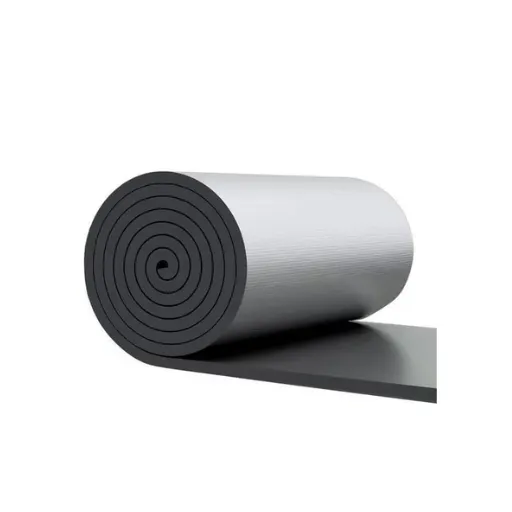
Non-standard thicknesses, self-adhesive backing, aluminum foil facing, and custom tube diameters are common requirements. DaCheng BangMei customizes density, dimensions, and facing options for project-specific applications, with MOQs typically starting at one 20' container for standard products.
Why Manufacturer Certification Matters
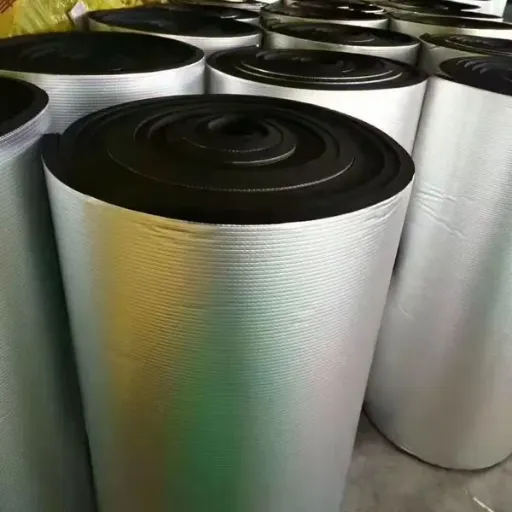
Not all closed cell elastomeric insulation performs to specification. Quality varies with raw materials, foaming process control, and curing consistency. Buyers should verify:
ISO9001 quality management certification
Fire test reports from accredited laboratories
Thermal conductivity test data with test standards listed
Factory audit history or third-party inspection capability
At Huaneng Zhongtian's 225,000 m² manufacturing base, our 5G smart factory tracks every batch digitally. This traceability supports quality audits and ensures that the thermal conductivity, density, and fire rating you specify are the values that ship to your port. We provide original or certified copies of ISO9001, ISO14001, OHSAS18001, and product-specific fire test reports on request.
When the procurement team at a Southeast Asian hospital group sourced rubber-plastic insulation for a new wing, they required full documentation for their consultants. Because we maintain digital batch records and certified test reports, the approval process took days instead of weeks. The project shipped on schedule with matching certificates.
Cost Considerations and Total Cost of Ownership
The purchase price per square meter is only one component of insulation cost. Lifecycle cost includes installation labor, energy loss, maintenance, and replacement. Closed cell elastomeric insulation often wins on total cost of ownership even when the material price is higher than open-cell alternatives.
Factors that reduce lifecycle cost include:
Faster installation on pipes and fittings due to flexibility
No additional vapor retarder or jacketing in many applications
Reduced risk of corrosion under insulation
Stable thermal performance over time
Lower energy loss from maintained R-value
For distributors and contractors buying at volume, factory-direct pricing from a manufacturer eliminates distributor markups. DaCheng BangMei offers flexible MOQs, OEM packaging, and full export documentation for international orders.
Conclusion
Closed cell elastomeric insulation is the right choice for chilled water, refrigeration, and HVAC applications where condensation control and flexible installation matter. Its closed-cell structure provides a built-in vapor barrier, stable thermal conductivity, and long-term durability that open-cell materials cannot match without additional protection.
Key takeaways:
Specify closed cell elastomeric insulation for cold systems operating below the dew point.
Verify thermal conductivity, water vapor permeability, and fire rating against project requirements.
Match the product grade to the operating temperature, from standard rubber-plastic to Deep Cold Polymer for cryogenic service.
Follow proper installation practices, especially seam sealing and support protection, to maintain the vapor barrier.
Source from a certified manufacturer with traceable quality documentation to reduce procurement risk.
If you need help selecting the right rubber-plastic insulation thickness for your HVAC or refrigeration project, our technical team provides complimentary specification support. We can review your drawings, calculate condensation risk, and recommend the optimal grade based on local codes and performance requirements.
Recently Posted
-
Insulation for Metal Buildings: Complete Buyer's Guide 2026
June 24, 2026A warehouse manager in Texas watched his electricity bill climb every summer. The metal roof turned the building into a solar oven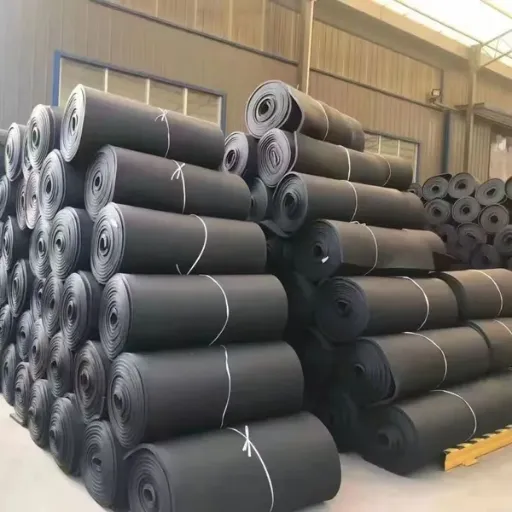 Read More
 -
Insulation Materials Comparison: How to Select the Right Type for Your Project
June 24, 2026The procurement manager stared at six quotations on her screen. Each supplier recommended a different insulation material for the Read More
 -
Thermal Conductivity of Insulation Materials: A Specifier's Guide
June 24, 2026Ahmed Hassan spent three weeks reconciling quotes for a cold storage expansion in Dubai. One supplier quoted 80 mm rubber-plastic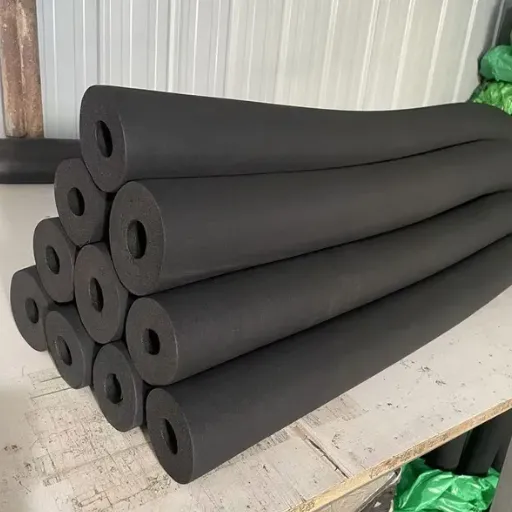 Read More
 -
Basement Insulation Board: Complete Buyer's Guide | DaCheng BangMei
June 24, 2026A homeowner in Michigan finished their basement with standard fiberglass batts and drywall. Two winters later, the bottom plates w Read More

Contact Us
Recommended Products
-
 Eco-Friendly Aluminum Foil Foam Board for Underfloor Heating SolutionsNegotiableMOQ: 100 Pieces
 -
Rubber Plastic Insulation Board Waterproof for Industrial Thermal InsulationNegotiableMOQ: 500 Square Meters
-
Premium Soft Silica Nano Aerogel Felt Sheets for Industrial Heat InsulationNegotiableMOQ: 50 Meters
-
Customizable PVC Magnetic Door Curtain Roll for Home & Kitchen UseNegotiableMOQ: 500 Kilograms
-
XPS Waterproof Board for Underground Garage Moisture BarrierNegotiableMOQ: 50 Square Meters
-
Heavy Duty Titanium Steel Mesh Magnetic Door Curtain With Reinforced EdgesNegotiableMOQ: 10 Pieces
-
Rubber Plastic Insulation Tube for Refrigeration & Cold Storage PipelineNegotiableMOQ: 500 Square Meters
-
Durable Aluminum Dry Floor Heating Panel With High Thermal ConductivityNegotiableMOQ: 100 Pieces
-
Nano Aerogel Felt Insulation Material for Cold Protection and Energy EfficiencyNegotiableMOQ: 50 Meters
-
High-Temperature Nano Silica Aerogel Felt for Pipe Fire and Thermal InsulationNegotiableMOQ: 50 Meters
-
Insulated PVC Magnetic Door Curtain for Thermal Insulation in Bedroom & KitchenNegotiableMOQ: 500 Kilograms
-
Professional Aluminum Foil Foam Board for Dry Underfloor Heating SystemsNegotiableMOQ: 100 Pieces
-
Aluminum Underfloor Heating Module for Commercial and Residential UseNegotiableMOQ: 100 Pieces
-
XPS Waterproof Board 10mm Thickness for Roofing InsulationNegotiableMOQ: 50 Square Meters
-
Custom Size Titanium Steel Mesh Magnetic Door Curtain for Warehouse Pest ControlNegotiableMOQ: 10 Pieces
-
Flame Retardant Thermal Insulation Sponge for Rubber & Plastic Pipes - Fireproof Factory DirectNegotiableMOQ: 500 Square Meters
-
Cold Insulation Rubber Plastic Board for HVAC and Industrial Pipeline ApplicationsNegotiableMOQ: 500 Square Meters
-
20mm XPS Thermal Insulation Panel for Dry Underfloor Heating SystemsNegotiableMOQ: 100 Pieces
-
High Temperature Resistant Foam Insulation Tube for Air Conditioner DuctsNegotiableMOQ: 500 Meters
-
XPS Tile Backer Board Waterproof Insulation for Wall & BathroomNegotiableMOQ: 500 Square Meters